
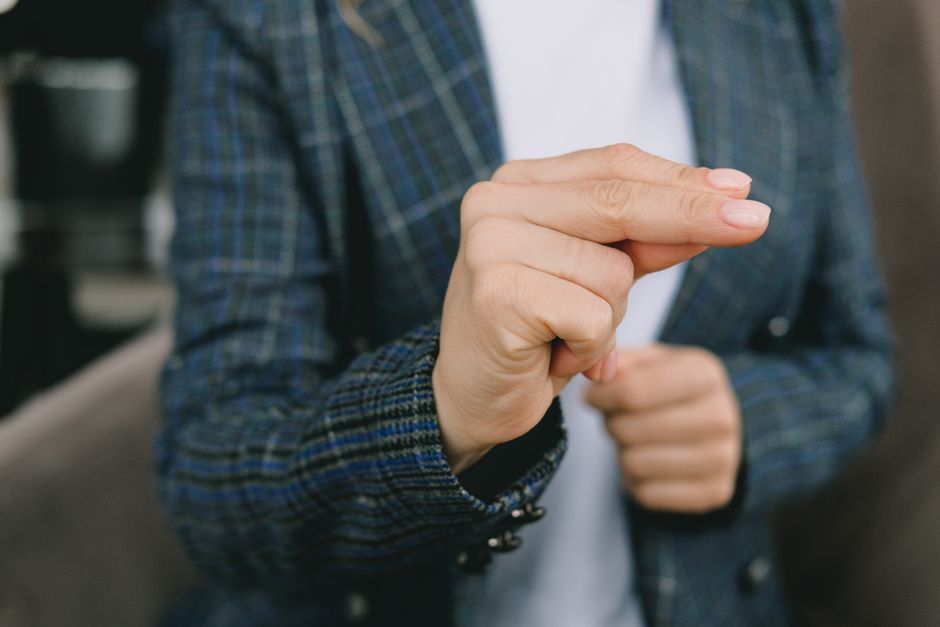
Nonverbal behavior is communication without words. It includes facial expressions, body posture, gestures, eye contact, touch, and the physical distance between people. These signals often reveal emotions and intentions that spoken language can hide. Research consistently shows that a large portion of human communication happens through these nonverbal channels, not through the words we choose.
What Are the Main Types of Nonverbal Behavior?
Nonverbal behavior breaks down into several distinct categories. Each type carries its own meaning and operates by different rules. Understanding the categories helps you read situations more accurately.
Kinesics refers to body movement. This includes gestures, posture, and facial expressions. A crossed arm might signal defensiveness, while an open palm suggests honesty. Posture tells a story too — leaning forward shows interest, while slumping signals boredom or fatigue.
Proxemics is the study of personal space. The distance people keep between themselves and others communicates comfort and relationship status. Close proximity often indicates intimacy or aggression, depending on context. In professional settings, people typically maintain more distance than they do with friends.
Haptics covers touch. A handshake, a pat on the back, or a comforting arm around the shoulder all transmit meaning. Touch is powerful but culturally sensitive. What feels appropriate in one culture may be intrusive in another.
Oculesics involves eye behavior. Eye contact signals attention and confidence. Prolonged staring can feel threatening. Looking away may indicate discomfort, deception, or simply shyness. The meaning depends heavily on the situation and the relationship between people.
Paralanguage is how you say something, not what you say. Tone of voice, pitch, speaking speed, and pauses all carry meaning. A flat tone can make a compliment sound sarcastic. A warm tone can soften bad news.
Chronemics is the use of time. Being late communicates something different than being early. How long you wait for someone, and how long you keep someone waiting, sends clear messages about priority and respect.
How Do Facial Expressions Communicate Emotion?
Facial expressions are the most direct channel of nonverbal emotion. The face can produce thousands of different expressions, but researchers have identified a set of universal emotions that people recognize across cultures. These include happiness, sadness, anger, fear, surprise, and disgust.
These expressions are largely automatic. When you feel a strong emotion, your facial muscles respond before you have time to think. This is why facial expressions are often trusted more than words. A person may say they are fine, but a tight jaw or a forced smile tells a different story.
Not all facial expressions are genuine. People learn to mask emotions, especially in social or professional settings. A customer service smile is different from a genuine smile of joy. The genuine smile involves the muscles around the eyes, not just the mouth. This distinction is well established in the research literature.
Reading facial expressions requires attention to context. A furrowed brow could mean concentration, confusion, or anger. The same expression in a meeting, a classroom, or a family argument carries different weight.
What Do Gestures and Posture Really Mean?
Gestures fall into several categories. Emblems are gestures with a direct verbal translation, like a thumbs-up or a peace sign. Illustrators accompany speech and help explain what you are saying. You might use your hands to show size or direction while talking. Adaptors are self-touching behaviors like rubbing your hands or playing with your hair. These often signal anxiety or stress.
Posture communicates status and attitude. People who feel confident often stand tall with open shoulders. People who feel subordinate may slouch or make themselves smaller. In negotiations, leaning back can signal confidence, while leaning forward shows engagement.
Mirroring is a subtle but important nonverbal behavior. When two people are comfortable with each other, they often unconsciously copy each other’s posture and gestures. This synchrony indicates rapport. When it is absent, the interaction may feel stiff or disconnected.
One common myth is that crossed arms always mean defensiveness. That is not always true. Crossed arms can simply mean the person is cold, comfortable, or thinking deeply. Reading a single gesture without considering the whole context leads to errors.





Why Does Eye Contact Matter So Much?
Eye contact regulates conversation. It signals when you are ready to speak, when you are listening, and when you are finished. In most Western cultures, direct eye contact conveys honesty and confidence. In other cultures, prolonged eye contact can be disrespectful, especially toward authority figures.
Eye contact also builds connection. Studies show that people who make more eye contact are perceived as more trustworthy and competent. Breaking eye contact frequently can make you seem nervous or evasive, even when you are telling the truth.
There is a balance. Staring without blinking can feel aggressive or unsettling. The natural pattern involves looking at the other person, looking away briefly, and returning. This rhythm feels comfortable because it matches the natural flow of conversation.
Eye contact affects memory too. People remember faces and information better when they have made eye contact with the speaker. This is one reason why public speakers are trained to scan the audience rather than read from notes.
How Does Body Language Differ Across Cultures?
Nonverbal behavior is not universal. While some facial expressions are recognized worldwide, many gestures and spatial rules are culturally specific. The same gesture can have opposite meanings in different countries.
The thumbs-up sign is positive in the United States but offensive in parts of the Middle East and West Africa. The OK sign made with thumb and index finger is fine in North America but vulgar in Brazil and Turkey. Nodding usually means yes, but in Bulgaria and Greece it can mean no.
Personal space also varies. People from Latin American and Middle Eastern cultures typically stand closer during conversation. People from Northern European and East Asian cultures prefer more distance. When people from different cultures interact, this mismatch can create discomfort without anyone understanding why.
Eye contact rules differ as well. In Japan, prolonged eye contact can be seen as challenging or rude. In the United States, avoiding eye contact is often interpreted as dishonesty. These differences matter in international business and diplomacy.
The safest approach is observation. Watch how local people interact before assuming your own nonverbal habits translate clearly. When in doubt, follow the lead of the person you are speaking with.
How Can You Improve Your Nonverbal Communication Skills?
Improving nonverbal communication starts with awareness. Pay attention to your own habits. Do you cross your arms during difficult conversations? Do you look at your phone while someone is speaking? Small adjustments can change how others perceive you.
Match your nonverbal signals to your words. If you are apologizing, your tone and posture should convey sincerity. If you are giving praise, make eye contact and use an open posture. Mixed signals create confusion and reduce trust.
Reading others requires patience. Look for clusters of behavior rather than single signals. One crossed arm means little. Crossed arms, a turned-away body, and limited eye contact together suggest disengagement. Consistent patterns are more reliable than isolated gestures.
Practice active listening nonverbally. Nod to show understanding. Lean slightly forward. Maintain comfortable eye contact. These signals encourage the speaker and improve the quality of the conversation.
Remember that context matters most. The same behavior means different things in a job interview, a family dinner, and an emergency room. Always interpret nonverbal cues within the specific situation and relationship.
Frequently Asked Questions
What is the difference between verbal and nonverbal behavior?
Verbal behavior uses words, either spoken or written. Nonverbal behavior includes all other communication, such as facial expressions, gestures, posture, eye contact, and tone of voice.
Can nonverbal behavior be controlled or faked?
Some nonverbal signals can be controlled, like gestures and posture. Other signals, like pupil dilation and micro-expressions, are harder to fake because they are automatic responses to emotion.
Why is nonverbal communication important in the workplace?
Nonverbal cues affect how colleagues and clients perceive your confidence, honesty, and competence. Consistent nonverbal signals build trust, while mixed signals create confusion and reduce credibility.
How accurate is body language reading?
Body language reading is useful but not foolproof. Single gestures are unreliable, and cultural differences change meanings. Accuracy improves when you observe patterns of behavior within a specific context.
