
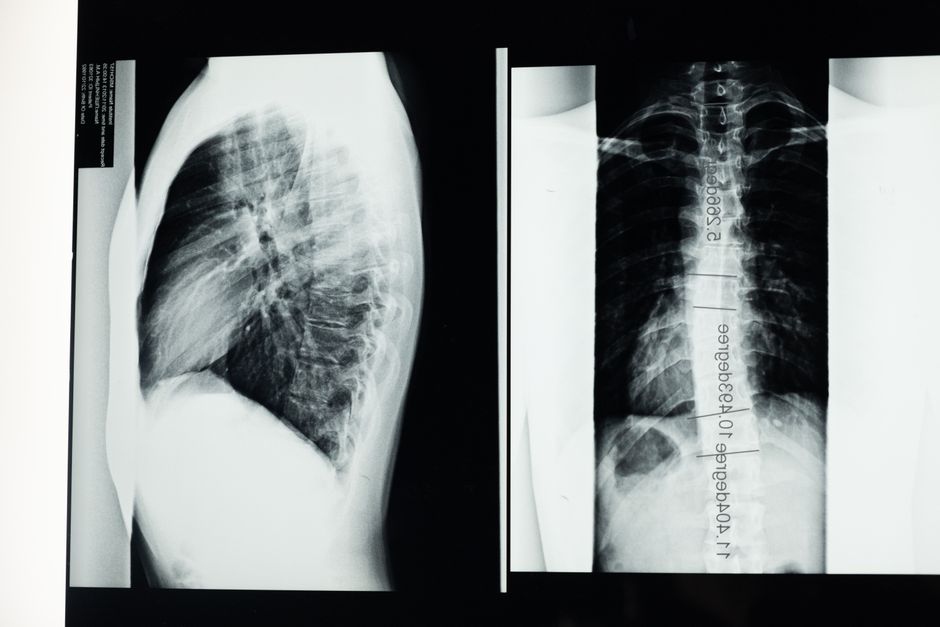
Levoconvex scoliosis is a description of a spinal curve, not a separate disease. The word tells you two things: the spine bends sideways, and the convex — or outer — edge of that curve points to the left. That is the whole definition. It is not a distinct diagnosis with its own cause or its own treatment protocol, and you will not find it listed as a standalone condition in major orthopedic references. It is a directional label that a clinician attaches to a scoliosis curve, usually when describing what an X-ray shows.
That distinction matters more than it might seem. People often search for “levoconvex scoliosis” after reading a radiology report and assume they have been given a specific diagnosis. What they have actually been given is a shape description. The underlying condition — and how it is managed — depends on factors the label itself does not contain.
What Is Levoconvex Scoliosis?
Scoliosis is defined as a lateral (sideways) curvature of the spine with a rotational component, measured by a value called the Cobb angle. A levoconvex curve is one where the apex of the curve bulges toward the left side of the body.
The opposite term is dextroconvex, meaning the curve bulges to the right. Both are simply directional descriptors. Neither one, on its own, tells you the severity, the cause, or the outlook.
Direction does carry some diagnostic weight, though. In adolescent idiopathic scoliosis — the most common form — curves in the thoracic (upper/mid) spine are far more often right-convex. A left-convex thoracic curve is unusual enough that clinicians tend to look harder for an underlying cause rather than assuming the curve is idiopathic. This is a genuine clinical pattern, not a rule. Left thoracic curves are sometimes benign, but they raise a flag that deserves a closer look.
One clarification worth making: scoliosis is a three-dimensional change. The spine does not just bend sideways. The vertebrae also rotate, which is why a rib hump can appear on one side of the back when a person bends forward. The convex side is typically the side where the ribs push outward in a thoracic curve.
What Causes a Left-Convex Spinal Curve?
The cause depends on which category of scoliosis a person has. The direction of the curve is a feature of the condition, not the source of it.
The main categories are:
- Idiopathic scoliosis — no identifiable cause. This is the most common type overall. It is further grouped by age of onset, with adolescent idiopathic scoliosis being the most frequent.
- Congenital scoliosis — caused by vertebrae that formed abnormally before birth.
- Neuromuscular scoliosis — associated with conditions that affect the muscles or nerves, such as cerebral palsy or muscular dystrophy.
- Degenerative scoliosis — developing later in life, often linked to age-related changes in the discs and joints of the spine.
When a curve points left in the upper back, some clinicians consider whether an underlying spinal cord or nervous system issue could be involved. This is why a thorough evaluation sometimes includes an MRI, particularly when there are other findings such as pain, neurological symptoms, or an unusual curve pattern. Not every left curve requires an MRI. The decision is a clinical judgment based on the full picture.
Some research suggests that curve direction may correlate with different patterns of spinal development, but the evidence here is not strong enough to draw firm conclusions. What is clear is that direction alone does not determine cause.
What Are the Symptoms of Levoconvex Scoliosis?
Most people with mild scoliosis have no symptoms at all. The curve is often noticed by a parent, a school screening, or a routine exam before the person feels anything.
When symptoms do appear, they typically include:
- Visible asymmetry in the shoulders, shoulder blades, or waist
- One hip appearing higher than the other
- A rib prominence on one side when bending forward
- Clothing fitting unevenly
- Back pain, which is more common in adults with degenerative curves than in adolescents
The presence of pain in a young person with scoliosis is worth mentioning to a doctor, because idiopathic scoliosis in adolescents is usually not painful. Pain does not automatically mean something serious, but it changes the evaluation.
Breathing problems are rare and generally only occur with severe curves that affect the chest cavity. For the large majority of people with mild to moderate curves, lung function is not affected.



How Is Levoconvex Scoliosis Diagnosed?
Diagnosis starts with a physical exam. A clinician watches the person bend forward from the waist — a test often called the Adams forward bend test — to look for rib or flank asymmetry. They also check shoulder and hip levels, and may measure leg lengths.
Imaging confirms and measures the curve. An X-ray is used to calculate the Cobb angle, which is the standard measure of scoliosis severity. This angle guides treatment decisions far more than the direction of the curve does.
General categories used in clinical practice:
- Under 10 degrees: not classified as scoliosis
- 10 to 25 degrees: typically mild, often monitored
- 25 to 40 degrees: moderate, where bracing may be considered in growing children
- Above 40 to 50 degrees: more severe, where surgery may be discussed
These ranges are widely used guideposts, not rigid cutoffs. Treatment decisions also factor in the person’s age, how much growth remains, and how quickly the curve is changing. In a growing child, the rate of progression can matter more than the current number.
MRI is not routine for every curve. It is more likely to be ordered when the curve is left-convex in the thoracic spine, when there is pain, when neurological signs are present, or when the curve appears atypical.
How Is Levoconvex Scoliosis Treated?
Treatment is based on the underlying type of scoliosis and its severity, not on which way the curve points. A left-convex curve and a right-convex curve of the same size and cause are generally managed the same way.
Options fall into three broad categories:
- Observation — for mild curves, especially in people who are still growing. Regular check-ups track whether the curve is changing.
- Bracing — used in growing children with moderate curves. Bracing is designed to prevent progression, not to straighten an existing curve. Research indicates bracing can reduce the likelihood of progression in some adolescents, though it does not work for everyone and results vary.
- Surgery — considered for severe curves or those that continue to progress despite other measures. Spinal fusion is the most common surgical approach. It is a major procedure with real risks and is not recommended for mild curves.
Physical therapy and exercise can help with pain, posture, and strength, but the evidence that exercise alone changes the Cobb angle is limited and mixed. Some specific exercise-based approaches have shown modest results in some studies, but they are not a substitute for bracing or surgery where those are indicated. Anyone who claims a particular exercise program reliably corrects scoliosis is going beyond what the evidence supports.
For adults with degenerative scoliosis, treatment often focuses on managing pain and maintaining function. Some clinicians recommend physical therapy, pain management, or targeted injections before considering surgery.
Does a Left-Convex Curve Change the Outlook?
Curve direction by itself does not determine how a person will do over time. What matters more is the size of the curve, the person’s age, and whether the curve is still progressing.
Mild curves in adolescents often remain stable or progress only slightly. The risk of progression is highest during periods of rapid growth. Once skeletal maturity is reached, curves that were mild tend to stay relatively stable, though they can still change slowly over decades.
Severe untreated curves can lead to long-term issues with breathing and function, which is why monitoring matters. But most people diagnosed with scoliosis today are diagnosed at mild stages and managed without surgery.
The takeaway for a left-convex curve specifically: it is a reason to make sure the evaluation is thorough, not a reason to expect a worse outcome. The label describes shape. The number and the cause describe the situation.
Frequently Asked Questions
Is levoconvex scoliosis dangerous?
The label itself is not dangerous — it only describes curve direction. Whether a curve needs attention depends on its size, cause, and whether it is progressing.
Does a left-convex curve always mean something is wrong with the spinal cord?
No. Left thoracic curves are more likely to prompt further testing such as an MRI, but many are benign. The decision to image is a clinical judgment based on the full exam.
Can levoconvex scoliosis be corrected with exercise?
The evidence that exercise alone changes the Cobb angle is limited and mixed. Exercise can help with pain and strength, but it is not a substitute for bracing or surgery when those are indicated.
What Cobb angle is considered scoliosis?
A curve of 10 degrees or more on X-ray is generally classified as scoliosis. Curves below that threshold are usually not labeled as scoliosis.
