
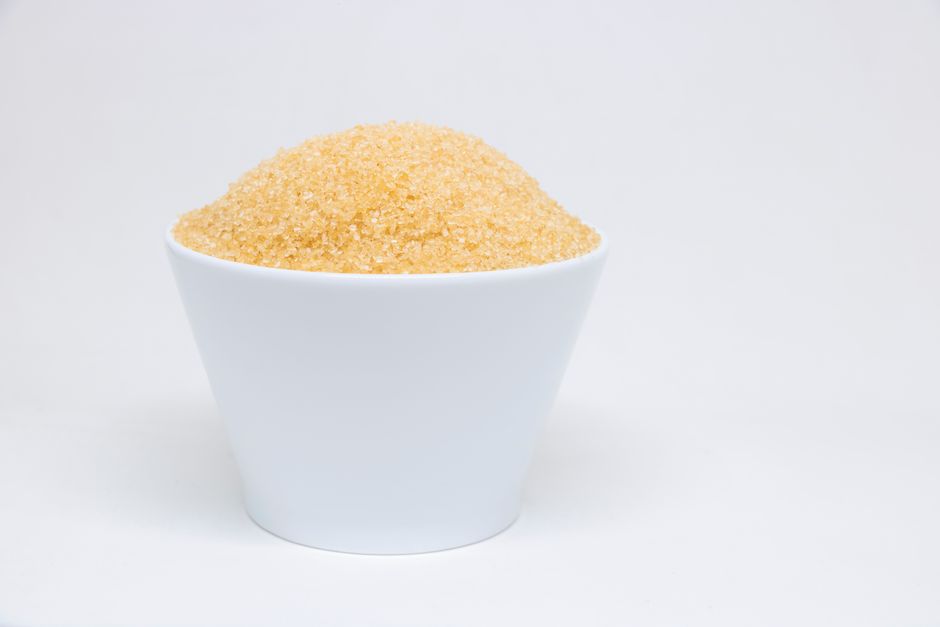
Brown sugar is simply white sugar that still contains molasses, or has molasses added back to it. The molasses gives it its brown color, its moisture, and its deeper, more complex flavor. While white sugar is pure sucrose, brown sugar is a mix of sucrose, molasses, and a small amount of water.
What Is In Brown Sugar, Exactly?
To understand brown sugar, you have to start with white sugar. White sugar comes from either sugar cane or sugar beets. During processing, the natural juices are extracted and boiled down to form raw sugar crystals.
These raw crystals are coated in a dark syrup called molasses. To make white sugar, manufacturers spin the crystals in a centrifuge to remove that molasses layer. The result is pure, white sucrose.
Brown sugar is made by one of two ways. The first is partially refined sugar that keeps some of its natural molasses. The second, and more common method, is taking refined white sugar and adding a specific amount of molasses back into it. Both methods produce a product that is roughly 85% to 95% sucrose, with the rest being molasses, water, and trace minerals.
Light Brown Sugar vs. Dark Brown Sugar
The difference between light and dark brown sugar comes down to molasses content. Light brown sugar contains about 3.5% molasses by weight. Dark brown sugar contains about 6.5% molasses.
That difference changes more than just color. Dark brown sugar has a stronger molasses flavor, a deeper color, and a slightly higher moisture content. It also tends to be more acidic because molasses is mildly acidic.
In baking, this matters. Dark brown sugar produces a chewier cookie and a more pronounced caramel or toffee flavor. Light brown sugar gives a milder sweetness that lets other ingredients, like vanilla or chocolate, come through more clearly. If a recipe calls for one and you only have the other, you can substitute them, but the final texture and flavor will shift slightly.
Nutritional Content of Brown Sugar
Brown sugar is not a health food. It is sugar, and it provides calories with almost no nutritional benefit. The mineral content in molasses is real but trivial in the amounts people actually eat.
A single teaspoon of brown sugar contains about 17 calories and roughly 4.5 grams of carbohydrates, all of which are sugars. It contains trace amounts of calcium, potassium, iron, and magnesium from the molasses. But you would need to eat an unreasonable amount of brown sugar to get any meaningful nutrition from those minerals.
For context, the American Heart Association recommends limiting added sugar to no more than 6 teaspoons per day for women and 9 teaspoons per day for men. Brown sugar counts toward that limit exactly the same as white sugar. Your body cannot tell the difference once it is digested.





How Brown Sugar Is Made
Commercial brown sugar production is straightforward. Refined white sugar crystals are placed in a large mixer. A carefully measured amount of molasses syrup is sprayed over the crystals while the mixer turns. The molasses coats each crystal evenly, creating the familiar moist, clumping texture.
Some specialty brown sugars, like muscovado, are made differently. Muscovado is an unrefined cane sugar. The cane juice is boiled down, and the resulting crystals retain all of their natural molasses. It is never spun in a centrifuge, so it has a higher molasses content than standard brown sugar. It is darker, stickier, and has a more intense flavor.
Another variety, called turbinado or “raw” sugar, sits somewhere in between. It is partially refined. The outer molasses layer is washed off, but not completely. The crystals remain large and light brown. These are often sold as “Sugar in the Raw” and used as a crunchy topping rather than a baking ingredient.
Why Brown Sugar Hardens and How to Fix It
Brown sugar hardens because it loses moisture. The molasses in brown sugar acts like a sponge. It holds water, which keeps the sugar soft and clumpable. When that moisture evaporates, the sugar crystals stick together into a hard block.
Storing brown sugar properly prevents this. An airtight container is essential. Some people add a slice of bread or a piece of apple to the container to provide moisture. Others use a terra cotta disk that is soaked in water and placed in the jar. Both methods work by keeping humidity inside the container.
If your brown sugar has already hardened, you can soften it. Place it in a microwave-safe bowl, cover it with a damp paper towel, and microwave in 15-second bursts until soft. Or place the hard block in a sealed container with a damp paper towel overnight. Both methods restore moisture without changing the sugar’s composition.
Is Brown Sugar Healthier Than White Sugar?
No. Brown sugar is not meaningfully healthier than white sugar. The difference is flavor and moisture, not nutrition.
Both brown and white sugar are about 99% sucrose. Brown sugar has slightly fewer calories per teaspoon because it contains a bit more water and molasses, which are less calorie-dense than pure sugar. But the difference is negligible in real-world use.
The glycemic index of brown sugar is nearly identical to white sugar. Both raise blood sugar quickly. Both are metabolized the same way. Both contribute to the same health risks when consumed in excess, including weight gain, type 2 diabetes, and tooth decay.
Some online sources claim brown sugar is a “cleaner” or “more natural” sweetener. That is marketing, not science. Unless you are buying a truly unrefined product like muscovado, commercial brown sugar is just white sugar with molasses added back.
Common Substitutes for Brown Sugar
If you run out of brown sugar, you can make a close approximation at home. Combine one cup of white sugar with one to two tablespoons of molasses. Mix thoroughly. For light brown sugar, use one tablespoon of molasses. For dark brown sugar, use two tablespoons.
This homemade version will not be identical to commercial brown sugar, but it performs nearly the same in most recipes. The molasses provides the moisture and flavor that the recipe expects.
Other substitutes exist, but they change the final product more noticeably. Maple sugar, coconut sugar, or date sugar can replace brown sugar by volume, but each has its own flavor profile. Coconut sugar, for example, has a lower glycemic index than white sugar, but it is still sugar and still counts toward your daily added sugar limit.
Artificial sweeteners are not direct substitutes for brown sugar. Brown sugar contributes moisture and acidity to baked goods, not just sweetness. Replacing it with a zero-calorie sweetener will change the texture, browning, and structure of the final product. If you are baking with sugar substitutes, use recipes specifically designed for them.
Does Brown Sugar Go Bad?
Brown sugar does not spoil in the way that dairy or meat spoils. Because it is mostly sugar, it does not support bacterial or mold growth. Sugar is hygroscopic, meaning it draws moisture out of its environment. Microorganisms cannot survive in that dry environment.
However, brown sugar can lose quality over time. It hardens, develops off-flavors from absorbing odors in your pantry, and can eventually become too dry to use. Stored properly in an airtight container, brown sugar can last for two years or more. Stored poorly, it will harden into a brick within a few months.
If you see mold on brown sugar, throw it away. This is rare, but it can happen if the sugar absorbed enough moisture and was contaminated. When in doubt, discard it. The cost of a new bag is not worth the risk of foodborne illness.
Frequently Asked Questions
Is brown sugar just white sugar with molasses?
Yes, most commercial brown sugar is refined white sugar with molasses added back in. Some specialty brown sugars are less refined and retain their natural molasses.
Does brown sugar have fewer calories than white sugar?
Brown sugar has slightly fewer calories per teaspoon because it contains a small amount of water and molasses. The difference is so small that it does not matter for weight management.
Can I substitute white sugar for brown sugar in baking?
You can, but the result will be drier and less flavorful. Brown sugar adds moisture and a caramel-like taste that white sugar cannot replicate.
Why does my brown sugar turn hard?
Brown sugar hardens when it loses moisture. Store it in an airtight container to keep it soft, or soften a hardened block with a damp paper towel or a brief microwave.
