
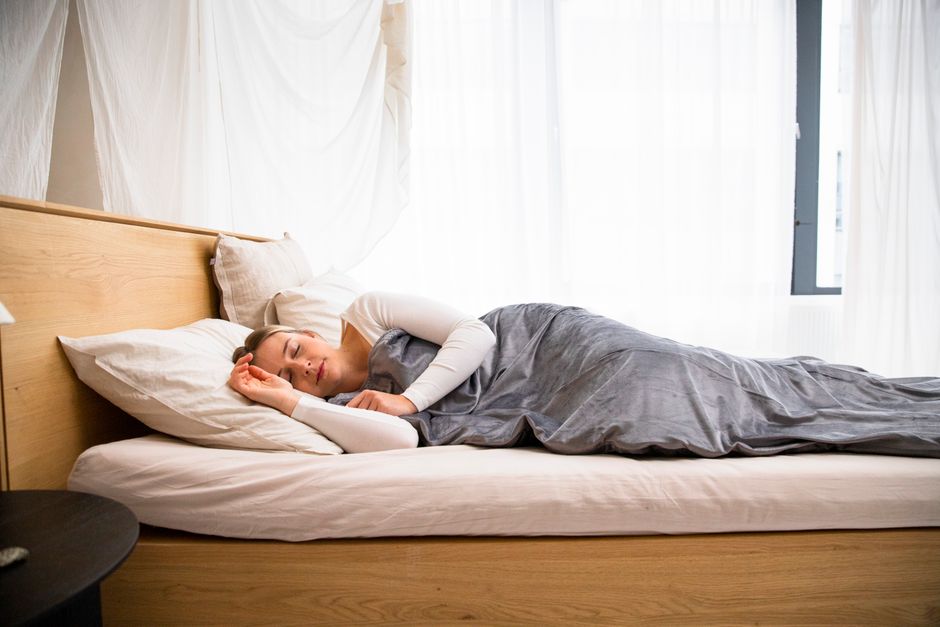
Grounding sheets are bedding products woven with conductive silver threads that connect to your home’s electrical ground through a wall outlet. The idea is simple: when you touch the sheet, you are electrically connected to the earth, just as you would be walking barefoot on soil or grass. The claims that follow — better sleep, less inflammation, reduced pain — are where the marketing runs well ahead of the science.
Here is what is actually established. Your body does carry a measurable electrical charge, and connecting to a grounded surface does change certain electrical readings on the body. What is not established is whether those changes translate into meaningful health outcomes. That gap is the entire story of grounding sheets, and it is worth understanding clearly before you spend money.
What Is Grounding Sheets and How Do They Work?
A grounding sheet looks like a normal fitted sheet, but it has a thin conductive grid woven into the fabric, usually silver fiber. A snap connector attaches to the sheet, and a cord runs from that connector to the grounding pin of a standard three-prong wall outlet. Only the ground pin is used. The sheet does not draw electricity.
The concept comes from a broader idea called earthing, or grounding. The earth’s surface carries a slight negative electrical charge. When your bare skin touches soil, grass, sand, or concrete, electrons can move between your body and the ground. Some researchers have proposed that modern life — rubber-soled shoes, indoor living, insulated flooring — has largely disconnected people from this natural electron exchange.
The sheets are an attempt to recreate that contact indoors. You plug in, lie down, and your skin touches conductive fiber instead of insulated cotton.
This is where an important distinction belongs. The physics of electrical grounding is real and well understood in engineering. Whether the human body benefits from that connection in any measurable health way is a separate question, and it is the one that remains genuinely unsettled.
What Does the Research Actually Show About Grounding Sheets?
The honest answer is that the research is thin, small, and mostly conducted by a small group of researchers with commercial ties to grounding products. That does not automatically make the findings wrong, but it does mean the evidence should be read with appropriate caution.
Some studies have measured changes in things like blood viscosity, skin conductivity, and markers of inflammation during grounding sessions. Many of these were small, short, and not designed to test whether people actually felt better or slept longer. A few small trials have reported improvements in sleep quality and reductions in reported pain. The sample sizes were generally tiny, and independent replication has been limited.
What is missing matters as much as what exists:
- No large randomized controlled trials with hundreds or thousands of participants
- No long-term studies tracking health outcomes over years
- Very little independent research from labs without a financial interest in the result
- No evidence that grounding sheets treat or prevent any diagnosed medical condition
This is the pattern of a promising hypothesis rather than an established therapy. If the effect were large and reliable, larger independent trials would likely exist by now. They largely do not.
Can Grounding Sheets Really Improve Sleep?
Sleep is the most common reason people buy these sheets, and it is also the claim with the most plausible explanation that has nothing to do with electricity.
When someone buys a grounding sheet, they are usually also changing their bedtime routine. They are paying attention to sleep. They may be going to bed at a more consistent time, reducing screen use, or simply expecting to sleep better. Expectation alone can change how people report their sleep, a well-documented effect in sleep research. This is not the same as saying the benefit is fake. It is saying that a reported improvement does not prove the sheet caused it.
Some small studies have reported that participants fell asleep faster or woke less often while using grounding products. These results are interesting but not strong enough to state as fact. No large trial has confirmed that grounding sheets improve sleep compared to a placebo sheet that looks and feels identical but is not connected to ground.
If you sleep better with one, that is your experience and it matters to you. Just be clear about what it does and does not demonstrate.




What About Inflammation, Pain, and Other Health Claims?
This is where the marketing gets furthest ahead of the evidence. Grounding product websites frequently list conditions these sheets are said to help with, including chronic pain, arthritis, cardiovascular disease, and more. No clinical evidence currently confirms that grounding sheets treat any of these conditions.
The proposed mechanism is that free electrons from the earth neutralize charged molecules called free radicals, which are involved in inflammation. That is a real biochemical concept. But the leap from “electrons can interact with free radicals in a lab setting” to “a sheet improves your arthritis” is enormous, and it has not been bridged by clinical trials.
Biological plausibility is not the same as demonstrated benefit. Many things make sense in theory and fail when tested in people. This is exactly why large trials exist.
If you have a diagnosed condition, grounding sheets are not a treatment. They do not replace medication, physical therapy, or any care your clinician has recommended.
Are Grounding Sheets Safe?
For most healthy adults using a properly manufactured sheet connected to a correctly wired outlet, no serious risks have been reported in the published literature. That is a limited statement, not a guarantee, because long-term safety data do not exist.
The more realistic concern is electrical safety. A grounding sheet depends on your home’s wiring being correct. In an older home or one with faulty wiring, the ground pin may not actually be grounded, or worse, may be miswired. Anyone using one of these products should verify that their outlets are properly grounded, ideally by a qualified electrician.
People with implanted electronic devices — pacemakers, defibrillators, insulin pumps, and similar — should talk to their doctor before using any grounding product. The evidence on how these devices interact with grounding is limited, and caution is reasonable.
Pregnant women, infants, and children are another group where guidance is genuinely absent. No clinical guidelines currently exist for these populations regarding grounding products. That is not a statement that they are dangerous. It is a statement that nobody has studied it well enough to say.
How Do Grounding Sheets Compare to Other Options?
If the goal is better sleep, grounding sheets are one of many options, and they are among the least studied. Established approaches have far more evidence behind them.
| Approach | Evidence Level | Notes |
|---|---|---|
| Grounding sheets | Limited, small studies | Most research from interested parties |
| Consistent sleep schedule | Strong | Well-established sleep hygiene principle |
| Limiting caffeine and alcohol | Strong | Both affect sleep quality |
| Cognitive behavioral therapy for insomnia | Strong | First-line treatment for chronic insomnia |
| Regular physical activity | Strong | Improves sleep in most people |
None of this means grounding sheets cannot be part of a routine. It means they should not be the first thing you try, and they should not replace approaches with real evidence behind them.
Should You Buy One?
That is a personal decision, and this article is not going to make it for you. What it can do is lay out the honest picture so you decide with clear eyes.
Grounding sheets cost anywhere from around $50 to several hundred dollars. For that money, you get a product with a plausible but unproven mechanism, a small body of research that is not independent, and no confirmed clinical benefit. You also get a sheet you can sleep on, which is a real thing regardless of the electrical claims.
If you are curious and can afford it, trying one is not unreasonable. Just do not expect it to treat a medical condition, and do not let it delay care that has actual evidence behind it. If you have a health concern, the sheet is not the answer. A clinician is.
The larger point is about how to read any wellness product claim. Ask three questions. Is the mechanism plausible? Yes, often. Is there independent, well-designed research in humans? Sometimes. Does that research show a real benefit compared to a placebo? That is the question most products cannot answer, and grounding sheets currently sit in that category.
Frequently Asked Questions
What is grounding sheets used for?
They are marketed mainly for better sleep, reduced inflammation, and pain relief. The evidence for these benefits is limited and comes mostly from small studies, some with commercial ties to grounding products.
Do grounding sheets actually work?
No large independent trial has confirmed that grounding sheets improve sleep or health outcomes. Some small studies suggest possible effects, but the evidence is not strong enough to state as established fact.
Are grounding sheets safe to sleep on?
No serious risks have been reported for healthy adults using properly manufactured sheets with correctly grounded outlets. People with implanted electronic devices should consult their doctor first, and no guidelines exist for pregnant women or children.
Can grounding sheets replace medical treatment?
No. Grounding sheets are not a treatment for any diagnosed condition and should never replace medication, therapy, or care recommended by a clinician.
