
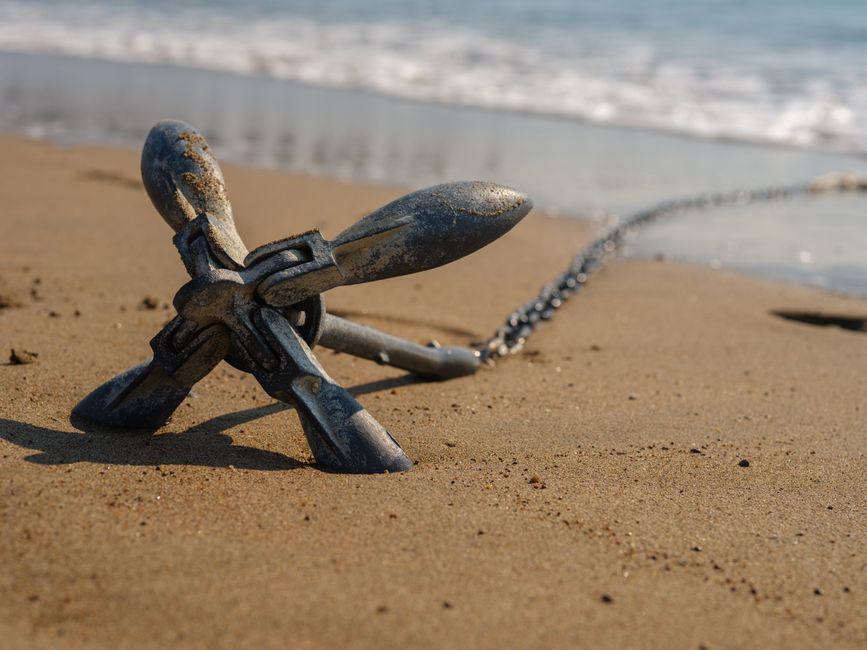
Dragging anchor happens when a boat’s anchor fails to hold the seabed and the vessel moves from its position. It is one of the most dangerous situations a boater can face, especially at night or in rough weather. The anchor loses its grip, and the boat drifts toward shore, other boats, or shipping lanes. Prevention depends on understanding why anchors drag, setting the anchor properly, and monitoring your position constantly.
What Does Dragging Anchor Actually Mean?
When you drop an anchor, the goal is to dig it into the seabed so the boat stays put. Dragging anchor means the anchor has pulled out of the bottom or never dug in properly in the first place. The boat then moves with the wind, current, or waves.
There is a difference between a quick drag and a slow one. A quick drag happens when a sudden gust or strong current pulls the anchor free all at once. A slow drag can go unnoticed for hours because the boat moves only a few feet at a time. Both are dangerous, but the slow drag is the one that catches experienced boaters off guard.
The anchor itself is not always the problem. Most dragging incidents involve a combination of poor holding ground, too little anchor chain, or an anchor that is too small for the boat. Wind and current direction changes can also cause the anchor to reset repeatedly until it finally gives up.
Why Do Anchors Drag in the First Place?
There are several established reasons an anchor loses its hold. Understanding these helps you prevent the problem before it starts.
Holding ground is the most common factor. Sand and mud generally hold anchors well. Hard clay can be tricky because the anchor may not penetrate deeply. Rocky bottoms are the worst — the anchor can catch on a rock temporarily, then slip off when the load shifts. Weedy bottoms prevent the anchor from reaching the seabed altogether, so it just sits on top of the vegetation.
Scope is the second major factor. Scope is the ratio of anchor line length to the depth of the water. If you anchor in 20 feet of water and let out 40 feet of line, your scope is 2:1. That is not enough. A scope of at least 5:1 is the standard recommendation for most conditions, and 7:1 to 10:1 is better in rough weather or at night. With too little scope, the pull on the anchor is upward rather than horizontal, and the anchor just plows out of the bottom.
An undersized anchor is another common cause. Anchors are rated by boat length and weight, but wind and current add enormous force. A boat that is fine with a certain anchor in calm conditions may drag in a moderate breeze because the anchor simply cannot generate enough holding power.
How Do You Know If Your Anchor Is Dragging?
You cannot always feel an anchor dragging. A slow drag produces no noticeable motion, especially on a larger boat. You need to check your position against fixed references.
On a modern boat, the GPS is the best tool. Set an anchor alarm on your chartplotter or a smartphone app. These alarms draw a circle around your anchor position and alert you if the boat moves beyond the radius. Set the radius based on how much line you have out plus a small margin. If you have 100 feet of line out, a 150-foot radius alarm is reasonable.
On a boat without electronics, use visual references. Line up two fixed objects on shore — a tree with a house, or two landmarks that are in a straight line from your position. If the alignment changes, you are moving. You can also drop a weighted float over the bow. If the float moves behind the boat, the boat is dragging.
Another sign is a change in the anchor line. If the line was taught and suddenly goes slack, or if you feel a repeated jerking motion, the anchor may be skipping along the bottom. The sound of chain grinding on rock is also a clear warning.





What Is the Proper Way to Set an Anchor?
Setting an anchor correctly takes time. Rushing this step is a leading cause of dragging later.
Lower the anchor slowly to the bottom. Do not throw it overboard and let it free-fall. Once it touches the seabed, let out line gradually while the boat drifts backward with the wind or current. When you have the desired scope, secure the line and put the engine in reverse at a moderate speed. This forces the anchor to dig in. Hold reverse for at least 30 seconds to a minute.
After setting, check that the anchor actually held. Put the engine in neutral and watch the anchor line. If it stays taught and the boat does not move, the anchor is set. Then reverse again at a slightly higher throttle and confirm the line remains steady. This second test confirms the anchor is dug in, not just resting on the bottom.
One common mistake is setting the anchor and immediately turning off the engine. The boat may swing on the anchor as the wind shifts, which can pull the anchor out of a weak set. Give the anchor time to settle before you relax.
How Much Anchor Line Do You Really Need?
The amount of line you let out depends on depth, tide, and weather. The depth you use for calculation is not just the water depth at your position. You must add the height from the water surface to your bow roller or cleat. On many boats, this adds several feet.
You also need to account for tide. If you anchor in 15 feet of water at low tide and the tide rises 6 feet, you are anchoring in 21 feet of water at high tide. If you calculated scope on the low-tide depth, your anchor will have less holding power at high tide.
A practical rule is to calculate scope based on the maximum depth you expect during your stay, then add a safety margin. In calm conditions, 5:1 is the minimum. In weather, 7:1 to 10:1 is appropriate. In crowded anchorages, you may not have room for a 7:1 scope, which means you need to be extra vigilant about monitoring your position and weather forecasts.
What Should You Do If Your Anchor Starts Dragging?
If you detect a drag, act immediately. Do not wait to see if the anchor will catch again on its own. It might, but it might not.
First, start the engine. This gives you control immediately. If there is room, you can motor forward to take the load off the anchor line, then reset the anchor. If the anchor is dragging in poor holding ground, retrieve it completely and move to a better spot.
If you are in a crowded anchorage and do not have room to maneuver, let out more scope. More scope changes the pull angle and can help the anchor dig in deeper. This is not a guaranteed fix, but it is worth trying if you have the room.
If the anchor continues to drag and you are close to other boats or shore, your priority is to avoid a collision. Cut the anchor line if you must. A lost anchor and chain is far cheaper than a collision or running aground. Do not risk the boat or crew to save gear.
In severe weather, some boaters choose to deploy a second anchor. This can help, but it requires planning and practice. A second anchor set at a different angle can stabilize the boat and reduce swinging, which lowers the load on each anchor. This is a technique best practiced in calm conditions before you need it in a storm.
How to Prevent Dragging Anchor Before It Happens
Prevention starts with planning. Check the weather forecast before you anchor. If strong winds or a wind shift is predicted, choose a more sheltered anchorage or anchor with more scope from the start.
Choose your holding ground carefully. Sand and mud are the best. Avoid rocky or weedy areas unless you have no other option. If you are unfamiliar with the area, ask local boaters or check a cruising guide. Local knowledge is genuinely valuable here.
Match your anchor to your boat and conditions. A larger anchor holds better than a smaller one, and the weight difference is minor compared to the safety gain. Modern anchor designs like the Rocna, Manson Supreme, and Spade hold well in a variety of bottoms, but even the best anchor will drag if the scope is too short or the bottom is poor.
Set an anchor alarm every time you anchor, even in calm conditions. It takes seconds to set and provides a continuous watch that no human can match. Check your position visually and on the GPS at regular intervals, especially before you go to sleep.
Does Anchor Type Matter for Preventing Drags?
Yes, anchor design affects holding power, but no anchor is perfect in every bottom type. Traditional fluke anchors, like the Danforth, hold extremely well in sand and mud but are poor in rocks and weeds. Plow anchors, like the CQR or Delta, are versatile but require a longer scope to set properly.
Modern scoop-style anchors, such as the Rocna and Spade, have a sharp tip that penetrates quickly and a roll-bar that helps the anchor right itself if it lands upside down. These designs have gained popularity because they set reliably in a wide range of bottoms. Some research and field testing suggests these newer designs hold better than traditional styles in soft mud and grass, but results vary by bottom type.
The anchor needs to be appropriate for your boat’s size and weight. Most anchor manufacturers provide sizing charts based on boat length and displacement. Using an anchor one size larger than recommended is a common safety practice among experienced cruisers.
Frequently Asked Questions
How do I know if my anchor is dragging at night?
Set a GPS anchor alarm before you go to sleep. Check your position against fixed lights on shore periodically, and listen for changes in the anchor line tension.
What is the minimum scope to prevent dragging anchor?
Use at least 5:1 scope in calm conditions and 7:1 to 10:1 in rough weather or at night. More scope is always safer because it makes the pull on the anchor more horizontal.
Can a bigger anchor prevent dragging?
A larger anchor generates more holding power and is less likely to drag in poor conditions. Many experienced boaters use an anchor one size larger than the manufacturer’s minimum recommendation.
What should I do if my anchor drags in a crowded anchorage?
Start the engine immediately and motor forward to take the load off the anchor. If you cannot reset the anchor safely, cut the line and move to a safer location.
