
Protein is one of three nutrients your body needs in large amounts, alongside carbohydrates and fats. Protein foods are those that supply meaningful amounts of this nutrient, and examples include meat, poultry, fish, eggs, dairy, beans, lentils, soy, nuts, and seeds. How much protein you actually need depends on your body weight, age, activity level, and health status.
Most adults need somewhere in the range of 0.8 grams of protein per kilogram of body weight per day just to meet basic requirements. That is the established Recommended Dietary Allowance. People who are pregnant, recovering from illness, or training hard often need more. The tricky part is that “protein food” is not a formal category. It is a practical label, and it covers foods that look nothing alike nutritionally.
What Counts as a Protein Food?
A protein food is any food that delivers a meaningful share of its calories from protein. There is no official cutoff, but nutrition researchers generally treat foods that provide at least several grams of protein per typical serving as protein sources.
The list is broader than most people assume. It includes:
- Animal sources: beef, pork, chicken, turkey, fish, shellfish, eggs
- Dairy: milk, yogurt, cottage cheese, cheese
- Legumes: beans, lentils, chickpeas, split peas
- Soy foods: tofu, tempeh, edamame, soy milk
- Nuts and seeds: almonds, peanuts, walnuts, sunflower seeds, pumpkin seeds
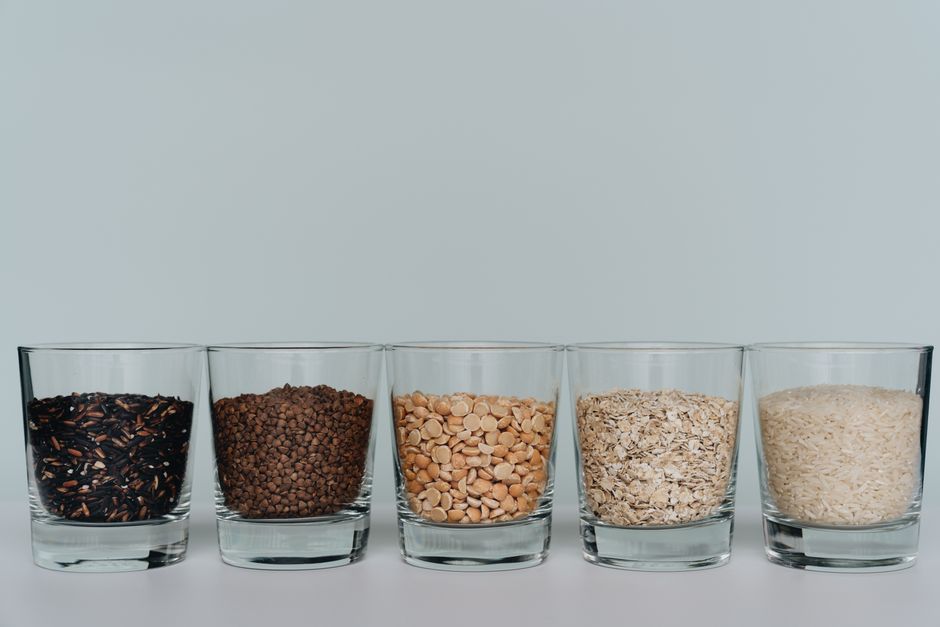
- Grains: quinoa, oats, and to a lesser degree, whole wheat and rice
That last category matters. Vegetables, grains, and even some fruits contain protein. The amounts are smaller, but they add up across a day. Someone eating a varied plant-based diet can meet protein needs without any animal products, though it takes more planning.
One clarification worth making: protein content alone does not make a food “healthy.” A food can be high in protein and also high in saturated fat, sodium, or added sugar. The package matters.
How Much Protein Do You Actually Need?
The Recommended Dietary Allowance for protein is 0.8 grams per kilogram of body weight per day for most healthy adults. For someone weighing 70 kilograms (about 154 pounds), that works out to 56 grams per day.
This is a minimum to prevent deficiency, not necessarily an ideal target. The distinction matters. The RDA was set to cover the needs of nearly all healthy people, with a margin built in. It is not a ceiling, and it is not a personalized prescription.
Certain groups have higher needs:
- Pregnant and breastfeeding women need more, though exact amounts vary by stage
- Older adults may need more to preserve muscle mass, a point supported by a growing body of research
- People recovering from burns, surgery, or illness often need significantly more
- Athletes and people doing regular resistance training typically need more than the RDA
For athletes, some sports nutrition guidelines suggest ranges closer to 1.2 to 2.0 grams per kilogram per day. These are general ranges from sports science literature, not fixed rules. Individual needs vary.
No clinical guidelines currently exist for precise protein dosing in infants beyond breast milk or formula, which are designed to meet their needs. Parents should follow pediatric guidance rather than calculating grams.
Animal vs Plant Protein: Does the Source Matter?
Both animal and plant proteins can meet your needs. The differences are real but often overstated in popular discussion.
Animal proteins are “complete,” meaning they contain all nine essential amino acids in proportions the body can use efficiently. Most plant proteins are lower in one or more essential amino acids. Soy is a notable exception and is considered a complete protein.
The old idea that you had to carefully combine plant foods at every meal to get complete protein has been largely abandoned. Your body maintains a pool of amino acids, so eating a variety of plant proteins across the day generally covers the gaps. This is well established in nutrition science.
What does differ is the rest of the package. Plant proteins come with fiber, vitamins, and phytochemicals. Animal proteins come with vitamin B12, heme iron, and zinc in forms the body absorbs more easily. Neither is universally superior — it depends on what else is in your diet.
| Protein Source | Protein per Typical Serving | Notes |
|---|---|---|
| Chicken breast (3 oz cooked) | About 26 grams | Complete protein, low saturated fat |
| Eggs (1 large) | About 6 grams | Complete protein |
| Greek yogurt (1 cup) | About 20 grams | Varies by brand and fat content |
| Lentils (1 cup cooked) | About 18 grams | High fiber, incomplete protein |
| Tofu (1/2 cup) | About 10 grams | Complete plant protein |
| Peanut butter (2 tbsp) | About 7 grams | High in fat and calories |
These values come from standard USDA nutrient data. They are approximate because preparation and brands vary.


Can You Eat Too Much Protein?
For most healthy adults, a higher protein intake within reasonable ranges is not harmful. The evidence does not support the idea that high protein diets damage healthy kidneys in people without pre-existing kidney disease.
That said, “more is better” is not supported either. Excess protein beyond what the body can use is either oxidized for energy or stored as fat. It does not automatically build more muscle.
People with chronic kidney disease often need to limit protein, and this should be managed by a doctor or dietitian. The same applies to certain liver conditions and some rare metabolic disorders.
Very high intakes — well above what most people eat — can cause digestive discomfort, and in some cases may affect hydration or mineral balance. These effects are generally seen at intakes far beyond typical diets.
What gets less attention: the source of protein may matter more than the total amount for long-term health. Diets heavy in processed meats have been linked to worse health outcomes in large observational studies, while diets emphasizing fish, poultry, legumes, and nuts tend to show better ones. This does not prove cause and effect, but the pattern is consistent across many studies.
How to Spot Protein Foods on a Nutrition Label
The nutrition facts panel lists protein in grams per serving. That number is what counts, not the marketing on the front of the package.
Front-of-package claims like “high protein” or “protein-packed” are not tightly regulated in the way you might expect. A food can carry those words with modest protein content. The label on the back is the reliable source.
A few practical markers:
- Check grams of protein per serving, not per package
- Look at serving size — it is often smaller than people assume
- Note the saturated fat and sodium alongside the protein
- Compare similar products directly rather than trusting claims
Protein powders and bars are a category of their own. Some contain substantial protein; others are closer to candy with added vitamins. There is no standard definition of what makes a product a “protein” product, so reading labels is the only reliable approach.
Do You Need Protein at Every Meal?
Spreading protein across meals appears to support muscle maintenance better than eating most of it at dinner. Research on muscle protein synthesis suggests that a moderate amount of protein per meal — often cited as around 20 to 30 grams — may be more effective than one large dose.
This is an active area of research, and the exact optimal amount per meal is not settled. What is clearer is that total daily intake matters most, and distribution is a secondary factor.
For most people, the practical takeaway is simple: include a protein source at each main meal rather than relying on a single large serving. This also tends to make meals more satisfying and helps stabilize appetite.
Breakfast is where many people fall short. Starting the day with eggs, yogurt, or a legume-based dish rather than a mostly carbohydrate meal is a common recommendation among dietitians, though the evidence for its unique benefits is not as strong as often presented.
Frequently Asked Questions
How many grams of protein do I need per day?
The RDA for most healthy adults is 0.8 grams per kilogram of body weight, which is about 56 grams for a 70-kilogram person. Needs are higher during pregnancy, illness recovery, and intense training.
Is peanut butter a protein food?
Yes, peanut butter provides about 7 grams of protein per 2-tablespoon serving. It is also high in fat and calories, so portion size matters.
Can I get enough protein without eating meat?
Yes, plant foods like beans, lentils, soy, nuts, and grains can meet protein needs when eaten in variety across the day. Plant-based eaters may need to pay more attention to total intake and to nutrients like vitamin B12 and iron.
Does eating more protein build more muscle?
Only up to a point. Muscle growth depends on resistance training and adequate total protein, but eating far more than your body can use does not add extra muscle.
