
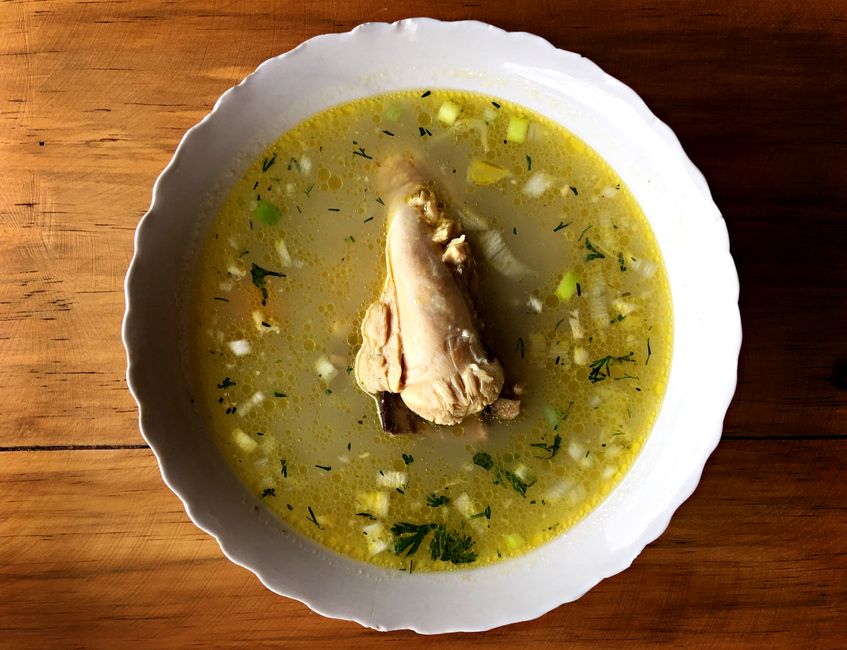
Chicken bouillon is a concentrated broth made from simmering chicken, vegetables, and seasonings, then dehydrated into cubes, powder, or paste. It is used to add savory flavor to soups, stews, rice dishes, and sauces. Think of it as instant chicken stock that dissolves in hot water.
What Exactly Is Chicken Bouillon Made Of?
Chicken bouillon typically contains cooked chicken meat and bones, salt, vegetables like onion and carrot, and seasonings such as turmeric and parsley. The ingredients are simmered for hours, then the liquid is strained and dehydrated. Most commercial bouillon cubes also contain palm oil, sugar, and monosodium glutamate (MSG) for flavor enhancement.
Some brands add yeast extract, which provides a similar savory taste as MSG. The exact recipe varies by manufacturer. If you check the label, you will usually find salt listed as the first or second ingredient. This is why bouillon is very high in sodium.
Homemade versions use only the broth, salt, and spices without added oils or preservatives. The basic process is the same: simmer, strain, and dry. The result is a concentrated flavor base that keeps for months in a sealed container.
How Is Chicken Bouillon Different From Chicken Broth and Stock?
Chicken broth is liquid. Chicken bouillon is dehydrated. Broth comes in cartons or cans and is ready to use. Bouillon requires you to add water before it becomes broth. One bouillon cube dissolved in one cup of hot water makes roughly one cup of broth.
Stock is made primarily from bones, while broth uses more meat. Bouillon can be made from either, but the dehydrated form is much more concentrated. The flavor of bouillon is often stronger and saltier than homemade broth because of the added salt and flavor enhancers.
Many cooks use the terms interchangeably in recipes, but they are not the same product. If a recipe calls for one cup of chicken broth, you can use one cup of water plus one bouillon cube or one teaspoon of bouillon powder. The final dish will be saltier, so adjust other salt in the recipe accordingly.
| Product | Form | Sodium per serving (1 cup prepared) | Shelf life (unopened) |
|---|---|---|---|
| Chicken bouillon cube | Solid cube | 700–900 mg | 1–2 years |
| Chicken bouillon powder | Granules | 600–800 mg | 1–2 years |
| Chicken broth (carton) | Liquid | 300–600 mg | 6–12 months |
| Chicken stock (carton) | Liquid | 200–500 mg | 6–12 months |
What Are the Health Concerns With Chicken Bouillon?
The main health concern is sodium content. One cube can contain nearly 900 milligrams of sodium. The American Heart Association recommends no more than 2,300 milligrams per day, with an ideal limit of 1,500 milligrams for most adults. One bowl of bouillon-based soup can use up more than half your daily sodium budget.
MSG is another concern for some people. MSG is a flavor enhancer that occurs naturally in foods like tomatoes and cheese. The FDA recognizes MSG as safe. Some people report headaches or flushing after eating MSG, but studies have not confirmed a consistent reaction in the general population. If you are sensitive, look for MSG-free bouillon.
Some bouillon products contain palm oil, which is high in saturated fat. A single cube has about one gram of saturated fat. This is not a major concern unless you eat multiple servings daily. The bigger issue is that palm oil production has environmental impacts, so some consumers avoid it for that reason.
Hydrolyzed vegetable protein and yeast extract appear in many brands. These provide savory flavor but can also contain glutamate, which acts similarly to MSG. For most people, these ingredients are safe. The evidence does not support claims that they cause harm in normal food amounts.





Does Chicken Bouillon Have Any Nutritional Benefits?
Chicken bouillon provides some nutrients from the chicken and vegetables used to make it. You get small amounts of protein, B vitamins, and minerals like potassium and magnesium. The amounts are minimal because the product is so concentrated and you use only a small quantity per serving.
Research published in the Journal of Agricultural and Food Chemistry found that chicken broth contains amino acids like glycine and proline, which support joint and skin health. Bouillon made from real chicken will contain these same amino acids, though in lower amounts than fresh broth because of the dehydration process.
The main nutritional benefit is hydration and electrolyte balance. When you dissolve bouillon in hot water, you get a warm, flavorful drink that provides sodium and potassium. This can be helpful for people who are dehydrated or who have low blood pressure.
Some people use chicken bouillon as a recovery drink after exercise. The sodium helps replace what you lose through sweat. The warm liquid can also be soothing for sore throats or cold symptoms. These uses are widely reported anecdotally, but strong clinical evidence is limited.
How Should You Choose and Use Chicken Bouillon?
Read the nutrition label before buying. Look for products with less than 500 milligrams of sodium per serving if you are watching your salt intake. Some brands make low-sodium versions with 300–400 milligrams per serving. Check the ingredient list for MSG, palm oil, and artificial colors if these matter to you.
Store bouillon cubes and powder in a cool, dry place. Humidity can cause cubes to become sticky or crumble. Keep the container sealed tightly. Properly stored bouillon lasts 1–2 years past its production date. If the color darkens or the smell changes, throw it away.
Use bouillon in these ways:
- Dissolve in hot water for instant broth as a soup base
- Add to rice or quinoa cooking water for flavored grains
- Mix into ground meat for extra savory flavor in burgers or meatballs
- Stir into sauces and gravies to deepen the taste
- Use as a seasoning for roasted vegetables or potatoes
Start with less than the package suggests. You can always add more, but you cannot remove salt. For most recipes, half a cube or half a teaspoon of powder is enough to add flavor without making the dish too salty. Taste as you go.
What Are Common Misconceptions About Chicken Bouillon?
One common belief is that bouillon cubes are the same as stock cubes. They are not. Stock cubes are made from bones and have less seasoning. Bouillon cubes contain more salt and spices. Using a bouillon cube where a recipe calls for stock can result in an overly salty dish.
Another misconception is that all bouillon contains MSG. Many brands now offer MSG-free versions. The ingredient list will tell you. If you see “monosodium glutamate” or “yeast extract,” the product contains glutamate. If you see neither, it is MSG-free.
Some people think bouillon is a complete meal replacement. It is not. Bouillon provides flavor, some electrolytes, and minimal nutrients. It does not contain enough protein, fiber, or calories to serve as a meal. Using it as a base for soup with vegetables and protein is fine, but drinking plain bouillon does not replace a balanced meal.
A persistent myth is that bouillon causes cancer. No credible evidence supports this. The World Health Organization has classified processed meat as a probable carcinogen, but bouillon is not processed meat. Bouillon is a dehydrated broth. The ingredients are generally recognized as safe by food safety authorities worldwide.
Can You Make Chicken Bouillon at Home?
Yes, homemade chicken bouillon is simple to make. You simmer chicken bones, meat scraps, and vegetables in water for several hours. Strain the liquid, then simmer it again until it reduces to a thick syrup. Pour the syrup into ice cube trays and freeze. Once frozen, store the cubes in a freezer bag.
Another method uses a dehydrator. Spread the reduced broth on a dehydrator tray lined with parchment paper. Dry at 135°F for 8–12 hours until brittle. Break into pieces and store in an airtight jar. This produces a powder similar to commercial bouillon without additives.
Homemade bouillon has less sodium than store-bought because you control the salt. It also contains no preservatives or artificial ingredients. The trade-off is shorter shelf life. Homemade bouillon lasts about 6 months in the freezer and 1 month in the pantry if fully dried. It will not stay shelf-stable as long as commercial products.
If you make your own, label the container with the date. Use clean utensils each time you scoop some out. If mold appears, discard the entire batch. Proper hygiene prevents bacterial growth in homemade preserved foods.
Frequently Asked Questions
Is chicken bouillon the same as chicken broth?
No. Chicken bouillon is dehydrated and concentrated, while chicken broth is liquid and ready to use. You add water to bouillon to make broth.
Can chicken bouillon go bad?
Yes. Bouillon can absorb moisture, grow mold, or lose flavor over time. Store it in a cool, dry place and check for changes in smell or appearance before use.
How much sodium is in one chicken bouillon cube?
Most cubes contain 700 to 900 milligrams of sodium. Low-sodium versions have 300 to 400 milligrams per serving. Check the label for exact amounts.
Is MSG in chicken bouillon harmful?
The FDA considers MSG safe for the general population. Some people report mild symptoms like headache or flushing, but studies have not confirmed a consistent reaction.
