

You have likely heard the term “cavitation” used in discussions about ultrasound. It sounds concerning. But in standard medical imaging, cavitation is not something you need to worry about. Cavitation refers to the formation of tiny gas bubbles in tissue or fluid caused by the pressure changes from ultrasound waves. In diagnostic ultrasound, the energy levels are kept low enough that harmful cavitation does not occur. Decades of research and millions of scans have shown that medical ultrasound is safe when used correctly by trained professionals.
What Is Cavitation in Ultrasound?
Cavitation is the physical process where rapid pressure changes in a liquid create small vapor-filled cavities or bubbles. When ultrasound waves pass through body tissues, they produce alternating high and low pressure. If the pressure drop is strong enough, gas bubbles can form from dissolved gases already in the fluid. These bubbles may then collapse or oscillate.
Two types of cavitation exist: stable and inertial. Stable cavitation means bubbles expand and contract rhythmically without collapsing. This is generally harmless. Inertial (or transient) cavitation is more forceful — bubbles grow quickly then collapse violently, producing high local temperatures and pressure. It is inertial cavitation that could potentially damage tissue. But in diagnostic ultrasound, the intensity and frequency are set to avoid reaching the threshold for inertial cavitation.
How Does Cavitation Happen During an Ultrasound?
Ultrasound waves are mechanical pressure waves. As they travel through the body, they cause molecules to vibrate. The pressure at any point cycles between compression (high) and rarefaction (low). If the rarefaction phase drops pressure enough, gas comes out of solution and forms a bubble.
Whether cavitation actually occurs depends on several factors: the frequency of the ultrasound, the peak negative pressure, the duration of exposure, and the type of tissue. Tissues that contain pre-existing gas pockets — such as lung or intestine — are more susceptible. For this reason, ultrasound technicians avoid scanning over air-filled organs for long periods. In solid organs like the liver or uterus, the risk of cavitation is extremely low because there are few gas nuclei for bubbles to form.
Is Cavitation Dangerous in Medical Imaging?
For diagnostic ultrasound, the answer is no — cavitation is not considered a safety concern. The US Food and Drug Administration (FDA) regulates ultrasound equipment and sets limits on acoustic output. These limits are well below levels known to cause inertial cavitation in soft tissue.
The American Institute of Ultrasound in Medicine (AIUM) has stated that no confirmed biological effects from cavitation have been observed in diagnostic ultrasound in humans. Thousands of peer-reviewed studies support this conclusion. The very few laboratory experiments that have shown cavitation-related damage involved exposure levels many times higher than those used in medical imaging, or they used contrast agents containing stabilized microbubbles.
It is important to distinguish between diagnostic ultrasound and therapeutic ultrasound. Therapeutic applications — such as high-intensity focused ultrasound (HIFU) for tumor ablation — intentionally produce thermal and cavitational effects to destroy tissue. That is a different modality entirely.


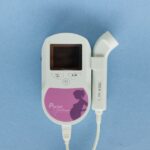


Are There Any Risks of Cavitation in Pregnancy Ultrasounds?
Prenatal ultrasound is one of the most thoroughly studied medical procedures. No evidence has shown that diagnostic ultrasound causes cavitation in fetal tissues. The fetus is surrounded by amniotic fluid, which transfers ultrasound waves efficiently without creating gas pockets.
Still, guidelines recommend using ultrasound only when medically needed — not for keepsake videos or non-medical purposes. The principle of ALARA (As Low As Reasonably Achievable) is standard practice. Technicians adjust power and time to get the necessary images while minimizing any theoretical risk. The thermal index (TI) and mechanical index (MI) are displayed on modern ultrasound machines. The MI specifically estimates the potential for cavitation. For obstetric scans, the MI is typically kept below 1.0, well below the threshold where cavitation could occur.
What Safety Standards Are in Place to Prevent Harm?
Ultrasound devices sold in the US must meet FDA limits. The key output limit is a spatial-peak temporal-average intensity (ISPTA) of no more than 720 mW/cm² for most imaging modes. This is roughly one-tenth the intensity needed to raise tissue temperature by 1°C. The mechanical index (MI) is also displayed during scanning; it is a calculated value that reflects the likelihood of cavitation. Manufacturers must keep the MI below 1.9 for most applications, and clinical protocols usually stay much lower.
The AIUM publishes regular safety statements. Their official position is that no confirmed adverse effects from diagnostic ultrasound have been reported in humans. The World Health Organization has also reviewed the evidence and concluded that diagnostic ultrasound is safe when used appropriately. These organizations continue to monitor new research, but the safety record remains strong after more than 50 years of clinical use.
Does Therapeutic Ultrasound Cause Cavitation Differently?
Yes. Therapeutic ultrasound uses much higher intensities — often 100 to 10,000 times greater than diagnostic levels. These devices intentionally produce heat and sometimes cavitation to treat conditions like kidney stones (lithotripsy), tumors, or uterine fibroids. Lithotripsy, for example, uses shock waves to break up stones; cavitation is part of the mechanism. That is a controlled medical procedure with known risks and benefits, and it is performed under careful monitoring.
Low-intensity therapeutic ultrasound for physical therapy (e.g., for muscle pain) also operates at higher outputs than imaging, but still within safety margins. Some cosmetic devices claiming to reduce fat via “ultrasound cavitation” are marketed, but these are not medical imaging devices and are not covered by the same FDA regulations for diagnostic safety. You should approach such treatments with caution and discuss them with a healthcare provider.
Frequently Asked Questions
Frequently Asked Questions
Can you feel cavitation during an ultrasound?
No. Diagnostic ultrasound does not produce cavitation that you can feel. The energy levels are too low. Any sensation you feel during a scan usually comes from the transducer pressure against your skin or from a full bladder during pelvic exams.
Does contrast ultrasound increase the risk of cavitation?
Microbubble contrast agents can make cavitation more likely because they provide pre-existing gas bubbles. However, studies show that at the low mechanical indices used for contrast imaging, any bubble activity is stable and harmless. Serious events are extremely rare.
Is ultrasound safe for all patients including those with metal implants?
Yes, ultrasound is safe for people with metal implants. Unlike MRI, ultrasound does not use magnetic fields. Metal implants do not pose a heating or cavitation risk. The main concern with implants is that they can block the sound beam, making images hard to obtain.
Should I worry about ultrasound cavitation for my baby?
No. Obstetric ultrasound has been used for decades with no proven harm from cavitation. The mechanical index is kept low, and scans are performed only when medically indicated. Follow your doctor’s recommendations and ask about the reason for any scan.
