
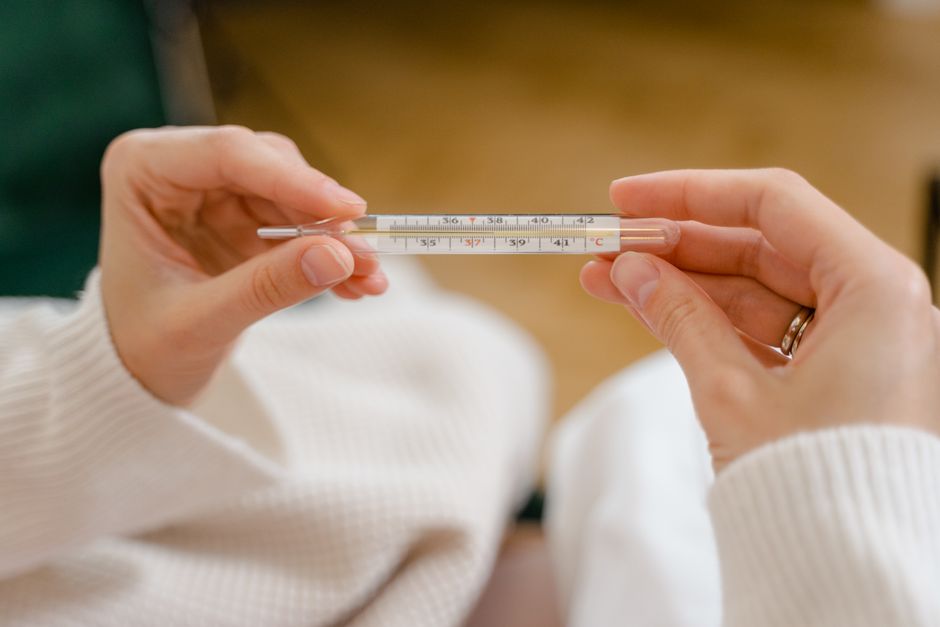
If you grew up in the United States, you think about body temperature in Fahrenheit. A normal reading is around 98.6°F. In Celsius, that same reading is 37°C. Most of the world measures body temperature in Celsius, and most medical research uses it too. So if you see a number like 38.5°C, you are looking at a fever — but it helps to know exactly where that falls.
Body temperature in Celsius is simply the same body heat measured on a different scale. Normal human body temperature is generally considered to be around 37°C (98.6°F). But “normal” is a range, not a single number, and it shifts throughout the day. Understanding that range — and what a number above or below it means — is more useful than memorizing one figure.
What Is Body Temp In Celsius?
Body temperature in Celsius is the measure of your internal body heat on the Celsius scale, where water freezes at 0°C and boils at 100°C. Human body temperature sits close to 37°C at rest.
The Celsius scale is used across most of the world and in nearly all medical research. That is worth knowing because when you read a study or a health guideline from another country, the numbers will be in Celsius. A reading of 37°C and a reading of 98.6°F describe the same thing.
One detail that surprises many people: 98.6°F was never meant to be a fixed target. It came from a 19th-century German physician, Carl Wunderlich, who averaged readings from thousands of patients. Later research using more accurate thermometers found that the true average is a bit lower — closer to 36.6°C (about 97.9°F) in some large studies. The 37°C figure stuck because it is simple and close enough for everyday use.
What Is a Normal Body Temperature in Celsius?
A normal resting body temperature generally falls between about 36.1°C and 37.2°C (97°F to 99°F). Anything inside that window is usually not a concern.
Temperature varies by person, by time of day, and by how it is measured. A reading taken in the early morning tends to be lower. A reading in the late afternoon or evening tends to be higher. The difference across a single day can be roughly 0.5°C (about 1°F) in many people.
Where you measure also matters. Here is how the common methods compare:
| Method | Typical Normal Range |
|---|---|
| Oral (mouth) | About 36.4°C to 37.2°C |
| Rectal | About 36.6°C to 37.5°C |
| Axillary (armpit) | About 35.5°C to 37.0°C |
| Ear (tympanic) | About 35.8°C to 37.5°C |
Rectal readings tend to run slightly higher and are often considered the most accurate in infants and young children. Armpit readings tend to run lower and are the least precise. Ear thermometers are convenient but can be thrown off by earwax or poor positioning.
Age matters too. Older adults often run cooler than younger adults. Infants and young children can run slightly warmer. This is normal physiology, not a sign of anything wrong.
What Counts as a Fever in Celsius?
A fever is generally defined as a temperature of 38°C (100.4°F) or higher. That threshold is used consistently in clinical settings around the world.
Fever is not a disease. It is a response. When your immune system detects an infection, it releases signaling molecules that tell your body to raise its internal set point. A higher temperature can make it harder for some bacteria and viruses to multiply and can help certain immune cells work faster. So a fever is often a sign that your body is doing its job.
Fever ranges are commonly described like this:
- Low-grade fever: roughly 38°C to 38.9°C (100.4°F to 102°F)
- Moderate fever: roughly 39°C to 39.9°C (102.2°F to 103.8°F)
- High fever: 40°C (104°F) and above
How high a fever goes does not always match how serious the illness is. A mild infection can produce a high fever in a child, while a serious infection in an older adult might cause only a mild rise — or none at all. That is one reason doctors look at the whole picture, not just the number.





What About Low Body Temperature in Celsius?
A body temperature below 35°C (95°F) is considered hypothermia. This is a medical emergency and needs immediate attention.
Hypothermia happens when your body loses heat faster than it can produce it. It can develop in cold weather, but it can also happen indoors, especially in older adults, people who are malnourished, or anyone exposed to cold water. Symptoms progress as temperature drops — shivering first, then confusion, slurred speech, drowsiness, and eventually loss of consciousness.
Between normal and hypothermia, some people run consistently low without any problem. A resting temperature of 35.8°C or 36°C can be perfectly normal for a given person. The concern is a drop from that person’s own baseline, or a reading that keeps falling.
An important distinction: “low body temperature” in everyday talk often means a reading slightly below 36°C. That is not the same as clinical hypothermia. Context — how the person feels, how the reading was taken, and whether it is dropping — matters more than a single number.
Why Does Body Temperature Change During the Day?
Your body temperature follows a daily rhythm controlled by your internal clock, a group of cells in the brain that regulates sleep, hormones, and temperature. This is why the same person can read 36.3°C in the morning and 37.1°C in the evening.
The pattern is fairly consistent. Temperature is lowest in the early morning, around 4 a.m. for many people, and highest in the late afternoon or early evening. The swing is usually less than 1°C.
Other things shift the number too:
- Physical activity raises temperature temporarily
- Digesting a large meal can cause a small rise
- Ovulation raises basal temperature slightly in women
- Hot environments and heavy clothing can push a reading up
- Certain medications can lower or raise it
This is why a single reading is rarely meaningful on its own. A doctor is more interested in whether a temperature is rising, falling, or staying steady — and how the person actually feels.
How Do You Convert Celsius and Fahrenheit?
The two scales are easy to convert once you know the formula. To go from Celsius to Fahrenheit, multiply by 1.8 and add 32. To go from Fahrenheit to Celsius, subtract 32 and divide by 1.8.
Here are the numbers worth memorizing:
| Celsius | Fahrenheit | What It Means |
|---|---|---|
| 35.0°C | 95.0°F | Hypothermia threshold |
| 36.1°C | 97.0°F | Low end of normal |
| 37.0°C | 98.6°F | Standard “normal” |
| 37.2°C | 99.0°F | High end of normal |
| 38.0°C | 100.4°F | Fever threshold |
| 39.0°C | 102.2°F | Moderate fever |
| 40.0°C | 104.0°F | High fever |
If you only remember two numbers, remember these: 37°C is normal, and 38°C is a fever. Everything else is a matter of degree.
When Should You Take a Temperature Seriously?
A number alone rarely tells you what to do. How someone looks and acts matters just as much as the reading on the thermometer.
Seek medical care for a fever in an infant under 3 months old, for any fever above 40°C (104°F), or for a fever that comes with severe headache, stiff neck, rash, trouble breathing, confusion, or seizures. Those signs point to something that needs prompt evaluation.
For adults, a fever that lasts more than a few days, keeps returning, or comes with worsening symptoms is worth a call to a doctor. A temperature that drops below 35°C is also a reason to get help right away.
One clarification worth making: treating a fever does not always shorten an illness, and in some cases fever-reducing medication can mask important symptoms. Some clinicians recommend letting a mild fever run its course in otherwise healthy people, while others treat for comfort. This is a genuine area of debate, and the right choice depends on the person, their age, and their overall health. It is a good thing to discuss with a doctor rather than decide from a single number.
Frequently Asked Questions
Is 37°C a normal body temperature?
Yes, 37°C (98.6°F) is considered a standard normal body temperature. However, normal is a range — most healthy adults fall between about 36.1°C and 37.2°C.
What is 38°C in Fahrenheit?
38°C equals 100.4°F, which is the general threshold for a fever. Anything at or above this reading is usually considered a fever in clinical settings.
Is 35.5°C too low?
A reading of 35.5°C (about 95.9°F) is below the typical normal range but not yet in hypothermia territory, which starts below 35°C. A single low reading is less concerning than one that keeps dropping or comes with shivering, confusion, or weakness.
Why do I feel feverish but my temperature is normal?
Feeling hot or chilled does not always match the thermometer. Body temperature shifts through the day, and sensations of warmth or cold can come from hormone changes, anxiety, or the early stages of an illness before the number rises.
