
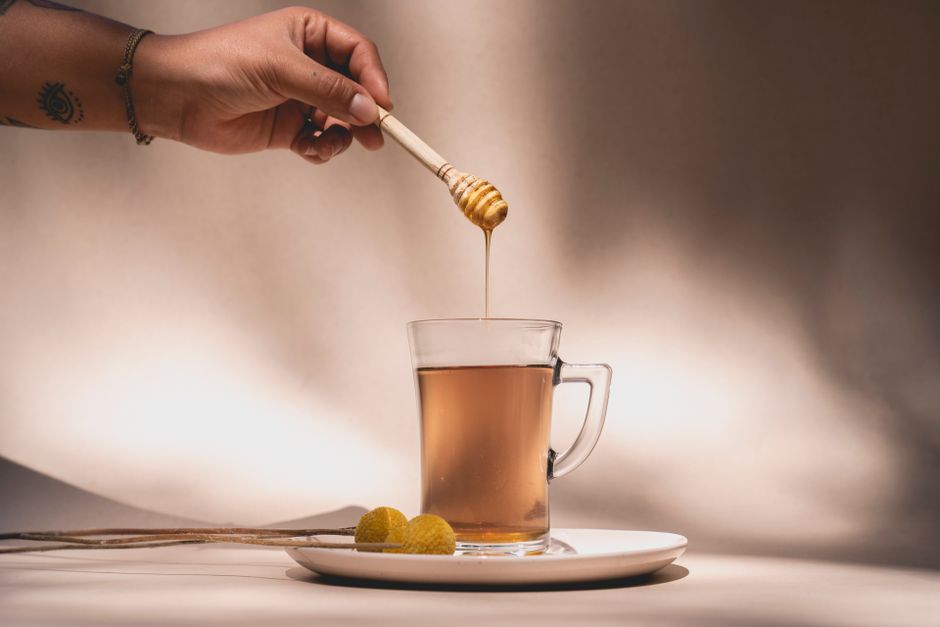
Honey is a sweet, thick liquid made by bees from flower nectar. People have used it as food and as a traditional remedy for thousands of years. Modern research shows honey has real antibacterial properties and can help with certain types of wounds and coughs. But it is still mostly sugar, and many popular health claims about it go far beyond what studies actually support.
What Is Benefits Of Honey? The Basics
Honey is roughly 80 percent sugar and about 18 percent water, with small amounts of other compounds. Those minor compounds include enzymes, amino acids, organic acids, minerals, and plant chemicals called flavonoids and phenolic acids. These are the substances behind most of honey’s proposed health effects.
The sugar itself is a mix of glucose and fructose. That matters because it explains why honey raises blood sugar, provides calories, and behaves in the body much like other sweeteners, even though it is often marketed as a healthier alternative to table sugar.
What makes honey unusual is its physical and chemical makeup. It is acidic, it holds very little water, and it contains hydrogen peroxide produced by an enzyme bees add during nectar collection. Those three traits together create an environment where many bacteria cannot survive. This is not folklore. It is a measurable property that has been studied in laboratories for decades.
What honey is not is a cure-all. Claims about honey treating cancer, reversing diabetes, or replacing antibiotics are not supported by clinical evidence. The gap between what honey does well and what it is marketed to do is wide.
How Does Honey Actually Fight Bacteria?
Honey’s antibacterial activity comes from several overlapping mechanisms, not one single ingredient. Understanding them helps separate real effects from exaggerated ones.
- Low water content. Honey is a supersaturated sugar solution. Bacteria need water to grow, and honey pulls water out of bacterial cells through osmosis, which kills or disables them.
- Acidity. Honey has a pH around 3.9, acidic enough to slow the growth of many pathogens.
- Hydrogen peroxide. The enzyme glucose oxidase, added by bees, produces small amounts of hydrogen peroxide when honey is diluted. This is a slow, steady release rather than a concentrated dose.
- Plant compounds. Flavonoids and phenolic acids from the nectar source contribute additional antimicrobial and antioxidant activity. The type of flower matters here, which is why honey from different plants varies so much.
Manuka honey, produced in New Zealand from the nectar of the manuka bush, has received the most research attention. It contains a compound called methylglyoxal, which adds antibacterial strength beyond what hydrogen peroxide provides. Not all honey contains meaningful amounts of this compound.
This is where a common misunderstanding shows up. The antibacterial activity measured in a lab dish does not automatically translate into a treatment for infections inside the human body. Honey applied to skin behaves very differently from honey swallowed and diluted by stomach acid and digestive enzymes.
What Does Research Show About Honey and Wounds?
Wound care is the area where honey has the strongest clinical support. Medical-grade honey is used in some clinical settings for certain wounds, including burns and chronic ulcers.
Research published in peer-reviewed journals has found that honey dressings can help clear infection and support healing in some wound types, particularly when compared with standard dressings in specific situations. Results vary by wound type, honey type, and study design. The evidence is not uniform across all wounds.
An important detail: the honey used in clinical wound care is sterilized and standardized. It is not the jar from your kitchen. Regular honey can contain bacterial spores and is not sterile. Applying grocery store honey to an open wound is not recommended.
For minor cuts and scrapes, standard wound care with clean water, gentle cleansing, and a sterile bandage remains the established approach. Honey is not a first-line home treatment for typical minor injuries.





Can Honey Help With Coughs?
Honey has modest evidence for reducing cough frequency and severity, particularly in children over one year old. Several studies have compared honey with over-the-counter cough syrups and found honey performed at least as well, and in some cases better, for nighttime cough.
The mechanism is not fully understood. Honey coats the throat, which may soothe irritation. Its thickness and sweetness may also trigger saliva production and calm the cough reflex. Some researchers suggest the effect may be partly placebo, which does not make it useless but does mean the benefit may be smaller than it appears.
Honey is not a treatment for the underlying cause of a cough. A cough from a viral infection, allergies, asthma, or reflux needs to be addressed at its source. Persistent coughing lasting more than a few weeks should be evaluated by a clinician.
Can Honey Help With Allergies?
Local honey is often promoted as a way to reduce seasonal allergy symptoms. The idea is that eating honey made from local flowers exposes you to small amounts of local pollen, gradually building tolerance.
This reasoning has a flaw. Bees collect pollen from flowers, not from the wind-pollinated plants like ragweed, grasses, and trees that cause most seasonal allergies. The pollen in honey is largely the wrong kind. And the amounts present are tiny.
No well-designed clinical trials have confirmed that eating honey reduces allergy symptoms. Some small studies have looked at this question, but the evidence remains weak and inconsistent. If you have seasonal allergies, honey is not a substitute for proven treatments, and it is not a substitute for avoiding known allergens.
Is Honey Healthier Than Sugar?
Honey is not a low-calorie food, and it is not a low-sugar food. One tablespoon contains about 64 calories and roughly 17 grams of sugar. Table sugar contains about 49 calories and 12.6 grams of sugar in the same volume. Honey is slightly sweeter, so people sometimes use less, but the difference is small.
Both honey and sugar raise blood sugar. Honey has a slightly lower glycemic index than table sugar in some measurements, but this varies widely by honey type and does not make it suitable for unrestricted use in people with diabetes.
Honey does contain trace amounts of antioxidants, vitamins, and minerals that table sugar lacks. The amounts are small. You would need to consume large quantities to get meaningful nutrition from them, and the sugar load would outweigh any benefit.
The honest position: honey is a slightly more complex sweetener than refined sugar, but it is still added sugar. Dietary guidelines recommend limiting added sugars, and honey counts toward that limit.
Who Should Not Eat Honey?
Infants under 12 months old should never be given honey. This is a firm, well-established safety rule, not a precaution.
Honey can contain spores of Clostridium botulinum, the bacterium that causes botulism. In older children and adults, the digestive system prevents these spores from causing harm. In infants, the gut is not developed enough to do this, and the spores can germinate and produce toxin. Infant botulism is rare but serious.
Other groups who should be cautious include people with diabetes, who need to account for honey’s sugar content in their overall carbohydrate intake, and people with pollen allergies, who may react to trace pollen in raw honey. Reactions are uncommon but possible.
Honey should also not be given to children under one year even in baked or cooked form, because cooking does not reliably destroy botulinum spores.
What About Raw Honey vs Regular Honey?
Raw honey is honey that has not been heated or finely filtered. Regular commercial honey is typically heated to make it easier to pour and filtered to remove particles. The heating process can reduce some enzymes and antioxidants, but the practical difference is smaller than marketing suggests.
Both raw and regular honey contain the same basic sugars and calories. Both carry the same infant botulism risk. Raw honey is not safer or more medicinal for adults in any established way.
Some people prefer raw honey for taste or texture. That is a reasonable personal choice. It is not a health upgrade backed by clinical evidence.
How Should Honey Be Used?
Honey works best as a food, not a medicine. Used as a sweetener in tea, on toast, or in cooking, it is a pleasant ingredient with a long history. Used as a cough soother for adults and children over one year, it has modest supporting evidence.
For wound care, use only medical-grade honey products and only under clinical guidance. Do not apply kitchen honey to open wounds.
For everything else, treat honey claims with the same skepticism you would apply to any other sweetener. It is not a superfood. It is not a drug. It is a natural product with a few real properties and a lot of overstated ones.
Frequently Asked Questions
Is honey good for you?
Honey has real antibacterial properties and modest evidence for soothing coughs, but it is mostly sugar and should be treated as an added sugar in your diet. It is not a superfood and does not prevent or cure disease.
Can I give honey to my baby?
No. Honey should never be given to infants under 12 months old because of the risk of infant botulism, a rare but serious illness caused by bacterial spores honey can contain.
Does local honey help with allergies?
No well-designed clinical trials have confirmed that eating local honey reduces seasonal allergy symptoms. Bees collect flower pollen, not the wind-borne pollen that causes most allergies.
Is raw honey healthier than regular honey?
Raw honey and regular honey have the same sugars and calories, and both carry the same infant botulism risk. Raw honey is not a meaningful health upgrade for adults.
