
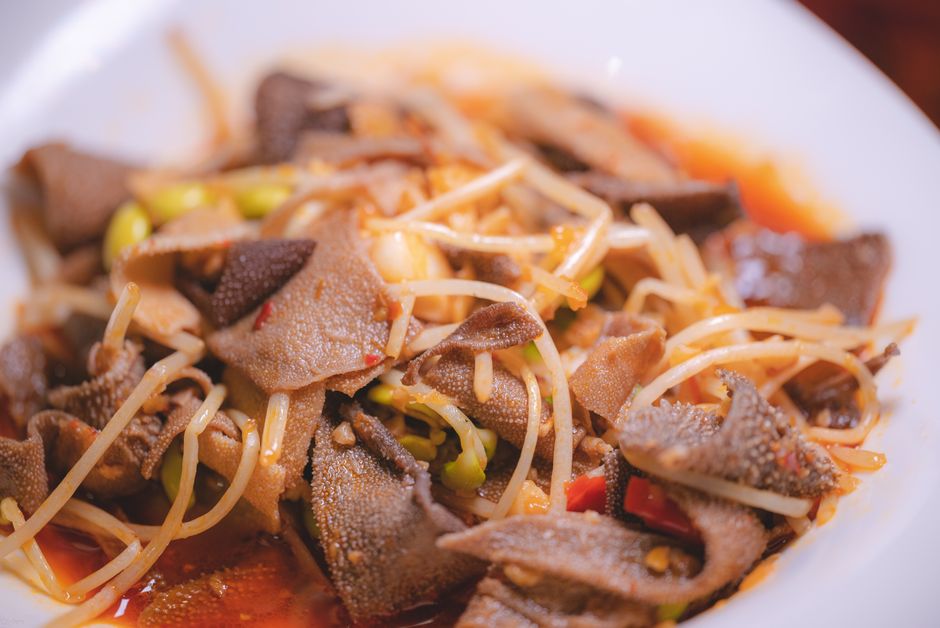
Beef tripe is the stomach lining of a cow, specifically the edible lining from one of the cow’s four stomach chambers. It is a type of organ meat that has been eaten for centuries in many cultures around the world, especially in soups, stews, and traditional dishes. You will most often find it sold as “honeycomb tripe” because of its distinctive, honeycomb-like pattern on one side.
What Exactly Is Beef Tripe Made Of?
Beef tripe is muscle tissue, just like a steak or a roast, but it comes from a cow’s stomach wall. The cow has four stomachs: the rumen, the reticulum, the omasum, and the abomasum. Tripe usually comes from the first two chambers. The rumen gives you “plain” or “smooth” tripe, while the reticulum gives you “honeycomb” tripe, which is the most common type sold in stores.
Before it reaches your kitchen, raw tripe goes through a thorough cleaning and bleaching process. It is boiled, scraped, and rinsed to remove any remaining stomach contents. The final product is a pale, slightly rubbery, neutral-tasting meat that takes on the flavor of whatever it is cooked with. The texture is chewy, which some people love and others find challenging.
From a nutritional standpoint, tripe is a lean source of protein. A 3-ounce serving provides about 10 grams of protein and only about 80 calories. It is also rich in certain B vitamins, selenium, and zinc. However, it is very low in fat and carbohydrates, making it a nutrient-dense option for those who can handle the texture.
What Does Beef Tripe Taste Like?
Beef tripe has a very mild, almost bland flavor on its own. It does not taste strongly like liver or kidney, which are more pungent organ meats. The flavor is best described as “beefy” but very subtle. Most of the taste in a tripe dish comes from the broth, spices, and other ingredients it is cooked with.
The texture is what people notice most. It is chewy and slightly spongy, similar to calamari or a firm mushroom. Honeycomb tripe has a slightly more delicate, almost lacy texture compared to plain tripe. If it is cooked properly — usually simmered for a long time — it becomes tender but still holds its shape. Overcooking can make it rubbery and tough.
Many cultures have mastered the art of making tripe taste excellent. In Mexican cuisine, it is used in menudo, a spicy soup. In Italian cooking, it appears in trippa alla romana with tomato sauce and cheese. In Asian hot pots, it is added for texture and absorbs the rich broth flavors. The key is always long, slow cooking with strong seasonings.
How Is Beef Tripe Prepared and Cooked?
Most store-bought tripe is already cleaned, bleached, and partially cooked. You do not need to clean it further, but you should rinse it under cold water. Some cooks soak it in milk or salted water for an hour to help remove any remaining odor and to tenderize it slightly. This step is optional but recommended for first-timers.
Here is a quick overview of common cooking methods:
- Braising or Stewing: The most common method. Simmer tripe in broth, tomatoes, or wine for 1-2 hours until tender. This is how you make menudo or Italian-style tripe.
- Boiling: Some recipes call for boiling tripe before adding it to other dishes. Boil for 30-60 minutes, then drain and add to soups or stir-fries.
- Frying or Sautéing: After boiling or braising, tripe can be sliced thinly and pan-fried until crispy on the edges. This is popular in some Asian street food dishes.
- Grilling: Pre-cooked tripe can be grilled briefly for a smoky flavor. It needs to be tender before it hits the grill, or it will be too tough.
The most important rule is to cook tripe low and slow. Quick cooking methods like high-heat searing will leave it rubbery and unpleasant. A slow simmer of at least 45 minutes to 2 hours is ideal. The tripe is ready when it is tender enough to cut with a fork but still holds its shape.





What Are the Health Benefits of Eating Beef Tripe?
Beef tripe is a nutrient-dense food, meaning it provides a lot of vitamins and minerals for relatively few calories. It is an excellent source of vitamin B12, which is crucial for nerve function and red blood cell production. A single serving can provide over 20% of your daily B12 needs. It also contains selenium, a mineral that supports thyroid function and acts as an antioxidant.
Research published in the Journal of Food Composition and Analysis has shown that organ meats like tripe are among the most nutrient-rich foods available. Tripe is particularly high in zinc, which is important for immune health and wound healing. It also provides a good amount of phosphorus, which works with calcium to build strong bones and teeth.
However, there are some important caveats. Tripe is very low in fat, which sounds good, but it also means it is low in fat-soluble vitamins like A, D, E, and K. It is not a complete source of nutrition on its own. Additionally, tripe is high in cholesterol. A 3-ounce serving contains about 80-100 milligrams of cholesterol. For most people, dietary cholesterol is not the main driver of blood cholesterol, but if you have specific health conditions like familial hypercholesterolemia, you should discuss this with your doctor.
One non-obvious point: tripe is a fantastic source of collagen and gelatin. When you slow-cook tripe, these compounds break down into the broth, making it rich and nourishing. Collagen supports skin, joint, and gut health. This is one reason why traditional bone broths and tripe soups have been valued for centuries.
How Does Beef Tripe Compare to Other Meats?
To give you a clearer picture, here is a comparison of tripe with other common meats per 3-ounce cooked serving:
| Nutrient | Beef Tripe | Beef Sirloin Steak | Chicken Breast |
|---|---|---|---|
| Calories | 80 | 180 | 140 |
| Protein | 10g | 25g | 26g |
| Fat | 3g | 8g | 3g |
| Vitamin B12 | High | Moderate | Low |
| Zinc | High | Moderate | Low |
| Cholesterol | 80-100mg | 70mg | 70mg |
As you can see, tripe is lower in calories and protein than lean muscle meats. It is not a replacement for steak if you are trying to build muscle. But it is a very efficient way to get specific nutrients like B12, zinc, and selenium without many calories. It also provides collagen, which muscle meats do not in significant amounts.
One common misconception is that tripe is “just filler” or has no nutritional value. This is not true. While it is lower in protein than steak, it is far from empty calories. Its nutrient profile is distinct and valuable, especially for people looking for lean sources of trace minerals. The collagen content is a genuine benefit that you will not get from a chicken breast.
Common Misconceptions About Beef Tripe
A few persistent myths about tripe deserve clarification. The first is that tripe is dirty or unsanitary. As mentioned earlier, commercial tripe is thoroughly cleaned, bleached, and inspected. It is as safe as any other meat product from a reputable supplier. The stomach of a healthy cow is a clean organ, and the cleaning process removes any residual material.
Another myth is that tripe tastes like cow stomach. In reality, it has almost no flavor on its own. The “stomach” taste is a result of improper cleaning or very short cooking times. Properly prepared tripe simply tastes like the broth or sauce it is cooked in. If you have had a bad tripe experience, it was likely due to poor preparation, not the ingredient itself.
Some people also believe that tripe is a “superfood” that can cure digestive issues. There is no strong clinical evidence that tripe alone can treat any medical condition. It is a healthy food that supports general nutrition, but it is not a magic bullet. Claims that it “heals the gut” are overblown. The collagen and gelatin in tripe may support gut health as part of a balanced diet, but they are not a treatment for conditions like leaky gut syndrome, which itself is a debated diagnosis in mainstream medicine.
Frequently Asked Questions
Is beef tripe the same as stomach lining?
Yes, beef tripe is the edible lining of a cow’s stomach, specifically from the first two stomach chambers known as the rumen and reticulum.
Can you eat beef tripe raw?
No, you should never eat raw beef tripe because it may contain harmful bacteria and parasites that are only killed by thorough cooking.
Does beef tripe need to be bleached?
Commercially sold tripe is already bleached and cleaned, but if you buy unbleached tripe from a butcher, you must clean and boil it yourself before cooking.
Is beef tripe healthy for weight loss?
Yes, tripe is low in calories and fat while providing protein and nutrients, making it a good option for weight loss when part of a balanced diet.
