
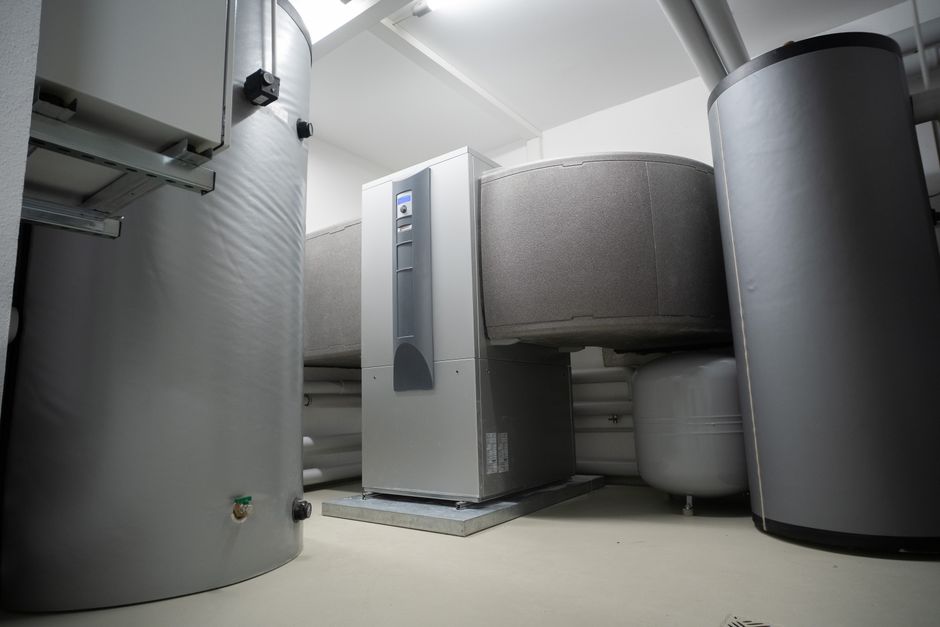
If you have ever noticed a small light on your heat pump thermostat that says “Aux” or “Aux Heat,” you are looking at one of the most misunderstood features of a home heating system. Aux heating, short for auxiliary heating, is a backup heat source that turns on when your heat pump cannot keep up with demand on its own. It is not a malfunction, and it is not a sign that your heat pump has failed. It is a built-in second stage of heat that most systems rely on at some point.
What makes aux heat confusing is that it works differently from the heat pump itself. A heat pump moves heat from outside air into your home, even when it is cold outdoors. Aux heat usually makes new heat instead, and it does so by burning electricity at a much higher rate. That difference matters for your comfort, your energy bill, and how you should respond when you see that light come on.
What Is Aux Heating On Your Heat Pump?
Aux heating is a secondary heat source that activates when your heat pump alone cannot meet the thermostat’s set temperature. In most homes, aux heat is a set of electric resistance heating coils built into the indoor air handler. When they energize, they glow hot like the elements in an electric oven, and a blower fan pushes that heat through your ducts.
The reason a heat pump needs a backup at all comes down to how it works. A heat pump does not generate heat by burning fuel. It uses a refrigerant cycle to absorb heat energy from outdoor air and move it indoors. That process is remarkably efficient, but its capacity drops as outdoor temperatures fall. At some point, the amount of heat it can extract and deliver is no longer enough to hold your home at the temperature you set.
That is when aux heat kicks in. It fills the gap between what the heat pump can produce and what your home needs. Think of it as a second engine that only fires when the first one is not enough.
Some systems use a gas furnace as the backup instead of electric coils, and that setup is often called a dual-fuel system. In that case, the “aux” or “emergency” heat is a gas burner rather than electric elements. The principle is the same: a second heat source covers the shortfall.
What Is The Difference Between Aux Heat And Emergency Heat?
Aux heat and emergency heat use the same physical equipment but are triggered in different ways. Understanding the distinction helps you know whether your system is working normally or telling you something is wrong.
Aux heat turns on automatically. The thermostat calls for it when the heat pump cannot reach the set temperature fast enough, when outdoor temperatures drop below a certain point, or during a defrost cycle. It is part of normal operation.
Emergency heat is a manual setting. You switch to it yourself, usually by flipping a switch or selecting a mode on the thermostat. When emergency heat is on, the heat pump is locked out entirely and only the backup source runs. Homeowners typically use this mode when the heat pump itself is broken or frozen and they need heat while waiting for a repair.
The practical difference is important. Aux heat is the system doing its job. Emergency heat is you overriding the system. Running on emergency heat for long periods is expensive because it abandons the efficiency of the heat pump and relies entirely on the more costly backup source.
Why Does My Aux Heat Keep Coming On?
Aux heat turning on occasionally in cold weather is expected. Aux heat turning on constantly, or in mild weather, usually points to a problem worth investigating.
Here are the most common reasons the aux light stays on more than it should:
- Very cold outdoor temperatures. This is the normal reason. Below a certain temperature, the heat pump simply cannot keep up, and aux heat is designed to help.
- A large gap between the set temperature and the room temperature. If you raise the thermostat several degrees at once, the system calls for aux heat to reach the new setting quickly. Raising it gradually avoids this.
- A dirty or clogged air filter. Restricted airflow forces the system to work harder and can trigger aux heat more often.
- Low refrigerant charge. If the heat pump is low on refrigerant, it loses capacity and leans on aux heat.
- A failing outdoor unit or defrost problem. If the outdoor unit ices up and does not defrost properly, the system may default to aux heat.
- A thermostat that is misconfigured. Settings that control when aux heat engages can be adjusted, and a wrong setting can cause it to run too often.
If the aux light comes on in mild weather, or runs for hours without shutting off, that is a signal to call a technician. In cold weather, it is far more likely to be normal.





Does Aux Heat Cost More To Run?
Yes. Aux heat is significantly more expensive to run than the heat pump alone. That is the single most important practical fact about it.
A heat pump moves heat rather than creating it, which is why it can deliver more heat energy than the electricity it consumes. Electric resistance aux heat does the opposite. Every unit of electricity it uses produces roughly one unit of heat. The efficiency difference is large, and it shows up directly on your electric bill.
This is why the aux light staying on for long stretches is worth paying attention to. A system that leans heavily on aux heat can cost noticeably more to operate than one that relies mostly on the heat pump. If your winter bills seem high, frequent aux heat use is one of the first things a technician should check.
There is a non-obvious point here that many homeowners miss. Aux heat is not a sign of a bad system. It is a sign the system is doing what it was designed to do. The question is not whether aux heat exists, but how often it runs. Occasional use is normal. Constant use is a cost problem and often a maintenance one.
How Can You Reduce Aux Heat Use?
You cannot eliminate aux heat entirely in a cold climate, and you should not try. It exists to keep your home warm when the heat pump cannot. But you can reduce how often it runs.
- Change your air filter regularly. A clean filter keeps airflow strong and helps the heat pump run at full capacity.
- Avoid large temperature jumps. Raise the thermostat a degree or two at a time instead of several degrees at once.
- Use a programmable or smart thermostat. These can be set to recover from a lower overnight temperature gradually, so the system does not call for aux heat in the morning.
- Keep the outdoor unit clear. Remove snow, leaves, and debris from around the outdoor unit so it can move air freely.
- Schedule regular maintenance. A technician can check refrigerant levels, the defrost cycle, and thermostat settings.
An important caveat: none of these steps change the fact that a heat pump loses capacity as it gets colder. In a severe cold snap, aux heat will run no matter what you do. That is expected behavior, not a failure. A well-maintained system simply runs it less often.
Is Aux Heat The Same As A Furnace?
Not usually, but it can be. In most homes, aux heat is electric resistance heating, which is a different technology from a gas furnace. Electric resistance heat is simple and reliable, but it is the least efficient way to make heat. A gas furnace burns fuel and can be cheaper to operate in some regions, depending on local energy prices.
In a dual-fuel system, the “aux” source actually is a furnace. The heat pump handles most of the heating, and the gas furnace takes over when it gets cold enough or when the heat pump cannot keep up. This setup is common in colder parts of the country where heat pumps alone struggle in winter.
Which one costs less to run depends on your local electricity and gas rates, which vary widely by region. There is no universal answer. A local HVAC professional can compare the numbers for your area.
When Should You Call A Technician?
Some aux heat use is completely normal, so the key is knowing when it crosses into a problem. Consider calling a technician if:
- The aux light runs for hours and never shuts off.
- Aux heat comes on in mild weather.
- Your electric bills have jumped sharply compared to previous winters.
- The outdoor unit is frozen and does not clear.
- The system blows cold air even with aux heat on.
A technician can check refrigerant charge, defrost operation, airflow, and thermostat settings. Often the fix is simple and the cost savings are real.
Frequently Asked Questions
Is it bad if my aux heat comes on?
No, aux heat coming on is normal and expected, especially in cold weather when the heat pump cannot keep up on its own. It only becomes a concern if it runs constantly or comes on in mild conditions.
Should I turn off aux heat to save money?
Turning off aux heat entirely can leave your home cold when the heat pump cannot meet demand, so it is generally not recommended in cold climates. Reducing how often it runs through maintenance and gradual thermostat changes is the safer approach.
Why does my aux heat come on when it is not that cold outside?
Aux heat in mild weather often points to an issue such as a dirty filter, low refrigerant, a defrost problem, or a thermostat setting that triggers it too easily. This is a good reason to have the system checked.
Is aux heat the same as emergency heat?
They use the same equipment but work differently. Aux heat turns on automatically when needed, while emergency heat is a manual setting that locks out the heat pump and runs only the backup source.
