
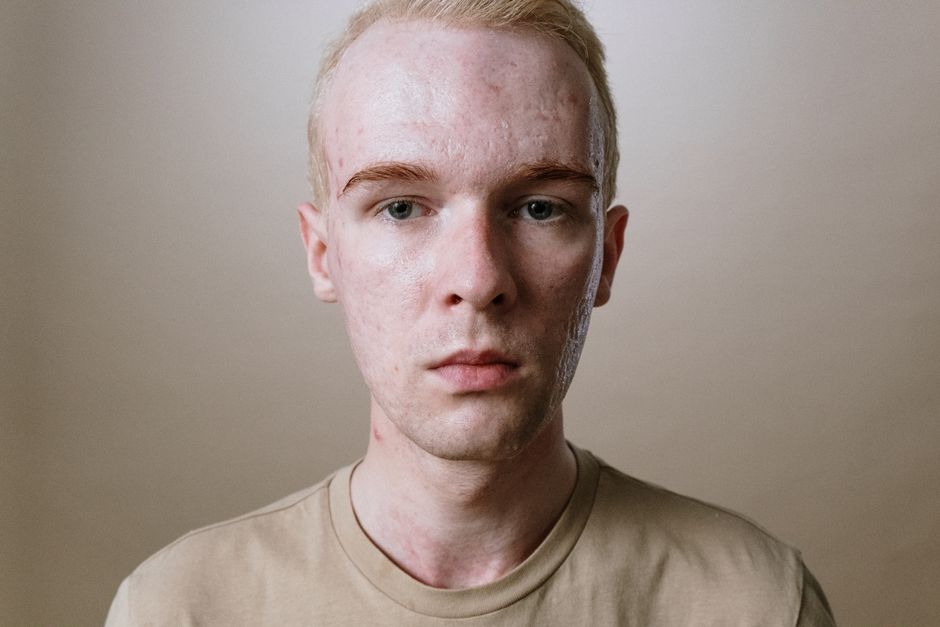
Autism face is not a medical diagnosis or a scientific term you will find in any medical textbook. It is a phrase used online, mostly in social media videos and blog posts, to describe certain facial features that some people claim are linked to autism. The idea has gone viral, but the science behind it is thin at best. Researchers have studied facial differences in autism for years, but the results are not simple or clear enough to support any kind of “autism face” checklist. Here is what the actual evidence says and what it does not say.
What Is the Origin of the Term “Autism Face”?
The term “autism face” appears to have been coined by content creators and commenters on platforms like TikTok and Instagram. It typically refers to a set of facial features — such as a broad forehead, wider-set eyes, a flatter midface, or a larger head circumference — that are said to be common in autistic people. Some videos claim you can “spot autism” just by looking at someone’s face.
This idea did not come from researchers or doctors. It came from pattern-seeking online. And pattern-seeking without data is just guessing.
The problem is that autism is a neurodevelopmental condition, not a facial deformity. The brain develops differently in autism, but the face develops mostly from different tissue layers during pregnancy. There is no strong biological reason why autism would consistently produce one specific facial appearance across all people.
Some studies have looked at facial measurements in autistic children, but those studies involve small groups and often do not account for other genetic conditions that affect both face and brain development. The CDC states that autism can be reliably diagnosed by age 2 through behavioral observation, not facial features. That alone tells you how little weight the face carries in real diagnosis.
Does Research Support a Distinct “Autism Face”?
Research published in journals like Molecular Autism and JAMA Pediatrics has examined whether certain facial measurements differ between autistic and non-autistic children. Some studies have found small average differences in things like the width of the face or the distance between the eyes. But these differences are not consistent enough to identify any individual as autistic.
Here is the key point: average group differences do not mean you can look at one person’s face and know if they are autistic. The overlap between groups is huge. Many non-autistic people have the same facial features that get labeled as “autism face.” And many autistic people have faces that look completely typical.
A 2011 study from the University of Missouri used 3D camera scans to measure faces of 64 autistic and 41 non-autistic boys. They found some statistical differences in facial shape. But the researchers themselves warned that these findings should not be used for diagnosis. They said the differences were subtle and not visible to the naked eye.
Since then, larger studies have failed to find a reliable facial signature for autism. A 2017 review in Neuroscience and Biobehavioral Reviews looked at multiple studies and concluded that facial measurements are not accurate enough for screening or diagnosis. The evidence is weak and inconsistent.
What Do Real Autism Diagnoses Look Like?
Real autism diagnosis is based on behavior and development, not appearance. Clinicians use tools like the Autism Diagnostic Observation Schedule (ADOS) and the Autism Diagnostic Interview-Revised (ADI-R). These involve watching how a child plays, communicates, and interacts with others. They also involve detailed interviews with parents about early development.
No doctor looks at a child’s face and makes an autism diagnosis. That would be irresponsible and unscientific. The American Academy of Pediatrics recommends developmental screening at 18 and 24 months, followed by a comprehensive diagnostic evaluation if concerns arise. Facial features are not part of that evaluation.
Some genetic conditions that are associated with autism — like Fragile X syndrome or 22q11.2 deletion syndrome — can include distinct facial features. But these are separate genetic disorders, not autism itself. Most autistic people do not have those conditions. And most people with those conditions do not have the facial features that get called “autism face” online.
If you or someone you know is wondering about an autism diagnosis, the only reliable path is a full developmental evaluation by a qualified professional. Anything else — including looking at photos online — is not valid.





Why Do People Believe in “Autism Face”?
Confirmation bias is a powerful force. Once someone tells you that a certain facial feature is linked to autism, you start noticing that feature in autistic people you already know. You do not notice it in non-autistic people as much. That creates a false sense of pattern.
Social media algorithms amplify this. Videos claiming to show “autism face” get high engagement because they are simple and visual. A complex explanation about behavioral diagnosis does not get as many shares. The algorithm pushes the simple story, even if the simple story is wrong.
There is also a human tendency to want quick answers. Autism can be confusing and hard to understand. A physical marker feels easier than a behavioral one. But wanting something to be true does not make it true.
Some people report that they or their child were told by a teacher or relative that they “look autistic.” That is not a diagnosis. It is an opinion based on a viral idea, not on science. The only people qualified to comment on autism are trained clinicians who have done the full evaluation.
What Should You Ignore and What Should You Trust?
Ignore any claim that you can diagnose autism from a photo or a video. Ignore lists of facial features that are said to be “autistic.” Ignore anyone who says they can “see autism” in someone’s face. These claims are not supported by evidence and can lead to misdiagnosis or missed diagnosis.
Trust the following:
- Behavioral observation by trained professionals is the gold standard for autism diagnosis.
- Developmental screening at well-child visits is recommended by the CDC and the American Academy of Pediatrics.
- Early intervention — speech therapy, occupational therapy, behavioral therapy — is what actually helps autistic children, not labeling facial features.
- Genetic testing may be recommended if a child has both autism and certain physical features or developmental delays. This is done by a medical geneticist, not by looking at a photo.
If you see a claim about autism that sounds too simple, it probably is. Real science on autism is complex and still evolving. Simple answers are usually wrong.
How Does This Compare to Other Viral Health Claims?
The “autism face” trend follows a pattern that is common in viral health misinformation. Someone makes a bold claim based on a small or misinterpreted study. The claim gets repeated without context. It spreads faster than corrections can keep up.
To show how this compares to other claims that have been debunked or are weakly supported, here is a table:
| Claim | Evidence Level | Source |
|---|---|---|
| You can identify autism from facial features | Weak | Small studies, not replicated, not used clinically |
| Autism is caused by vaccines | None | Multiple large studies have found no link; the original study was retracted |
| Gut bacteria cause autism | Moderate | Some studies show gut differences, but cause vs. effect is unclear |
| Early behavioral intervention improves outcomes | Strong | Multiple randomized trials show benefit |
The pattern is clear. Claims that are visual, simple, and emotional spread fastest. Claims that are nuanced, complex, and evidence-based spread slowly. That does not mean the simple claims are true. It means they are easy to share.
Frequently Asked Questions
Can you tell if someone is autistic by looking at their face?
No. There is no reliable way to identify autism from facial features alone. Diagnosis requires a full behavioral and developmental evaluation by a trained professional.
What facial features are linked to autism in research?
Some small studies have found average differences in features like face width or eye spacing, but these differences are not consistent enough to identify any individual as autistic.
Is “autism face” a real medical term?
No. It is a term created online, not used by doctors or researchers. You will not find it in any medical textbook or diagnostic manual.
Should I be concerned if my child has certain facial features?
Not on its own. If you have concerns about your child’s development, talk to their pediatrician about a developmental screening. Facial features alone are not a reason to worry.
