
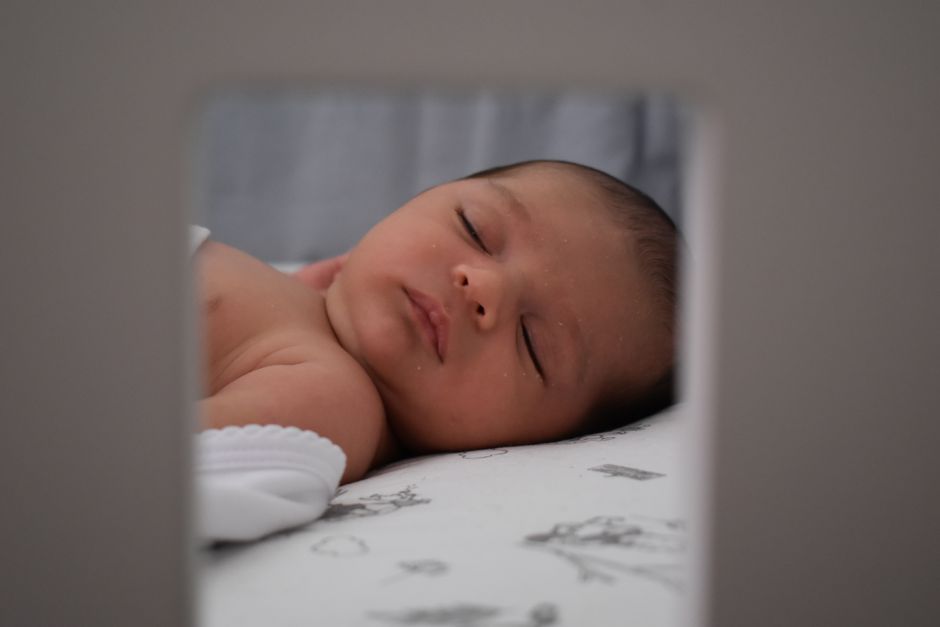
Getting a baby to sleep through the night is one of the most exhausting puzzles of early parenthood. The science points to a few things that genuinely matter: sleep pressure builds the same way in babies as in adults, their sleep cycles are shorter and lighter than ours, and their ability to self-settle develops on its own timeline that no parent can rush. What helps most is a consistent, calming routine, a sleep environment built for safety and darkness, and realistic expectations about what normal infant sleep actually looks like.
What Does Normal Infant Sleep Actually Look Like?
Newborns sleep a lot, but not in long stretches. In the first weeks, total sleep often runs somewhere between 14 and 17 hours across a full day, split into many short periods. That pattern is not a problem to fix. It reflects how infant sleep is wired.
Baby sleep cycles are shorter than adult ones, and a larger share of that sleep is spent in lighter stages. Babies also spend more time in active or REM-type sleep, which is when dreaming and brain development activity are high. This means babies surface toward wakefulness more often than adults do. When they surface, they may cry or stir because they have not yet learned to drift back down on their own.
There is a wide range of normal here. Some babies begin sleeping longer stretches at a few months. Others wake frequently well into the first year. Both can fall within typical development. Night waking in infancy is common and is not, by itself, a sign that something is wrong.
One thing worth knowing: the ability to self-settle is developmental. It tends to emerge gradually as babies get older, and the timing varies a lot from one baby to the next. No method can force it to appear before a baby is ready.
How To Help Your Baby Stay Asleep At Night With a Consistent Routine
A predictable wind-down routine is one of the most reliable tools parents have. The reasoning is straightforward: babies learn to associate a sequence of calm events with sleep. Over time, the routine itself becomes a cue.
Keep it short and repeatable. A warm bath, a feed, a dim room, a song or a few pages of a book, then down to sleep. The exact steps matter less than doing them in the same order, at roughly the same time, most nights. Consistency is what builds the association.
Timing matters too. Watch for early tired signs, such as yawning, rubbing eyes, or getting fussy. Waiting until a baby is overtired often backfires. An overtired baby can become wired and harder to settle, not easier.
Keep daytime and nighttime clearly different. During the day, let light in and allow normal household sound. At night, keep lights low and interactions quiet and boring. This contrast helps reinforce that night is for sleeping.
Does the Sleep Environment Change How Well Babies Sleep?
The room a baby sleeps in plays a real role, and safety comes first. The American Academy of Pediatrics recommends placing babies on their backs to sleep, on a firm, flat surface, in their own sleep space, with no soft bedding, pillows, bumper pads, or toys. Room-sharing without bed-sharing is recommended for at least the first several months. These steps are tied to reducing the risk of sleep-related infant deaths, and they are not negotiable for the sake of longer sleep.
Beyond safety, a few environmental factors support sleep:
- Darkness. Light signals alertness to the brain. A dark room supports the body’s natural sleep signals.
- White noise. Steady, low-level sound can mask household noises that might rouse a baby. Keep the volume low and place the device away from the crib, not right next to a baby’s head.
- Comfortable temperature. Overheating is a risk factor for sleep-related deaths, so avoid overdressing and keep the room comfortably cool.
White noise is widely used and generally considered low risk when kept at a modest volume. It is not a proven treatment for night waking, but many parents find it helps reduce how often a baby is startled awake by other sounds.





Should You Feed or Soothe a Baby Back to Sleep at Night?
For young infants, night feeds are a genuine need, not a habit to break. Newborns have small stomachs and need to eat around the clock. As babies grow, some continue to need night feeds while others gradually drop them on their own.
Whether to feed or soothe at a waking depends on the baby’s age and what is actually going on. If a baby is hungry, feeding is appropriate. If a baby is simply surfacing between sleep cycles and is not hungry, a brief, low-key response may help them resettle. The key is to keep night interactions calm and dim so they do not become a party.
Some approaches encourage putting a baby down drowsy but awake so they practice falling asleep in the crib rather than in a parent’s arms. This can help some babies learn to self-settle. It does not work for every baby, and for very young infants it may not be realistic. There is no single method that fits all families.
Do Sleep Training Methods Work, and Are They Safe?
Sleep training refers to a range of approaches, from gradual methods with check-ins to more structured ones where a parent pauses before responding. Research on these methods has generally found that they can reduce night waking and improve how quickly babies settle, and that they do not appear to harm the parent-child relationship or a child’s emotional development in the studies conducted so far.
That said, the evidence is not unlimited. Much of it comes from smaller studies and varies in how sleep was measured. It also does not tell us what is best for every family. Some parents find structured approaches effective. Others prefer gentler, slower methods or choose not to sleep train at all. All of these can be reasonable.
Two honest points. First, no method works overnight, and progress often comes in fits and starts. Second, regressions are normal. Teething, illness, growth spurts, and developmental leaps can all disrupt sleep that had been going well. A rough patch does not mean a method failed.
When Should You Talk to a Doctor About Your Baby’s Sleep?
Most night waking is normal, but some signs warrant a call to a pediatrician. These include:
- Loud, frequent snoring or long pauses in breathing during sleep
- Sleep that seems to cause real distress or breathing trouble
- Feeding problems, poor weight gain, or unusual sleepiness during the day
- Waking that suddenly gets much worse and does not ease
Trust your instincts. If something feels off, it is reasonable to ask. A pediatrician can help sort out whether a waking pattern is typical development or something that needs a closer look.
One final note on expectations. Night waking in the first year is common, and the goal is not necessarily a baby who never wakes. It is a baby who can increasingly resettle, and parents who can get enough rest to function. For most families, that arrives gradually. Patience, consistency, and a safe sleep space do more than any single trick.
Frequently Asked Questions
How long should a baby sleep at night?
There is no single correct number, since total sleep needs change with age. Newborns often sleep 14 to 17 hours across a full day, while older babies gradually consolidate more of that sleep into the night.
Is it normal for a baby to wake up multiple times at night?
Yes, frequent night waking is common in the first year and is not by itself a sign of a problem. Babies have shorter, lighter sleep cycles than adults, so they surface toward waking more often.
Can white noise help a baby sleep better?
White noise is widely used and may help mask household sounds that rouse a baby, though it is not a proven treatment for night waking. Keep the volume low and place the device away from the crib.
Does sleep training harm a baby?
Research so far has generally not found harm to the parent-child relationship or emotional development from structured sleep training methods. The evidence is not unlimited, and no single method suits every family.
