
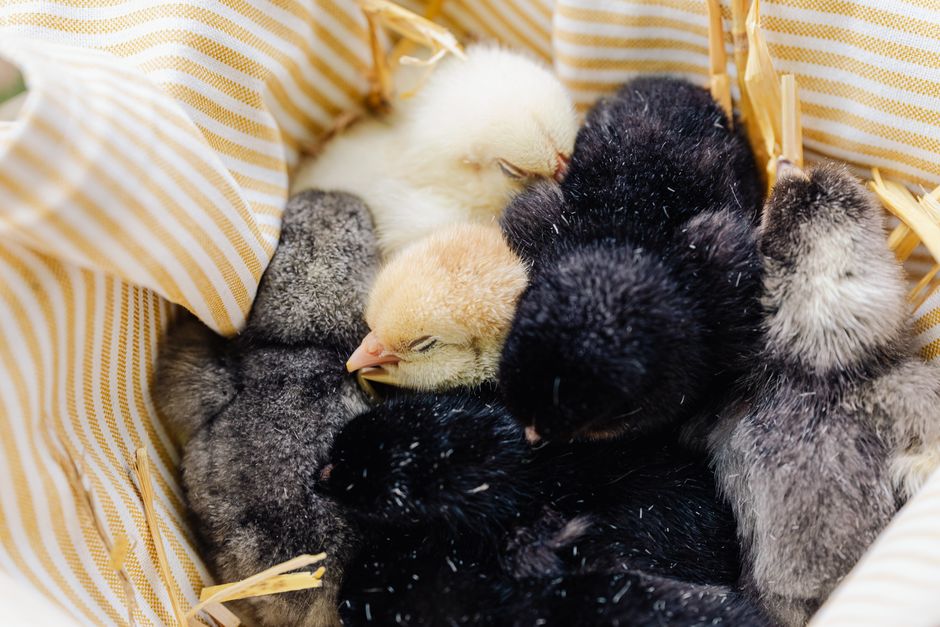
An egg tooth is a small, sharp, temporary projection on a chick’s beak that it uses to break through its shell during hatching. This remarkable tool is not a true tooth but a hardened piece of keratin that forms just before birth. Without it, chicks would be trapped inside their eggs, unable to start their lives. The egg tooth falls off within days after hatching, serving its single critical purpose and then disappearing.
How Does a Chick Use Its Egg Tooth to Hatch?
The process is called pipping. The chick rotates inside the egg and uses the egg tooth to scrape a small crack in the shell. This first break is the internal pip. The chick then pushes its beak through the membrane and takes its first breath of air from the air cell.
After resting, the chick continues. It uses the egg tooth to chip away at the shell in a circular pattern. This is called external pipping. The chick pushes with its legs and body until the shell cap pops off. The egg tooth is essential for this work. Without it, the chick cannot create the initial opening.
Research from poultry science shows that chicks with malformed or missing egg teeth have much lower hatch rates. They simply cannot generate enough focused pressure to break the shell. The egg tooth concentrates the chick’s force into a tiny point, making the shell fracture possible.
What Is an Egg Tooth Made Of and Where Is It Located?
The egg tooth is made of keratin, the same protein that forms human fingernails and bird feathers. It is not a true tooth with enamel or roots. It is a hardened cap on the tip of the upper beak. In most bird species, it appears as a small, white, cone-shaped bump.
In chickens, the egg tooth is located on the top of the beak, slightly to the left of center. This placement helps the chick create an effective crack as it rotates. The egg tooth is connected to a special muscle called the pipping muscle, which gives the chick the strength to push.
Some people mistake the egg tooth for a piece of shell stuck to the chick. It is not. It is a living part of the chick’s beak that dries out and falls off within 24 to 48 hours after hatching. You might find the tiny cap in the incubator or brooder, looking like a small white flake.
Do All Birds Have an Egg Tooth?
Yes, nearly all bird species develop an egg tooth. This includes chickens, ducks, geese, quail, turkeys, songbirds, and even ostriches. The egg tooth is a universal adaptation for escaping the egg. It evolved independently in birds and some reptiles, showing how important it is for survival.
There are minor differences between species. Waterfowl like ducks and geese have a slightly different structure called a caruncle, which is a hardened bump on the top of the beak rather than a sharp point. But the function is the same. It allows the chick to break the shell.
Some reptiles like snakes and lizards also have an egg tooth. This is a case of convergent evolution, where unrelated species develop similar traits to solve the same problem. In snakes, the egg tooth is on the snout and falls off after hatching, just like in birds.





What Happens to the Egg Tooth After Hatching?
The egg tooth has no use after the chick leaves the shell. Within a day or two, it dries out and falls off. The chick does not feel pain or discomfort when this happens. It is a natural shedding process similar to a baby losing its first set of teeth, but much faster.
Once the egg tooth falls off, the chick’s beak continues to grow and harden. The spot where the egg tooth was located heals quickly. The chick uses its beak for eating, drinking, and exploring right away. There is no scar or lasting mark from the egg tooth.
Some people worry when they see the egg tooth still present on a day-old chick. This is normal. It can take up to 48 hours for the egg tooth to fall off. If it stays longer than that, it is usually not a problem. The chick will rub it off on food, bedding, or other surfaces.
What Can Go Wrong With the Egg Tooth During Hatching?
Problems with the egg tooth can cause chicks to die inside the shell. The most common issue is a chick that is too weak to use the egg tooth effectively. This can happen if the incubator humidity is wrong or if the chick has a genetic defect. The chick may pip internally but never break the shell.
Another problem is malposition. The chick must be in the correct position inside the egg for the egg tooth to work. If the chick is upside down or twisted, the egg tooth cannot reach the shell membrane. This is a common cause of failed hatches in shipped eggs that were jostled during transport.
Some chicks have a missing or deformed egg tooth. This is rare but happens. Without an egg tooth, the chick cannot create the first crack. In some cases, a person can help by carefully making a small hole in the shell. This is called assisted hatching and should only be done when absolutely necessary. The chick still needs to do the rest of the work itself.
| Stage | What Happens | Role of Egg Tooth |
|---|---|---|
| Internal pip | Chick breaks into the air cell | Punctures the inner membrane |
| External pip | Chick cracks the outer shell | Chips a small hole in the shell |
| Zipping | Chick rotates and cuts around the shell | Scrapes a line around the shell circumference |
| Hatching | Chick pushes shell cap off | No longer needed, begins to dry out |
- The egg tooth is always temporary and never grows back
- It works like a miniature pickaxe, concentrating force into a small area
- Chicks use their legs and neck muscles together with the egg tooth to push out
- High humidity during hatching softens the shell membrane, making the egg tooth more effective
- The egg tooth does not contain any blood vessels or nerves, so losing it is painless
What Is an Egg Tooth How Chicks Hatch With It? Key Facts to Remember
The egg tooth is a survival tool that appears for exactly one job and then disappears. It is made of keratin, located on the upper beak, and used to break the shell from the inside. Without it, chicks cannot hatch naturally.
Most chicks lose their egg tooth within two days of hatching. You do not need to do anything to help this process. It happens on its own. If you see a small white cap on your chick’s beak, leave it alone. It will fall off when it is ready.
Understanding the egg tooth helps you appreciate how well-designed the hatching process is. Every part of the chick’s body works together at exactly the right time. The egg tooth is a perfect example of a temporary structure that makes life possible.
Frequently Asked Questions
Can a chick hatch without an egg tooth?
It is very rare for a chick to hatch without an egg tooth because it cannot create the initial crack in the shell. Most chicks without an egg tooth will die inside the egg without human help.
How long does it take for the egg tooth to fall off?
The egg tooth usually falls off within 24 to 48 hours after hatching. It dries out and drops off naturally as the chick moves and eats.
Is the egg tooth a real tooth?
No, the egg tooth is not a real tooth. It is made of keratin, the same protein found in human fingernails and bird feathers.
Do all baby birds have an egg tooth?
Yes, nearly all baby birds develop an egg tooth before hatching. It is a universal adaptation for breaking out of the egg.
