
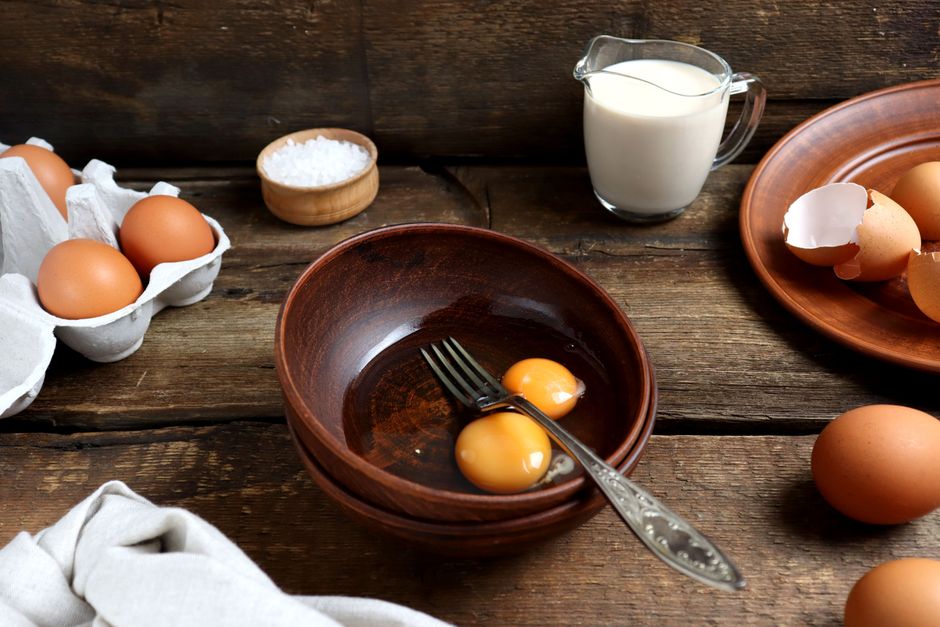
An egg is a single cell designed to nourish and protect a developing embryo, and every part of it serves a specific purpose. From the hard outer shell to the nutrient-dense yolk, each layer has a distinct composition and function. The shell provides protection, the membranes filter bacteria, the white supplies protein and water, and the yolk delivers fat, vitamins, and the genetic material needed for life.
What Is An Egg Made Of From Shell To Yolk? Key Facts
The anatomy of an egg is more complex than most people realize. It is not just a shell, a white, and a yolk. It is a precisely engineered biological package with multiple layers, each with its own job.
Starting from the outside, the egg has a protective shell, followed by two thin membranes, an air cell, the thick and thin albumen (the white), two twisted protein cords called chalazae, a vitelline membrane, and finally the yolk at the center. Each layer exists for a reason, and understanding what each part is made of helps explain why eggs behave the way they do when you cook, bake, or whip them.
What Is The Eggshell Made Of?
The eggshell is roughly 94% calcium carbonate. The remaining percentage is made up of magnesium carbonate, calcium phosphate, and small amounts of protein. This combination makes the shell strong enough to protect the contents while still being porous enough to allow air to pass through.
A single eggshell contains about 7,000 to 17,000 tiny pores. These pores allow oxygen to enter and carbon dioxide to escape. This is why eggs must be stored properly — the pores also allow odors and bacteria to pass through if the shell is not clean or if the egg is stored near strong-smelling foods.
The shell also has a thin outer coating called the bloom or cuticle. This natural protective layer seals the pores and helps prevent bacteria from entering the egg. In many countries, commercial egg washing removes this bloom, which is why those eggs must be refrigerated to stay safe.
The shell color — white or brown — comes from pigments deposited during formation. The color has no effect on nutrition, flavor, or cooking quality. It only reflects the breed of the hen.
What Are The Egg Membranes And Air Cell?
Just inside the shell are two thin membranes: the outer shell membrane and the inner shell membrane. They are made of protein fibers that are arranged in a mesh-like pattern. These membranes are the egg’s second line of defense against bacteria.
These two membranes are pressed tightly together when the egg is laid. As the egg cools, the contents shrink slightly, and air is drawn in through the pores. This creates the air cell, which sits at the blunt end of the egg between the two membranes.
The air cell is the reason an older egg floats in water. As an egg ages, moisture and carbon dioxide escape through the pores, and the air cell grows larger. A fresh egg will sink in a glass of water; an older egg will stand on end or float. This is a simple freshness test, though it does not tell you whether the egg is safe to eat — only how old it is.





What Is Egg White Made Of?
Egg white, also called albumen, is about 90% water and 10% protein. It contains almost no fat and very little carbohydrate. The protein in egg white is mostly ovalbumin, along with conalbumin, ovomucoid, and lysozyme.
Lysozyme is an enzyme that breaks down bacterial cell walls. It is one of the egg’s natural defense mechanisms. This is why egg white can inhibit bacterial growth even when the shell is compromised.
Egg white exists in two forms: thick white and thin white. The thick white stands up high around the yolk in a fresh egg. The thin white spreads out flat. As an egg ages, the thick white becomes thinner because the protein structure breaks down over time. This is why fresh eggs make better poached eggs — the thick white holds its shape better in hot water.
When you whip egg whites, you are mechanically unfolding those proteins and trapping air bubbles. This is the basis of meringues, soufflés, and angel food cake. The proteins then re-form bonds when heated, which is why whipped egg whites hold their structure when baked.
What Is The Chalaza?
The chalaza is the thick, twisted cord of protein you sometimes see attached to the yolk in a raw egg. It looks like a small white rope or a cloudy spot. There are two of them — one on each side of the yolk.
The chalazae anchor the yolk in the center of the egg. They act like suspension cables, keeping the yolk safely positioned away from the shell. In a fresh egg, the chalazae are very visible and firm. As the egg ages, they break down and become less noticeable.
The chalaza is completely edible. Some cooks strain it out for perfectly smooth custards or baked goods, but it is not harmful and does not need to be removed.
What Is The Yolk Made Of?
The yolk is the most nutrient-dense part of the egg. It contains all of the fat, most of the vitamins, and about half of the protein in the whole egg. The yolk is roughly 50% water, 32% fat, and 16% protein by weight.
The fats in the yolk include triglycerides, phospholipids, and cholesterol. The phospholipids, particularly lecithin, act as emulsifiers. This is why egg yolks are essential for making mayonnaise, hollandaise sauce, and creamy salad dressings — lecithin allows oil and water to mix without separating.
The yolk is surrounded by the vitelline membrane, a thin but strong barrier that keeps the yolk intact. This membrane weakens with age. That is why the yolk of an older egg breaks more easily when you crack it into a pan.
The yolk also contains the germinal disc, a small pale spot on its surface. This is the female genetic material — the actual cell that would develop into a chick if the egg were fertilized. In a fertilized egg, this disc appears slightly larger and more defined.
How Does Egg Composition Change With Cooking?
Egg proteins are sensitive to heat. When you cook an egg, the proteins in both the white and the yolk denature — they unfold from their natural coiled shape and then re-bond with each other. This is what turns a liquid egg into a solid one.
Egg white proteins coagulate at a lower temperature than yolk proteins. Egg white begins to set at around 144°F (62°C), while the yolk sets at around 158°F (70°C). This difference is why a soft-boiled egg has a firm white but a runny yolk — the white has reached its setting temperature while the yolk has not.
Overcooking eggs squeezes water out of the protein network. This is why a hard-boiled egg cooked too long develops a greenish-gray ring around the yolk. That ring is iron sulfide, formed when iron from the yolk reacts with sulfur from the white. It is harmless but unappealing.
How Do Egg Parts Compare Nutritionally?
People often ask whether the white or the yolk is healthier. The answer depends on what you are looking for.
| Component | Main Nutrients | Best Known For |
|---|---|---|
| Egg white | Protein, water, B vitamins | Low-calorie protein source |
| Yolk | Fat, cholesterol, vitamins A, D, E, K, iron, choline | Nutrient density and emulsifying power |
| Whole egg | Complete protein, all vitamins except vitamin C | Balanced nutrition in one package |
The yolk contains all of the fat-soluble vitamins — A, D, E, and K. It also contains choline, a nutrient important for brain and liver function. Most of the egg’s iron is in the yolk as well.
The white is almost pure protein and water. If you are looking for a low-calorie, high-protein option, egg whites fit that role. If you want the full nutrient profile — including vitamins that are only found in the yolk — you need to eat the whole egg.
Frequently Asked Questions
Can you eat eggs past the expiration date?
Eggs are often safe to eat for several weeks past the date on the carton if they have been refrigerated continuously. The best way to check freshness is the float test, but the only way to know if an egg has spoiled is to crack it open and smell it.
Why do some eggs have double yolks?
Double yolks happen when a hen releases two yolks at the same time during ovulation. They are more common in young hens whose reproductive systems are still regulating, and they are safe to eat.
Are brown eggs healthier than white eggs?
No. Shell color is determined by the hen’s breed and has no effect on nutrition or flavor. The nutrient content of an egg is influenced more by the hen’s diet than by the color of its shell.
Is it safe to eat raw eggs?
Raw eggs carry a small risk of Salmonella contamination, and the risk is higher for young children, older adults, and people with weakened immune systems. Pasteurized eggs are a safer option if you need raw eggs for recipes like Caesar dressing or homemade mayonnaise.
