
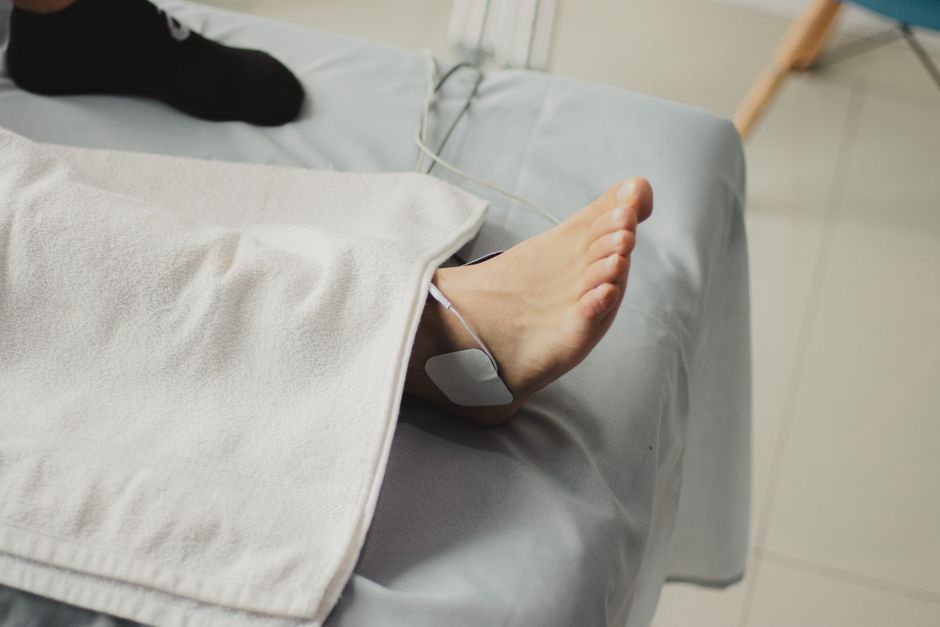
Achilles tendonitis is the inflammation of the Achilles tendon, the thick band of tissue that connects your calf muscles to your heel bone. It is an overuse injury that causes pain, swelling, and stiffness at the back of the ankle, most commonly affecting runners and people who suddenly increase their activity level. The condition is often confused with Achilles tendinosis, which is a chronic degeneration of the tendon without active inflammation, though the terms are frequently used interchangeably in everyday conversation.
What Is Achilles Tendonitis?
The Achilles tendon is the strongest tendon in the human body. It absorbs enormous force every time you walk, run, or jump—up to several times your body weight with each stride. When this tendon is subjected to repetitive stress beyond its capacity to recover, microscopic tears develop in the tissue. The body responds with an inflammatory process, which produces the classic signs of pain, warmth, and swelling.
True Achilles tendonitis is an acute condition. It develops over days or weeks of excessive training, often after a sudden increase in mileage, intensity, or frequency of exercise. The pain typically starts as a mild ache after activity and progresses to pain during activity and eventually pain at rest if left untreated.
What Causes Achilles Tendonitis?
Overuse is the primary cause. The tendon is loaded repeatedly without enough time to repair itself between sessions. Several specific factors increase the risk:
- Sudden increases in training volume or intensity
- Running on hard or uneven surfaces
- Wearing worn-out or inappropriate footwear
- Tight calf muscles that place extra tension on the tendon
- Flat arches or high arches that alter foot mechanics
- Age—the tendon becomes less flexible and more prone to injury as we get older
- Certain medications, particularly fluoroquinolone antibiotics, which have been linked to tendon rupture
Less commonly, inflammatory conditions like rheumatoid arthritis or gout can cause Achilles tendonitis. These cases are rarer but important to identify because the treatment approach differs.
What Does Achilles Tendonitis Feel Like?
The hallmark symptom is pain at the back of the heel, usually about 2 to 6 centimeters above where the tendon attaches to the bone. The pain is often described as a dull ache that sharpens with activity. Many people notice stiffness in the morning that improves somewhat after a few minutes of walking, only to return again after exercise.
Swelling and tenderness are common. The area may feel warm to the touch. In some cases, a visible bump or nodule forms on the tendon. If you press on the tendon, it typically hurts, especially at the point of the injury.
Crepitus—a crackling or grating sensation when you move the ankle—can occur when the inflamed tendon moves against its sheath. This is not always present, but when it is, it points strongly toward an inflammatory process.





How Is Achilles Tendonitis Diagnosed?
A doctor can usually diagnose Achilles tendonitis based on your history and a physical examination. The examination involves pressing on the tendon, checking your range of motion, and performing specific tests that load the tendon to reproduce the pain.
Imaging is not always necessary, but it can help in certain situations. Ultrasound shows the structure of the tendon, including thickening, tears, or fluid around it. MRI provides a more detailed view and is useful when the diagnosis is unclear or when a partial tear is suspected. Imaging is particularly important if the pain has not improved after several weeks of treatment, because chronic pain may indicate tendinosis rather than tendonitis.
What Is the Difference Between Tendonitis and Tendinosis?
This distinction matters because the treatment differs. Tendonitis is inflammation. It is acute, typically resolves within weeks with appropriate care, and responds to anti-inflammatory measures. Tendinosis is degeneration. The tendon fibers break down and become disorganized over months or years, and inflammation is not the primary problem.
Most chronic Achilles problems are actually tendinosis, not tendonitis. Research consistently shows that tendons that have been painful for more than a few weeks often show degenerative changes rather than active inflammation. This explains why anti-inflammatory medications and ice—which work well for acute tendonitis—often disappoint when the problem has persisted for months.
If your pain has lasted more than six weeks, the condition has likely moved into the tendinosis category. The treatment emphasis shifts from reducing inflammation to loading the tendon appropriately to stimulate healing and reorganization of the tissue.
What Are the Treatment Options?
Treatment depends on whether the condition is acute or chronic. For acute Achilles tendonitis, the standard approach focuses on reducing inflammation and unloading the tendon:
- Relative rest—reducing or modifying activity so the tendon is not constantly irritated
- Ice applied to the area for 15 to 20 minutes several times a day
- Over-the-counter anti-inflammatory medication, such as ibuprofen, for short-term pain relief
- Heel lifts to reduce tension on the tendon
- Stretching the calf muscles gently once the acute pain subsides
For chronic tendinosis, the evidence points strongly toward eccentric strengthening exercises. These are exercises that lengthen the muscle while it is under load—for example, slowly lowering your heel off a step. Some studies indicate this type of exercise is the most effective conservative treatment for chronic Achilles tendinopathy, though the optimal protocol is still debated.
Physical therapy is often recommended. A therapist can assess your gait, strength, and flexibility to identify contributing factors and design an appropriate exercise program. Other treatments, such as shockwave therapy, injections, or surgery, are reserved for cases that do not improve with conservative care. The evidence for these options is mixed, and they are not first-line treatments.
How Long Does Recovery Take?
Recovery time varies widely. Acute tendonitis can improve within a few weeks if caught early and treated appropriately. Chronic tendinosis often takes months to resolve, and some people experience symptoms for six months or longer even with proper treatment.
The key variable is how long the condition has been present before treatment begins. Early intervention produces faster results. Continuing to train through the pain, or returning to full activity too quickly, prolongs recovery and increases the risk of worsening the injury.
Can Achilles Tendonitis Be Prevented?
Prevention focuses on managing the load on the tendon. Gradual increases in training volume are essential—the general guidance is to increase mileage or intensity by no more than about 10 percent per week, though this is not a universal rule and individual tolerance varies.
Strengthening the calf muscles regularly helps the tendon tolerate higher loads. Eccentric calf exercises, performed even when you are not injured, build tendon resilience. Maintaining flexibility in the calves and wearing appropriate footwear that is not worn out also reduce risk.
If you have had Achilles tendonitis before, you are at higher risk of recurrence. Continuing a maintenance exercise program after recovery is one of the most effective ways to prevent a repeat episode.
When Should You See a Doctor?
See a doctor if the pain does not improve after two weeks of home care, if you cannot bear weight on the affected leg, or if the area becomes red, hot, or severely swollen. A sudden pop or snap in the back of the heel with immediate weakness suggests a tendon rupture, which is a medical emergency requiring prompt evaluation.
Do not ignore persistent Achilles pain. The longer the tendon remains injured, the more difficult it becomes to treat successfully. Early diagnosis and appropriate management give you the best chance of a full recovery.
Frequently Asked Questions
Can Achilles tendonitis heal on its own?
Mild cases can resolve with rest and activity modification, but the tendon will not heal if you continue to stress it. Without treatment, the condition often becomes chronic and harder to resolve.
Is it okay to walk with Achilles tendonitis?
Walking is usually acceptable if it does not cause significant pain, but you may need to reduce your pace or distance temporarily. If walking is painful, rest is needed until the acute symptoms settle.
Should I stretch a sore Achilles tendon?
Gentle stretching can help once the acute pain subsides, but stretching an actively inflamed tendon can worsen the injury. In the first few days, focus on rest and ice rather than stretching.
What happens if Achilles tendonitis is left untreated?
The condition can progress to chronic tendinosis, which takes much longer to treat, or in severe cases lead to a partial or complete tendon rupture. Early treatment gives the best outcome.
