
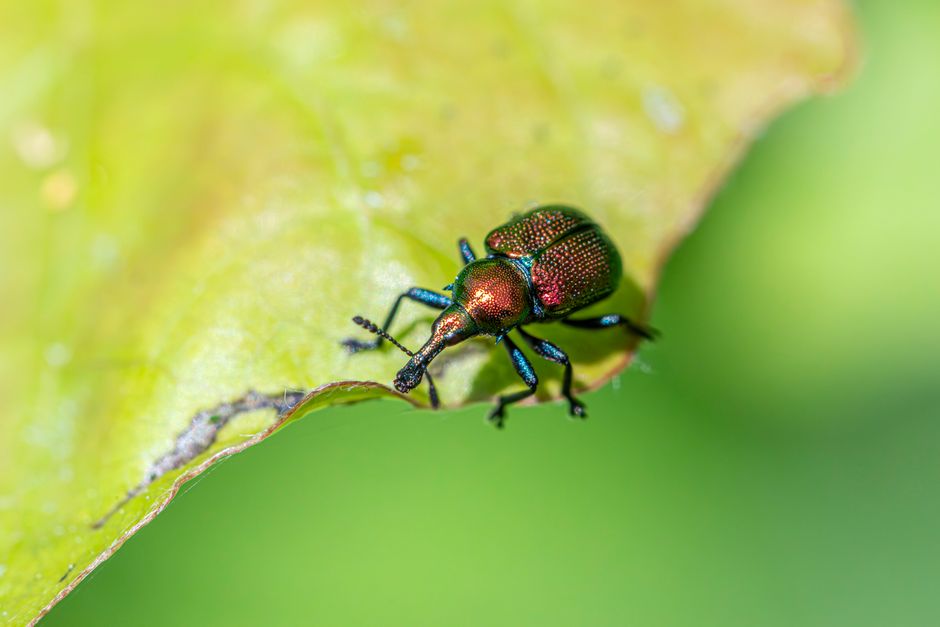
A weevil is a type of beetle known for its distinctive elongated snout, called a rostrum, and its habit of feeding on plants, seeds, and stored grains. With over 60,000 known species, weevils make up one of the largest families in the animal kingdom. They live on every continent except Antarctica, and a handful of species have become significant pests in homes and agricultural storage.
What Is A Weevil Its Appearance Diet And Life Cycle?
Weevils belong to the superfamily Curculionoidea. Their defining feature is the elongated snout that extends from the head, with small chewing mouthparts at the tip. This snout is not a nose — it is an extension of the head capsule, and it serves as a drilling tool for feeding and egg-laying.
Body shape varies widely across species. Most weevils have a compact, oval or pear-shaped body with a hard outer shell, called an exoskeleton, that ranges in color from dark brown and black to gray, reddish-brown, or even bright metallic hues in tropical species. Many have a pattern of tiny scales or hairs on their back that gives them a dusty or mottled appearance.
Size ranges from less than 1 millimeter in some species to over 30 millimeters in larger tropical types. The grain weevil, one of the most common household species, is typically 3 to 5 millimeters long.
Their diet is almost entirely plant-based. Different species specialize in different plant parts:
- Seeds and grains — including wheat, rice, corn, and barley
- Roots and tubers — such as sweet potato and carrot
- Stems and leaves — including cotton and alfalfa
- Nuts and fruits — such as acorns, palms, and citrus
- Flower buds and developing seed pods
The life cycle follows complete metamorphosis, the same four-stage pattern seen in butterflies and other beetles: egg, larva, pupa, and adult. The female chews a small hole in plant tissue, deposits an egg inside, and seals it. The larva hatches and feeds within the plant material, often hidden from view. After pupation, the adult emerges, sometimes chewing its way out of a seed or grain kernel.
Depending on species and temperature, the full cycle can take as little as a few weeks or as long as several months. Warm, humid conditions generally speed development.
How Do You Tell a Weevil Apart From Other Beetles?
The snout is the clearest identifier. No other major beetle group has the same elongated rostrum combined with the weevil’s characteristic elbow-shaped antennae. Those antennae usually attach partway down the snout rather than at the tip.
Behavior also helps. When disturbed, many weevils play dead — they fold their legs tight against the body and drop. This reflex, called thanatosis, is common in the group.
Some other insects are mistaken for weevils:
- Grain beetles (such as the confused flour beetle) have no snout and a flatter body.
- Bark beetles are cylindrical but lack the elongated rostrum.
- Bed bugs are flat, wingless, and reddish-brown but have a completely different body structure and no snout.
If you find a small brown insect in your pantry with a distinct snout and a hard shell, it is very likely a weevil. If it has no snout and is flat and oval, it is probably a different stored-product beetle.
Where Do Weevils Live and How Do They Get Inside?
Outdoors, weevils are found in soil, on plants, under bark, and in leaf litter. Some species live in stored food products indoors. The most common indoor species are the grain weevil, the rice weevil, and the maize weevil.
These stored-product weevils typically enter homes in one of two ways:
- They arrive already inside packaged grains, flour, pasta, or dried beans from the store or warehouse.
- They fly or crawl in from outdoors through open windows, doors, or cracks.
Once inside, they can spread from one container to another if infested packages are stored together. Adults are small enough to chew through thin plastic bags and cardboard boxes.
Outdoor weevils rarely come inside unless they are searching for shelter or a food source. The boll weevil, for example, lives on cotton plants and does not infest homes. The acorn weevil develops inside acorns and is not a household pest.



Are Weevils Harmful to Humans or Pets?
Weevils do not bite or sting humans. They do not transmit diseases to people or pets. They are not venomous, and they do not carry parasites that affect humans.
If a weevil is accidentally swallowed in food, it is generally considered harmless. The stomach acid digests it like any other small insect. Some people may experience mild stomach upset from eating food heavily infested with weevils, but this is not a common medical concern.
The real harm is economic and practical. In stored grains, weevils consume the product, leave behind waste, and reduce nutritional quality. In agriculture, certain species cause significant crop losses. The boll weevil, for instance, was historically one of the most destructive cotton pests in the United States.
People with insect allergies should still handle large numbers of weevils with care. Dust from infested grain can contain insect fragments and may trigger allergic reactions in sensitive individuals, though this is uncommon.
How Do You Get Rid of Weevils in Your Home?
Getting rid of weevils requires finding and removing the source. Insecticides are generally not recommended for indoor weevil control because the insects live inside food packages where sprays cannot reach them safely.
Steps that work:
- Inspect all stored grains, flour, cereal, pasta, dried beans, and pet food. Look for small holes in packaging, fine dust, or live insects.
- Discard any infested packages in an outdoor trash bin. Do not compost them indoors.
- Vacuum shelves, cracks, and corners where grain dust may have collected. Dispose of the vacuum bag promptly.
- Wipe surfaces with soap and water. Weevils do not survive on clean, dry surfaces for long without a food source.
- Store uninfested dry goods in airtight glass or heavy plastic containers with tight-fitting lids. Weevils can chew through thin plastic and cardboard.
- Freeze newly purchased grains or flour for several days if you want to kill any eggs or larvae that may be present. This is a common preventive practice, though its effectiveness depends on temperature and duration.
After removing the source, adult weevils may still appear for a short time. They cannot reproduce without food, so the infestation will die out if no new food source is available. If weevils keep appearing weeks after cleanup, there is likely a hidden source you have not found — check less obvious places like decorative dried arrangements, birdseed, or forgotten containers in the back of the pantry.
Can Weevils Damage Crops and Gardens?
Yes. Many weevil species are serious agricultural pests. The damage depends on the species and the crop.
Root weevils, such as the black vine weevil, feed on the roots and leaves of ornamental plants, strawberries, and rhododendrons. The larvae cause the most damage by feeding on roots underground, which can stunt or kill plants.
Boll weevils attack cotton buds and bolls. Their feeding destroys the developing cotton fibers. This species was largely eradicated from most of the United States through a coordinated government program that combined monitoring, pesticide use, and crop destruction, though it still exists in parts of Texas and Mexico.
Alfalfa weevils damage alfalfa crops by feeding on leaves. The larvae do most of the feeding, skeletonizing leaves and reducing hay yield.
Palm weevils, including the red palm weevil, bore into the trunks of palm trees. They are a major pest in date palm and coconut palm plantations across parts of Asia, Africa, and the Middle East. Infestations are often fatal to the tree.
For gardeners dealing with root weevils, control options include beneficial nematodes, which are microscopic worms that attack weevil larvae in the soil. Some studies suggest these can reduce larval populations, though results vary by soil type, moisture, and temperature. Chemical controls are available but should be used according to label instructions and local regulations.
Do Weevils Have Any Beneficial Role?
Most weevil species are not pests. The vast majority live in forests, grasslands, and other natural habitats where they feed on native plants without causing economic harm. Some are important pollinators, particularly of certain palm species and cycads.
A few weevils have been introduced intentionally as biological control agents. The salvinia weevil, for example, feeds on an invasive aquatic fern called giant salvinia and has been used to help control its spread in waterways. This is a rare case where a weevil is deliberately released to solve a problem rather than being treated as one.
In natural ecosystems, weevils are part of the food web. They are eaten by birds, lizards, spiders, and other insects. Their feeding on plants can influence plant distribution and community structure, though these effects are complex and vary by habitat.
Frequently Asked Questions
Do weevils bite humans?
No. Weevils do not bite or sting humans, and they do not transmit diseases to people. Their mouthparts are designed for chewing plant material, not piercing skin.
How do I know if I have a weevil infestation?
Look for small brown insects with a distinct snout in your pantry, along with fine dust or tiny holes in grain packages. You may also see adult weevils crawling on shelves or flying near windows.
Can weevils live in your bed?
No. Weevils feed on plant material and do not infest beds, mattresses, or bedding. If you find small insects in your bed, they are likely a different species such as bed bugs or carpet beetles.
Are weevils dangerous to eat accidentally?
Swallowing a weevil in food is generally considered harmless. The insect is digested like any other small particle, though some people may experience mild stomach discomfort from eating heavily infested food.
