
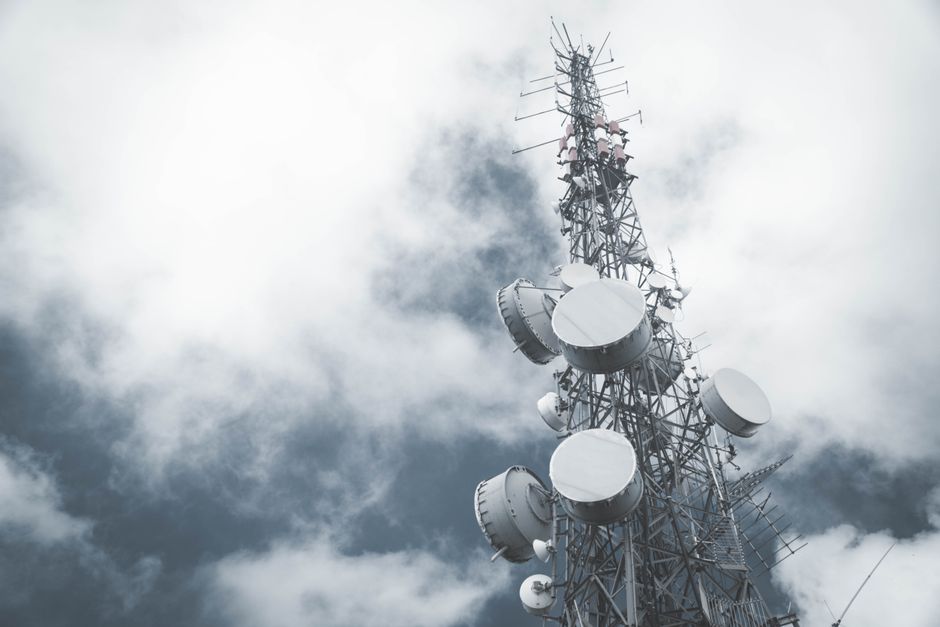
A transmitter and receiver form the basic unit of wireless communication. The transmitter creates a signal, encodes information onto it, and sends it out as electromagnetic waves. The receiver picks up those waves from the air, decodes the information, and delivers it to you as sound, text, or video. This pair of devices is how your phone talks to a cell tower, how your car key unlocks the door, and how a baby monitor carries a cry from one room to another.
What Is A Transmitter And Receiver And How Do They Work?
Think of a transmitter as a broadcaster and a receiver as a listener. The transmitter starts with information—your voice, a photo, a text message. It converts that information into an electrical signal. Then it uses that signal to create a radio wave, which is a type of electromagnetic radiation. The radio wave travels through the air at the speed of light.
The receiver does the opposite. It has an antenna that picks up the radio wave from the surrounding environment. It filters out unwanted signals and amplifies the one it wants. Then it converts the radio wave back into the original information. If the signal was your voice, you hear it. If it was a photo, you see it on a screen.
This process happens billions of times every second across the world. Every Wi-Fi connection, every Bluetooth earbud, every GPS navigation system relies on this exact pair of functions.
What Are the Main Parts of a Transmitter?
A transmitter has three essential components: an oscillator, a modulator, and an amplifier. Each one performs a specific job in the chain.
The oscillator generates a continuous high-frequency wave called the carrier wave. This wave is the “vehicle” that will carry your information. It oscillates at a specific frequency, measured in hertz. For example, an FM radio station broadcasts at a frequency around 100 megahertz, which means the wave cycles 100 million times per second.
The modulator is where the actual information gets attached to the carrier wave. There are two main ways to do this. Amplitude modulation (AM) changes the height, or strength, of the wave to match your voice or data. Frequency modulation (FM) changes the spacing between the wave peaks instead. Both methods work, but FM is generally more resistant to static and interference.
The amplifier boosts the modulated signal so it has enough power to travel a useful distance. A smartphone transmitter might only need a fraction of a watt. A commercial radio station transmitter can use tens of thousands of watts. The amplifier is also where most of the transmitter’s electricity is consumed, which is why your phone battery drains faster when you are in a poor signal area—the transmitter has to work harder.
What Are the Main Parts of a Receiver?
Receivers are more complex than transmitters because they have to separate one specific signal from a sea of others. The key parts are the antenna, the tuner, the demodulator, and the amplifier.
The antenna is a conductor that captures passing electromagnetic waves. It generates a tiny electrical current in response to the waves hitting it. That current is extremely weak—often measured in millionths of a volt—so it needs immediate processing.
The tuner selects which frequency to listen to. It acts like a filter, allowing only the desired frequency band to pass through while rejecting everything else. When you change the channel on a radio, you are adjusting the tuner.
The demodulator reverses the modulation process. It extracts the original information from the carrier wave. In a voice radio, this is the part that turns the wave back into audible sound. In a digital receiver, this is where the 1s and 0s are recovered from the wave pattern.
The amplifier then boosts the recovered signal to a level that can drive a speaker, a screen, or a computer processor. Without this final amplification, the signal would be too weak for any device to interpret.





How Do Transmitters and Receivers Share the Same Device?
Most modern devices are both transmitters and receivers. Your phone, your laptop, and your smart speaker all contain both circuits. These are called transceivers.
A transceiver switches between transmitting and receiving modes rapidly. In a phone call, the device alternates between sending your voice and receiving the other person’s voice. It does this so fast that both people hear a continuous conversation with no gaps.
Some systems use separate frequencies for sending and receiving. This is called frequency-division duplexing. Others use the same frequency but take turns in time. That is called time-division duplexing. Wi-Fi uses the time-sharing approach. Cellular networks use a combination of both, depending on the generation of the technology.
The antenna in a transceiver also does double duty. It radiates power when the device is transmitting and absorbs power when receiving. This is why a single small antenna in your phone can handle both directions of communication.
Why Do Transmitters and Receivers Need to Be Matched?
A transmitter and receiver must be tuned to the same frequency and use the same modulation scheme. If they do not match, communication fails.
Think of it like two people speaking different languages. The transmitter might be broadcasting perfectly, but if the receiver does not understand the modulation format, the information is lost. This is why Bluetooth devices go through a pairing process. They agree on a frequency hopping pattern and an encryption method before any data flows.
Matching also involves power levels. A receiver has a sensitivity limit—a minimum signal strength it can detect. If the transmitter is too far away, the signal falls below that limit and the connection drops. This is why Wi-Fi coverage gets weaker as you move away from the router. The router transmits at constant power, but the signal spreads out and weakens with distance.
What Limits the Range of a Transmitter and Receiver Pair?
Several factors determine how far a signal can travel. The most important is the transmitted power. Higher power means the signal stays detectable over a longer distance. But there are practical limits. Regulatory agencies cap the power output of consumer devices to prevent interference with other users of the same frequencies.
Frequency also matters. Lower frequencies, like those used for AM radio, can travel long distances and pass through buildings. Higher frequencies, like those used for 5G and Wi-Fi, carry more data but are easily blocked by walls and trees. This is a fundamental physics tradeoff—you cannot have both maximum range and maximum data speed at the same time.
Obstacles and interference also play a role. Metal reflects radio waves. Concrete absorbs them. Other transmitters on the same frequency create noise that the receiver must filter out. Weather can affect some frequencies, particularly those in the microwave range used for satellite communication.
Frequently Asked Questions
What is the difference between a transmitter and a receiver?
A transmitter sends electromagnetic waves carrying information. A receiver captures those waves and extracts the information from them.
Can a transmitter work without a receiver?
Yes, a transmitter can broadcast without any receiver listening. The signal still exists in the air, but no one decodes it.
Do all transmitters and receivers use radio waves?
Most use radio waves, but some use other parts of the electromagnetic spectrum. Infrared remotes, for example, use light waves instead of radio waves.
Why does my Wi-Fi get slower when I move to another room?
Walls and floors absorb and reflect the Wi-Fi signal, reducing its strength. The receiver still picks up the signal, but the weaker signal means more errors and slower data rates.
