
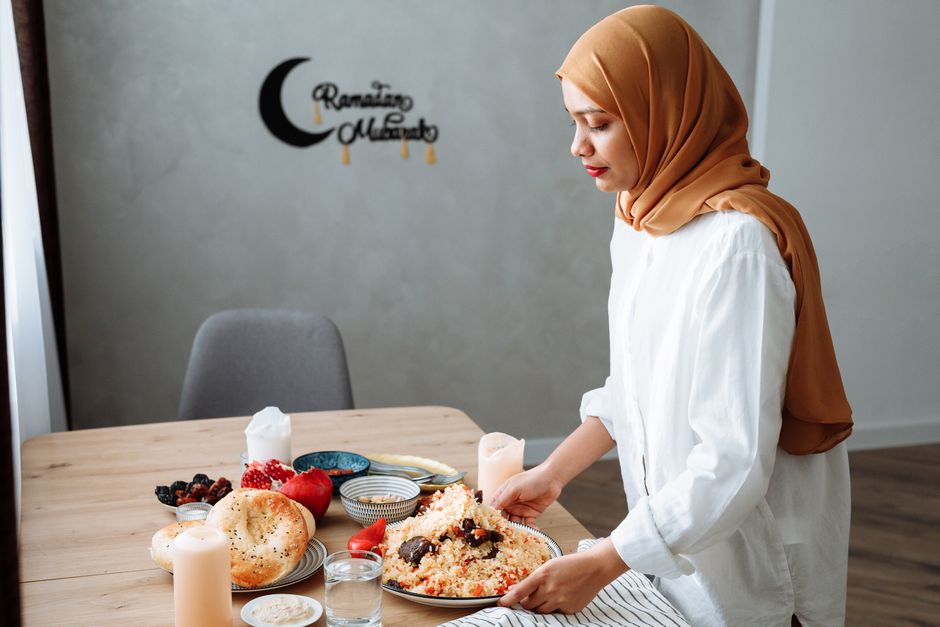
A Muslim diet is defined by two categories: halal, meaning permitted, and haram, meaning forbidden. These categories come from Islamic law, primarily the Quran and the recorded teachings of the Prophet Muhammad. The rules cover what foods and drinks are allowed, how animals must be slaughtered, and a few other practical matters like alcohol and blood.
For anyone trying to understand the diet — whether you follow it, cook for someone who does, or just want accurate information — the core rules are actually straightforward. The complexity tends to show up in the details: processed foods, additives, restaurant meals, and differences of opinion among scholars.
What Is A Muslim Diet Halal And Haram Explained?
Halal means lawful or permitted under Islamic law. Haram means unlawful or forbidden. Everything edible falls into one of these two categories, though some scholars add a third: makruh, meaning discouraged but not strictly forbidden.
The default rule in Islamic law is that foods are permitted unless specifically prohibited. That surprises many people. The list of forbidden items is relatively short. The list of permitted items is very long.
Four categories are clearly forbidden in the Quran:
- Pork and any part of the pig
- Blood
- Animals that were not slaughtered in the name of God
- Animals that died from causes other than slaughter — disease, accident, or natural death
Alcohol is also forbidden, based on separate Quranic verses. Some scholars extend this to any intoxicating substance.
Within halal, there is a concept called tayyib. This means wholesome or good. A food can be technically halal but still not tayyib if it is harmful, contaminated, or of poor quality. Some Muslims see this as a call to choose clean, nutritious food, not just ritually permitted food.
Why Is Pork Forbidden in Islam?
Pork is explicitly prohibited in the Quran. The prohibition is direct and leaves no room for interpretation within mainstream Islamic scholarship.
The Quran lists pork alongside blood and improperly slaughtered animals as forbidden. This appears in more than one verse, which scholars take as reinforcement of the rule.
What the Quran does not do is explain the reason. Some Muslims point to health concerns, and some point to the idea that the command is a test of obedience regardless of reason. Others note that pork was also restricted in Jewish dietary law, and that Islam shares some dietary principles with Judaism.
Pork shows up in more places than people expect. Gelatin from pork is common in marshmallows, gummy candies, and some yogurts. Lard appears in some baked goods and refried beans. Some vaccines and medications use pork-derived gelatin as a stabilizer, which has prompted specific religious rulings allowing their use when no alternative exists and the need is medical.
What Are the Rules for Halal Slaughter?
Halal slaughter, called zabiha, has specific requirements. The animal must be alive and healthy at the time of slaughter. The slaughterer must be a Muslim. The name of God must be invoked at the moment of slaughter. The cut must sever the windpipe, esophagus, and the major blood vessels in the neck.
The method is designed to cause rapid death and thorough blood drainage. The animal must be handled with care and not subjected to unnecessary suffering. Sharpening the blade before the animal is brought forward is part of the traditional requirement.
Stunning is a contested area. Some scholars allow it if the animal is still alive when slaughtered. Others reject it entirely. This is one reason halal certification standards vary between countries and certifying bodies.
Most fish and seafood do not require ritual slaughter. There is broad agreement among scholars that fish is halal without the zabiha process. Shellfish is a different story — some schools of thought permit it, others do not.

Is Alcohol Haram in All Forms?
Alcohol consumption is forbidden in Islam. The Quran addresses it in stages, ultimately prohibiting it clearly. Most scholars extend this beyond drinking to include any substance that intoxicates.
Cooking with alcohol is debated. Some scholars say the prohibition applies to the intoxicating substance itself, so if alcohol is fully evaporated during cooking, the food may be permissible. Others say the intent matters and any use of alcohol is forbidden. The evaporation argument is not universally accepted.
Alcohol in other products is a separate question. Trace amounts in vanilla extract, mouthwash, perfume, and some medications have generated extensive scholarly discussion. Many scholars distinguish between alcohol used as an intoxicant and alcohol used as a solvent or preservative in tiny amounts that have no intoxicating effect. This is not a settled matter across all schools of thought.
Some Muslims avoid all alcohol-containing products regardless of quantity or purpose. Others accept trace amounts in non-beverage items. Both positions exist within mainstream Islamic scholarship.
How Do You Know If Food Is Halal?
Certification labels are the most practical tool. A halal certification logo means a certifying body has reviewed the product and its supply chain. The strength of that assurance depends entirely on the certifying body.
Certification standards are not globally uniform. Different organizations apply different criteria, especially around stunning, cross-contamination, and alcohol-based ingredients. A product certified in one country may not meet the standards of a certifying body in another.
Ingredient lists help but are not always enough. Some ingredients can be animal-derived or plant-derived, and the label does not always say which. Common examples include mono- and diglycerides, gelatin, rennet, and natural flavors. When the source is unclear, some Muslims avoid the product; others research the manufacturer or accept it based on the default-permitted principle.
The phrase “suitable for vegetarians” is not the same as halal. A vegetarian product can still contain alcohol or be processed on equipment shared with pork.
What About Cross-Contamination and Shared Equipment?
Cross-contamination is a real concern for many Muslims. If a grill cooks both pork and chicken, or a fryer cooks both halal and non-halal items, some Muslims consider the halal food no longer permissible.
Scholars differ on this. Some apply strict rules: any contact with a haram substance makes the food haram. Others allow for negligible traces, especially when the contact is incidental and the haram substance is not a component of the food itself.
In practice, this is why separate preparation areas matter in halal restaurants and why some Muslims ask about cooking surfaces and fryer oil. It is also why some certification standards include requirements for dedicated equipment or documented cleaning between production runs.
What Foods Are Always Halal?
Most foods are halal by default. This includes all fruits, vegetables, grains, legumes, nuts, and seeds. It includes milk, eggs, and honey. It includes most fish and seafood, with some scholarly disagreement about shellfish.
Meat from cows, sheep, goats, chickens, and similar animals is halal when slaughtered according to zabiha rules. Meat from pigs is never halal. Meat from carnivorous animals — lions, tigers, dogs, cats — is generally considered haram. Meat from animals that are themselves considered unclean, like donkeys, is also haram in most schools of thought.
Processed foods need more attention. Bread, cereal, candy, yogurt, ice cream, and sauces can all contain hidden animal derivatives or alcohol. Reading labels and looking for certification is the most reliable approach when the source is uncertain.
How Does Halal Compare to Kosher?
Halal and kosher share some rules but are not the same. Both prohibit pork. Both require ritual slaughter. Both prohibit blood. But the details differ.
Kosher law prohibits mixing meat and dairy in the same meal. Halal does not. Kosher law prohibits certain cuts of meat and the sciatic nerve. Halal does not have the same restriction. Kosher law requires the slaughterer to be Jewish and trained in specific laws. Halal requires the slaughterer to be Muslim.
Some Muslims accept kosher meat as halal because the slaughter requirements overlap. Most scholars do not accept this automatically, because the invocation at slaughter differs. Some Jews do not accept halal as kosher for similar reasons. The two systems are related but distinct.
Frequently Asked Questions
Can Muslims eat food that is not certified halal?
Yes, if the food contains no haram ingredients and was not contaminated by haram substances. Certification is a practical tool for verifying this, not a religious requirement in itself.
Is seafood always halal?
Most fish and seafood are considered halal by the majority of scholars. Shellfish is debated — some schools permit it, others do not.
What happens if a Muslim eats haram food by mistake?
Islamic law generally does not hold a person responsible for unintentional actions. The person is expected to stop eating once they realize and seek forgiveness.
Is vanilla extract halal?
Vanilla extract typically contains alcohol, and scholarly opinion is divided. Some permit it because the amount is small and not intoxicating; others prohibit it entirely.
