
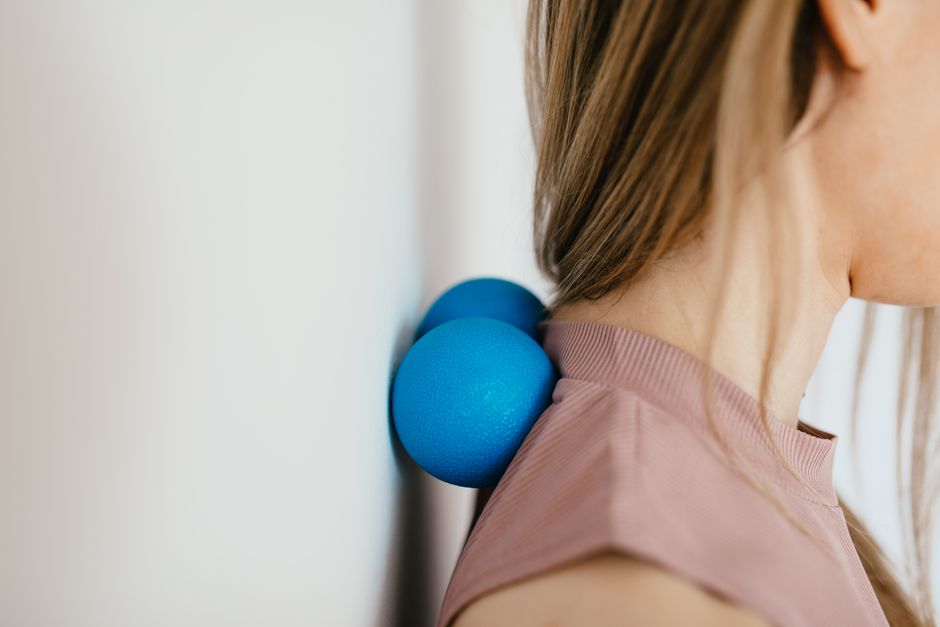
A muscle adhesion is an area of connective tissue that has become stuck to surrounding tissue instead of sliding freely. The term is used loosely in clinical practice, and not every “adhesion” a therapist or trainer describes is one. True adhesions are bands of fibrous tissue that form after injury, surgery, or prolonged immobility. Releasing them usually means restoring normal movement between tissue layers, most often through manual therapy, targeted stretching, and progressive loading of the affected area.
What Is A Muscle Adhesion And How Do You Release It?
The word “adhesion” gets used in two different ways, and the difference matters.
In a strict medical sense, an adhesion is a band of scar tissue that binds together surfaces that are normally separate. Surgeons see these after abdominal or pelvic operations, where loops of tissue that should slide past each other become tethered. That is a well-documented phenomenon with clear causes and, in some cases, clear surgical solutions.
In muscle and fascia, the picture is murkier. Fascia is the web of connective tissue that wraps every muscle, nerve, and organ. It is designed to let layers glide over one another. When that gliding is lost — after a strain, a period of immobilization, or repeated overload — the tissue can feel ropey, tender, or restricted. Whether this always represents a true adhesion at the cellular level is debated. Some researchers describe it as altered fascial stiffness or a loss of normal tissue glide rather than a discrete fibrous band.
What is not debated is the experience. People with these restrictions often report a pulling sensation, reduced range of motion, and tenderness when pressure is applied.
What causes tissue to stick
Several mechanisms are well established:
- Injury and inflammation. When muscle fibers tear, the body lays down collagen to repair the damage. If that collagen matures in a disorganized pattern, the result is stiffer, less elastic tissue.
- Immobilization. Connective tissue adapts to how it is used. Weeks of not moving a joint or limb can allow collagen fibers to cross-link in ways that limit glide.
- Surgery. Any incision cuts through fascia and muscle. Healing involves scar formation, and scar tissue does not move the way the original tissue did.
- Repeated overload. Chronic strain without adequate recovery can lead to localized areas of tissue that feel denser and more sensitive.
Age plays a role too. Collagen becomes less elastic over time, and the water content of fascia decreases. That does not mean older adults are destined to develop restrictions, but the tissue has less built-in resilience.
How Do You Know If You Have A Muscle Adhesion?
There is no blood test or imaging study that reliably confirms a muscle adhesion. This is an important point. MRIs and ultrasounds can show scar tissue in some cases, but they cannot show the functional quality of fascial glide. Diagnosis is typically clinical — based on history, palpation, and movement testing.
Common signs people notice:
- A localized area that feels tight or ropey even when the rest of the muscle is relaxed
- Reduced range of motion that does not improve with general stretching
- Pain or a pulling sensation with specific movements
- Tenderness when firm pressure is applied to a small area
These symptoms overlap with many other conditions. Trigger points, muscle strains, tendinopathy, and nerve entrapment can all produce similar complaints. A physical therapist or physician can help distinguish between them. Self-diagnosis is unreliable here, partly because the sensation of “tightness” does not always correspond to actual tissue restriction.
What Actually Helps Release A Muscle Adhesion?
The evidence for specific release techniques is mixed, and anyone who claims certainty is overstating what is known.
What follows is a summary of approaches that are commonly used and the state of evidence behind them.
Manual therapy
Hands-on techniques — including myofascial release, deep tissue massage, and instrument-assisted soft tissue mobilization — aim to break up restrictions and restore glide. Some studies suggest these approaches can reduce pain and improve range of motion in the short term. Whether they physically “break up” adhesions is unclear. Much of the benefit may come from neurological effects: reduced pain signaling, improved circulation, and increased tolerance to stretch.
Stretching and mobility work
Static stretching held for 15 to 60 seconds is a standard recommendation for improving flexibility. For fascial restrictions, dynamic stretching and movement patterns that take the tissue through its full range may be more useful than passive holding alone. The key is consistency. A single session rarely changes tissue that has been restricted for months.
Progressive loading
This is where the strongest evidence lies, particularly for tendon and muscle issues. Controlled loading — gradually increasing the demand on the tissue through resistance exercise — stimulates collagen remodeling and improves tissue quality over time. It is slower than manual therapy but more likely to produce lasting change.
Other approaches
Dry needling, foam rolling, and cupping are used by some clinicians. Evidence for these is limited and results vary. Some people report relief; others do not. None of these have been shown to permanently “release” an adhesion in controlled trials.





Does Stretching Alone Release Adhesions?
No. Stretching can improve flexibility and reduce the sensation of tightness, but it does not appear to permanently alter scar tissue or fascial structure on its own.
Tissue remodeling takes time and requires mechanical load. Collagen fibers reorganize in response to sustained, progressive demand — not to brief stretches. Think of it like a rope that has become stiff and tangled. Pulling on it occasionally will not straighten it. Repeated, controlled tension over weeks will gradually change its structure.
Stretching still has value. It can reduce pain, improve movement confidence, and prepare tissue for loading. But it works best as part of a broader plan, not as a standalone fix.
How Long Does It Take To Release A Muscle Adhesion?
There is no standard timeline. This is genuinely uncertain, and anyone who gives you a specific number of weeks is guessing.
What is known: connective tissue remodeling is a slow process. Collagen turnover in tendons and fascia occurs over months, not days. Improvements in pain and function often come faster than structural changes — sometimes within a few sessions of therapy — but that does not mean the underlying tissue has fully reorganized.
Factors that affect recovery time include:
- How long the restriction has been present
- The size and location of the affected area
- Whether there was surgery or significant trauma
- Age and general health
- How consistently the person follows through with loading and mobility work
Most people who improve do so gradually over several weeks to a few months. Some do not improve with conservative care and may need further evaluation.
When Should You See A Professional?
See a doctor or physical therapist if you have:
- Pain that is worsening rather than improving
- Significant loss of strength or sensation
- Swelling, redness, or warmth in the area
- A history of surgery in the affected region
- Symptoms that do not respond to several weeks of self-care
These signs can point to conditions other than a simple adhesion, including nerve compression, infection, or a more serious musculoskeletal problem. Getting an accurate diagnosis matters more than trying to release something that may not be the actual issue.
Can You Prevent Muscle Adhesions?
Not entirely. Some scar formation after injury or surgery is unavoidable and is part of normal healing.
What may reduce the risk of problematic restrictions:
- Moving the affected area gently soon after injury, within the limits your clinician advises
- Avoiding prolonged immobilization when it is safe to move
- Progressively loading tissue as healing allows
- Addressing chronic strain patterns before they become entrenched
Post-surgical rehabilitation is particularly important. Guided movement in the weeks after an operation helps maintain tissue glide and reduces the chance of stiff, painful scar tissue forming.
What The Evidence Does Not Support
Several claims about adhesions are not backed by good evidence:
- That a therapist can feel and “break up” adhesions with their hands. Tissue is stronger than that, and what is felt under the skin is more likely to be muscle tone, fascia tension, or fluid than a discrete adhesion.
- That a single session can permanently fix a long-standing restriction.
- That foam rolling or massage guns dissolve scar tissue. These tools may reduce pain and improve short-term mobility, but they do not appear to change tissue structure.
- That everyone has “knots” that need releasing. Muscle knots are a real sensation, but the term is imprecise and often used to describe normal areas of increased tone.
The honest position is that muscle and fascial restrictions are real, but our ability to diagnose and treat them is less precise than marketing suggests. The approaches with the best support are gradual, active, and consistent — not dramatic or quick.
Frequently Asked Questions
Can a muscle adhesion go away on its own?
Minor restrictions sometimes resolve with normal movement and time, especially after a mild strain. Long-standing or post-surgical restrictions usually need targeted movement and loading to improve.
Is a muscle adhesion the same as a knot?
Not exactly. A “knot” is a lay term for a tender, tight band of muscle, while an adhesion refers to connective tissue that has stuck to surrounding tissue. The two are often confused, and neither is precisely defined in clinical research.
Does massage release muscle adhesions?
Massage can reduce pain and improve short-term mobility, but evidence that it physically breaks up adhesions is limited. Any lasting change likely comes from gradual loading and movement rather than hands-on pressure alone.
How do you release a muscle adhesion at home?
Gentle movement, progressive stretching, and controlled strengthening of the affected area are the most reasonable home approaches. If symptoms persist beyond a few weeks or worsen, see a clinician for evaluation.
