
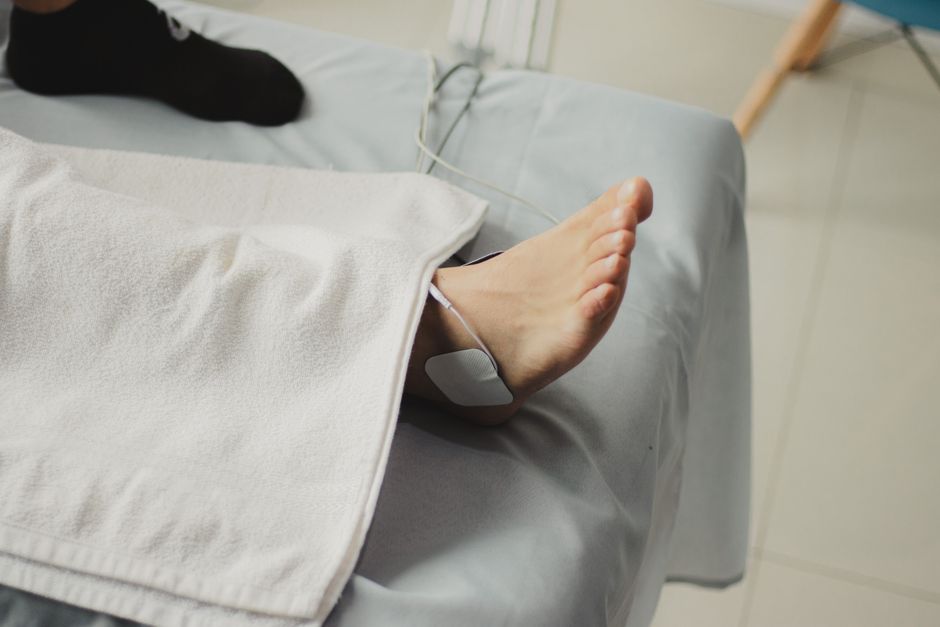
A high instep means the top of your foot arches upward more than usual. It is also called a high arch or cavus foot. You can often spot it by looking at your footprint — the middle section will be mostly missing because the arch never touches the ground.
Knowing whether you have a high instep matters because it changes how your foot absorbs shock, how your shoes fit, and what kind of foot pain you might develop. Many people live with high arches for years without problems. Others notice pain, frequent ankle sprains, or calluses that form in specific spots.
This article explains what causes a high instep, how to check for one at home, what problems it can create, and what your treatment options actually are.
What Is A High Instep Foot And How Do You Know?
A high instep foot has an unusually high arch along the middle of the foot. When you stand, most of your body weight rests on the heel and the ball of the foot. The middle section of the foot carries very little weight.
You can check at home with a simple wet test. Wet the bottom of your foot and step onto a piece of paper or a flat surface that shows the imprint. A normal foot shows a continuous imprint with a moderate curve on the inside. A flat foot shows nearly the whole sole. A high instep shows a very narrow band connecting the heel to the forefoot — sometimes with almost no connection at all.
Another sign is shoe fit. People with high insteps often feel pressure or tightness across the top of the foot. The shoe may feel too short even when the length is correct, because the instep pushes up against the tongue and laces.
You can also look at your feet while standing. If the arch looks visibly high and the toes appear to point downward slightly, that is consistent with a high instep. But appearances alone are not a diagnosis. A healthcare provider can confirm it and check for underlying causes.
What Causes A High Instep?
High insteps are often inherited. Some people simply have a foot structure that runs in their family. In these cases, the high arch is present from childhood and is usually the same on both feet.
Other times, a high instep develops because of a neurological condition. This is more serious. Conditions that affect nerve or muscle function can change the balance of muscles in the foot. When certain muscles weaken and others stay strong, the foot can pull into a higher arch position.
Charcot-Marie-Tooth disease is the most common neurological cause of high arches. It is a hereditary condition that affects the peripheral nerves. Other possibilities include cerebral palsy, spina bifida, and conditions that cause muscle imbalance in the lower leg.
A high instep that appears suddenly in adulthood deserves medical attention. If you always had normal arches and they are getting higher, or if only one foot is affected, a doctor should evaluate you. The same applies if the high arch comes with weakness, numbness, or difficulty lifting the front of your foot.
What Problems Can A High Instep Cause?
High arches change how force travels through your foot. A normal arch acts like a spring — it flattens slightly with each step and stores energy. A high arch tends to be rigid. It does not absorb shock well, so more force transfers to the heel, the ball of the foot, and up into the ankles and knees.
This can lead to several specific problems:
- Metatarsalgia — pain and inflammation in the ball of the foot from excessive pressure
- Plantar fasciitis — irritation of the thick band of tissue along the bottom of the foot
- Ankle instability — high arches tilt the foot outward, making lateral ankle sprains more likely
- Stress fractures — repeated impact on the outer edge of the foot can cause small cracks in the bones
- Calluses and corns — thickened skin forms on the heel, the ball of the foot, or the outside edge where pressure concentrates
- Hammertoes and clawed toes — the toe muscles can tighten over time because of the foot’s altered position
Not everyone with a high instep develops these problems. Some people have high arches and never experience foot pain. The risk increases with age, high-impact activity, unsupportive footwear, and excess body weight.
One important point: high arches and flat feet are not simply opposites with equal risks. Flat feet tend to cause overpronation, while high arches cause supination — the foot rolls outward. Supination places repetitive stress on the outside of the foot and ankle, which is why lateral ankle sprains are common in this group.

How Is A High Instep Diagnosed?
A doctor can usually identify a high instep during a physical exam. They will watch you stand, walk, and maybe do a few simple movements like rising onto your toes. They will also look at the wear pattern on your shoes. High-arch feet wear down the outside edge of the sole first.
Imaging may be used in some cases. A weight-bearing X-ray shows the angles of the foot bones while you stand. This can confirm the severity of the arch and show whether the foot structure is flexible or rigid.
The distinction between flexible and rigid matters for treatment. A flexible high arch flattens somewhat when you stand and move. A rigid high arch does not. Rigid high arches are more often associated with neurological causes and are harder to treat with simple measures.
If your doctor suspects a neurological cause, they may refer you to a neurologist. Nerve conduction studies and electromyography can assess how well your peripheral nerves and muscles are working. Genetic testing may be offered if a hereditary condition is suspected.
What Treatment Options Exist?
Treatment depends on whether you have symptoms. If your high instep causes no pain, you may not need any treatment at all. The goal is not to force the arch down — that is neither possible nor desirable. The goal is to manage symptoms and prevent injury.
Footwear is the first line of defense. Look for shoes with a wide toe box, a deep profile that accommodates a high instep, and good cushioning. Shoes with laces or straps that adjust across the top of the foot work better than slip-ons. Avoid shoes that press down on the instep.
Orthotic inserts are commonly recommended. For high arches, the typical recommendation is not a rigid arch support but a cushioned insole with a slight arch fill. The purpose is to distribute pressure more evenly and add shock absorption. Some research supports the use of cushioned orthotics for reducing symptoms in cavus feet, though individual results vary.
Physical therapy can help in specific ways. Strengthening the muscles around the ankle improves stability and may reduce the risk of sprains. Stretching the calf muscles and the plantar fascia can relieve tension. Balance training is often included because it improves proprioception — your body’s awareness of where your foot is in space.
Bracing may be used for more severe cases. An ankle-foot orthosis can support the foot and ankle during walking. This is more common when a neurological condition causes muscle weakness.
Surgery is reserved for severe cases that do not respond to conservative care. Procedures aim to realign the bones, transfer tendons to correct muscle imbalance, or fuse joints in the hindfoot. Surgery is a significant decision with real recovery time and risks. It is not something to rush into.
Can You Prevent A High Instep From Getting Worse?
If your high instep is inherited and stable, there is little evidence that any intervention changes its progression. The arch is a structural feature of your skeleton. No exercise, stretch, or device has been shown to permanently lower a high arch.
What you can do is manage the consequences. Wearing appropriate footwear and using cushioned insoles may reduce the load on specific areas of the foot. Staying at a healthy weight reduces overall force through the feet. Avoiding high-impact activities if they cause pain is reasonable, though low-impact exercise like swimming or cycling is generally well tolerated.
If the high instep is caused by a progressive neurological condition, the underlying disease will continue its course. Treatment then focuses on maintaining function, managing symptoms, and preventing falls and injuries. Working with a physical therapist and a neurologist is appropriate in these cases.
One myth worth addressing: some people believe that walking barefoot or on uneven surfaces strengthens the arch and corrects a high instep. No clinical evidence supports this. Barefoot walking on hard surfaces can increase pressure on the ball of the foot and worsen symptoms in people with cavus feet.
When Should You See A Doctor?
See a doctor if you have foot pain that limits your daily activities or lasts more than a few weeks. The same applies if you notice frequent ankle sprains, numbness or tingling in the foot, weakness when lifting your foot, or a change in your foot shape that you cannot explain.
If you have diabetes or peripheral artery disease, foot problems need earlier attention. Reduced sensation or blood flow can turn minor issues into serious ones. A podiatrist or orthopedic foot specialist can assess your foot structure and recommend appropriate care.
For most people, a high instep is simply a foot shape that requires the right shoes and some attention to foot health. For a smaller group, it signals an underlying condition that deserves proper evaluation. The key is knowing which group you are in — and that starts with an accurate assessment.
Frequently Asked Questions
How can I tell if I have a high instep at home?
Do the wet footprint test — if the middle of your footprint is very narrow or missing, you likely have a high instep. You may also notice tightness across the top of your shoes or calluses on the ball and outer edge of your foot.
Are high insteps hereditary?
Yes, many high insteps run in families and appear in childhood. However, a high instep that develops later in life or affects only one foot may signal a neurological condition that needs medical evaluation.
What kind of shoes are best for high insteps?
Look for shoes with a deep toe box, adjustable laces or straps, and good cushioning. Avoid shoes with rigid tops that press down on the instep, and consider adding cushioned orthotic inserts for shock absorption.
Can high instep cause knee or hip pain?
Yes, a high instep reduces shock absorption, which can transfer extra force up the leg to the ankle, knee, and hip. Not everyone experiences this, but it is a recognized pattern in people with cavus feet.
