
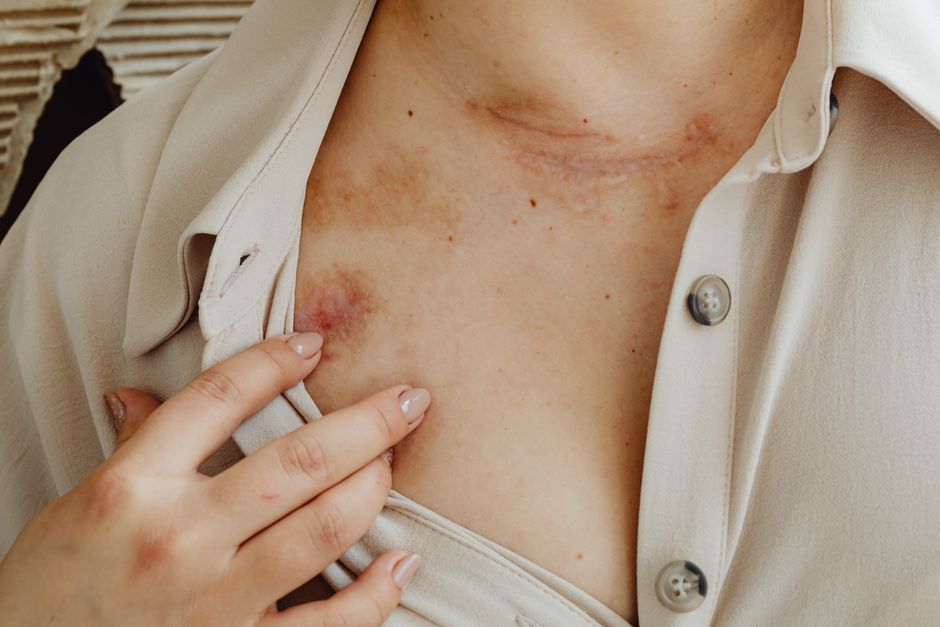
A degloving injury is a serious type of trauma where the top layers of skin and tissue are forcefully torn away from the underlying muscle, bone, or connective tissue. It is a medical emergency that requires immediate hospital care, often involving surgery to save the affected limb or body part. Treatment focuses on cleaning the wound, preventing infection, and restoring blood supply to the exposed deeper tissues.
What Exactly Happens in a Degloving Injury?
Think of the skin as a protective sleeve. In a degloving injury, that sleeve is ripped off, much like pulling a glove off your hand. The skin and the layer of fat beneath it separate from the deeper structures they normally cover.
This separation is the core problem. The blood vessels that supply the skin are torn. Without blood, the skin tissue dies quickly. The exposed muscle, tendons, or bone underneath are now vulnerable to severe infection and further damage.
These injuries are often more dangerous than they first appear. The wound may look small from the outside, but the internal damage can be extensive. The skin may appear bruised or discolored rather than completely torn away. This is known as a closed degloving injury, and it can be missed if not carefully evaluated.
What Are the Main Causes of Degloving Injuries?
Degloving injuries are almost always the result of high-energy trauma. They are not caused by minor bumps or scrapes. The force required to tear skin away from the body is immense.
Common causes include:
- Motor vehicle accidents: This is the most frequent cause. The impact can crush or shear skin against the vehicle or the road.
- Industrial accidents: Machinery with moving parts, such as rollers, gears, or conveyor belts, can catch clothing and pull skin off.
- Falls from height: Landing on a hard surface can create enough force to separate the skin.
- Sports injuries: High-impact collisions, such as those in football or rugby, can occasionally cause these injuries.
- Animal bites: Large animal bites can sometimes tear skin away from the underlying tissue.
It is important to understand that the severity of the injury is not always visible. Even if the skin is still attached, the blood supply may be damaged beyond repair.
How Are Degloving Injuries Classified?
Medical professionals classify degloving injuries into two main types. This classification is important because it guides treatment decisions.
Open degloving injuries are the most obvious. The skin is completely torn away, and the underlying structures are exposed. This type of injury is easier to diagnose because the damage is clearly visible.
Closed degloving injuries are more subtle. The skin remains intact, but it has been separated from the tissue beneath it. This separation creates a pocket filled with blood and lymphatic fluid. The skin may look bruised or swollen, but the full extent of the damage is hidden. This type is often more dangerous because it can be misdiagnosed as a simple bruise or contusion, delaying proper treatment.





What Is the Immediate Treatment for a Degloving Injury?
Treatment for a degloving injury is always surgical. There is no way to heal this type of wound without intervention. The goals are to preserve as much tissue as possible, prevent infection, and restore function.
The first step in the emergency room is to assess the damage and clean the wound thoroughly. Dead tissue must be removed because it provides a breeding ground for bacteria. This process is called debridement.
After cleaning, the surgeon must decide how to close the wound. The options depend on the size and location of the injury, as well as the condition of the tissue.
- Skin grafts: A thin layer of healthy skin is taken from another part of the body, such as the thigh, and placed over the exposed area.
- Flap surgery: A section of skin, fat, and sometimes muscle is moved from a nearby area to cover the wound. This tissue has its own blood supply.
- Replantation: In rare cases, if the torn skin is in good condition, it can be cleaned and reattached. This is a complex procedure with mixed outcomes.
In severe cases, multiple surgeries may be needed. The first operation focuses on cleaning the wound. Later operations may be required to perform grafts or flaps once the area is stable.
What Are the Potential Complications?
Degloving injuries carry a high risk of complications. The most immediate and serious threat is infection. The exposed deeper tissues are not protected by the skin’s natural barrier, making them highly susceptible to bacterial invasion. Infections can spread to the bloodstream, a life-threatening condition called sepsis.
Another significant risk is the death of the affected tissue, known as necrosis. If the blood supply is not restored in time, the tissue will die and must be removed. This can lead to permanent loss of function or, in severe cases, amputation of the affected limb.
Long-term complications are also common. Patients often experience:
- Nerve damage, resulting in numbness or weakness
- Scarring and cosmetic deformity
- Chronic pain
- Reduced mobility or range of motion in the affected area
Rehabilitation is a critical part of recovery. Physical therapy is often needed to regain strength and movement. The psychological impact of such a traumatic injury should not be underestimated, and counseling may be beneficial.
How Long Does Recovery Take?
Recovery from a degloving injury is a long process. It varies significantly based on the severity of the injury, the location, and the patient’s overall health. There is no standard timeline that applies to everyone.
Hospital stays can range from days to weeks, depending on the number of surgeries required and the risk of infection. After discharge, wound care continues at home. Patients may need to keep the area elevated and change dressings regularly.
Full recovery of function can take months. It is not uncommon for patients to require ongoing physical therapy for a year or more. Some patients experience permanent limitations, while others regain near-complete function. The outcome depends heavily on the extent of tissue damage and the success of the surgical repair.
How Can Degloving Injuries Be Prevented?
Because these injuries are caused by high-energy trauma, prevention focuses on reducing the risk of serious accidents.
Workplace safety is a major factor. Following proper safety protocols around heavy machinery is essential. Guards on moving parts, proper training, and avoiding loose clothing near equipment can reduce risk.
On the road, standard safety measures apply. Wearing a seatbelt and driving at safe speeds reduce the force of impact in a crash. Motorcyclists should always wear protective gear, which provides a layer of abrasion resistance.
No preventive measure can eliminate the risk entirely. These are unpredictable accidents. The best outcomes depend on rapid emergency response and appropriate surgical care.
Frequently Asked Questions
Is a degloving injury always visible?
No. Closed degloving injuries can look like a deep bruise or swelling while hiding severe internal tissue separation. Any high-impact injury with significant bruising should be evaluated by a medical professional.
Can a degloving injury heal without surgery?
No. The torn skin and tissue cannot reattach on their own, and the exposed deeper structures are at high risk of infection. Surgical intervention is always required.
What is the difference between a skin graft and a flap?
A skin graft uses a thin layer of skin from another body area without its own blood supply. A flap moves tissue with its blood vessels intact, which is often necessary for deeper wounds.
