
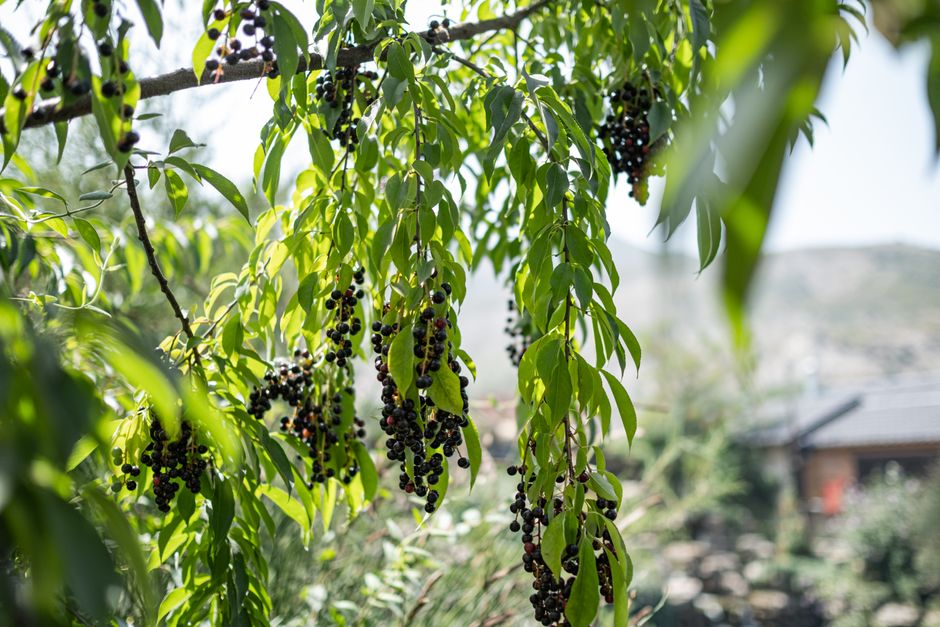
Chokecherries are small, dark-red to nearly black berries that grow on shrubs and small trees native to North America. They are safe to eat when cooked, but the raw fruit, pits, and leaves contain compounds that can make you sick. The name comes from the fruit’s intensely astringent, mouth-drying taste that can feel like it is choking you if you eat one raw.
What Is A Chokecherry And Is It Safe To Eat?
A chokecherry is the fruit of Prunus virginiana, a woody plant found across most of the United States and Canada. It grows in thickets, along roadsides, and near streams. The berries look similar to other wild cherries but are smaller and grow in clusters along a single stem.
The fruit is safe to eat after cooking. Raw chokecherries are not poisonous in small amounts, but they are unpleasant and carry real risk. Every part of the plant except the ripe flesh contains amygdalin, a compound that can release cyanide when chewed or crushed. The pits are the biggest concern. Swallowing a pit whole is not likely to harm you, but chewing them can be dangerous.
What Do Chokecherries Taste Like?
Raw chokecherries are intensely bitter and astringent. The word “choke” in the name is literal. Biting into one pulls the moisture from your mouth and leaves a dry, puckering sensation that can be hard to swallow.
When cooked with sugar, the flavor changes completely. The bitterness fades and the fruit takes on a rich, tart, wine-like taste similar to sour cherries or black currants. This is why chokecherries are traditionally used in jellies, jams, syrups, and sauces rather than eaten fresh.
Can You Eat Chokecherries Raw?
Eating a few raw chokecherries will not kill you, but it is not recommended. The flesh itself contains low levels of the cyanide-producing compound, and the pit contains much higher concentrations. The risk depends on how many you eat and whether you chew the pits.
Children are the biggest concern. A child who chews and swallows a handful of pits could consume enough to develop symptoms of cyanide poisoning. Symptoms include headache, dizziness, confusion, nausea, and rapid breathing. Severe cases can cause seizures or loss of consciousness. If you suspect someone has eaten a significant number of chewed chokecherry pits, call poison control immediately.
The practical rule is simple: spit out the pits, do not chew them, and do not let children eat raw chokecherries at all.




How To Prepare Chokecherries Safely
Cooking destroys the enzyme needed to release cyanide from amygdalin. This is why traditional recipes call for simmering the berries before use. The heat breaks down the dangerous compound and makes the fruit safe to eat.
The standard method is to simmer the berries in water, mash them to release the juice, and strain out the pits and skins. The resulting juice can be used for jelly, syrup, or wine. The pits should never be crushed or blended into the juice.
Do not use a blender or food processor on whole chokecherries unless you plan to strain the mixture thoroughly. Crushing the pits releases more amygdalin into the liquid. A fine mesh strainer or cheesecloth will catch the pit fragments, but the safest approach is to remove the pits before cooking when possible.
Nutritional Value Of Chokecherries
Chokecherries are genuinely nutritious. They contain vitamin C, vitamin K, manganese, and a class of antioxidants called anthocyanins — the same compounds that give blueberries and blackberries their deep color.
Some research suggests chokecherries have high antioxidant activity compared to other common berries. However, no large human trials have confirmed specific health benefits. The evidence for antioxidant effects in the body is limited, and eating chokecherries should not be treated as a medical intervention.
They are also naturally low in calories and contain fiber, though the exact amounts vary by growing conditions and ripeness. No official USDA nutritional profile exists for chokecherries because they are not a commercially farmed crop.
Chokecherries vs. Other Wild Berries
People often confuse chokecherries with several other dark berries that grow in similar areas. Knowing the difference matters because some lookalikes are more dangerous.
| Berry | Appearance | Edibility |
|---|---|---|
| Chokecherry | Small, dark red to black, grows in clusters | Safe cooked, pits must be removed |
| Pin cherry | Bright red, slightly larger, grows in clusters | Edible but tart, pit also contains amygdalin |
| Black cherry | Dark purple-black, larger, grows in clusters | Edible, pit contains amygdalin |
| Chokecherry lookalikes (buckthorn, nightshade) | Variable dark berries | Many are toxic, do not eat unless identified |
If you are not completely certain what a berry is, do not eat it. Wild foraging mistakes send thousands of people to emergency rooms every year. When in doubt, leave it alone.
Are Chokecherries The Same As Aronia Berries?
No. This is a common confusion because both fruits are sometimes called “chokeberry.” Aronia berries come from a different plant family entirely and are not related to chokecherries.
Aronia berries are safe to eat raw, though they are also very astringent. They do not contain cyanide-producing compounds. The similar names and similar appearance lead people to mix them up, but the safety profiles are different.
If you bought a product labeled “chokeberry” at a health food store, it is almost certainly aronia, not chokecherry. Commercial chokeberry products are made from aronia because chokecherries are not farmed at scale. Always check the botanical name on the label.
Can You Make Wine Or Juice From Chokecherries?
Yes, chokecherry wine and juice are traditional in many parts of North America, especially in the northern plains and Rocky Mountain regions. The process is the same as for any tart fruit: cook the berries, strain out the pits, and use the juice.
For wine, the juice is fermented with sugar and yeast. The fermentation process also breaks down amygdalin, adding another layer of safety. Commercial chokecherry wine is rare but exists in some regions.
Never use whole berries in a juicer that crushes seeds. If you make juice at home, always strain it through a fine mesh to remove every pit fragment before drinking.
Are There Any Real Health Benefits?
Chokecherries are a good source of antioxidants and vitamin C, and they are a traditional food in many Indigenous cultures across North America. Some Native American tribes used chokecherry preparations for digestive complaints and colds.
That said, no clinical trials have studied chokecherries for any specific health condition. The traditional uses are documented but not scientifically validated. Eating chokecherry jelly or syrup is a reasonable way to enjoy a seasonal wild food, but it is not a treatment for anything.
If you are looking for berries with strong clinical evidence behind them, blueberries, cranberries, and blackberries have far more research support. Chokecherries are best enjoyed for their flavor and cultural significance, not for medicinal purposes.
Frequently Asked Questions
Can eating raw chokecherries kill you?
A few raw berries will not kill a healthy adult, but chewing the pits can cause cyanide poisoning.
Children are at higher risk because their smaller bodies are more sensitive to the toxin.
Do you have to remove the pits before cooking chokecherries?
Yes, the pits contain amygdalin and should be strained out after cooking.
Crushing the pits during cooking releases more of the compound into the juice.
How can you tell a chokecherry from a poisonous berry?
Chokecherries grow in clusters on a single stem and have a single small pit inside.
If you cannot positively identify the plant, do not eat the berry — many wild berries are toxic.
Are chokecherries and chokeberries the same thing?
No, they are different plants. Chokeberries are aronia berries and are safe to eat raw.
Chokecherries are Prunus virginiana and must be cooked before eating.
