
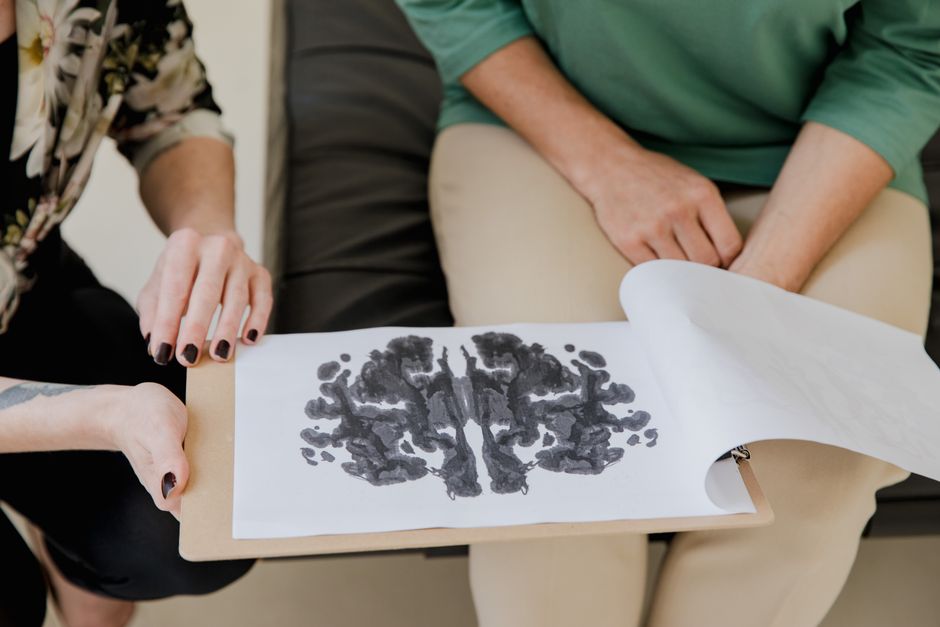
A blind spot in psychology is a gap in self-awareness—something about your own thoughts, feelings, or behaviors that you cannot see clearly, even though others might. It is not a physical eye problem. It is a mental one. These gaps form because your brain filters information to protect your self-image, and this filtering happens automatically, below your conscious awareness. Understanding how these blind spots work can help you recognize your own patterns, improve your relationships, and make better decisions.
What Is A Blind Spot In Psychology And How It Works
A psychological blind spot is an area where your perception of yourself does not match reality. You might believe you are a great listener, but your friends avoid confiding in you. You might think you are rational, but you make the same emotional decision every time. These mismatches exist because your mind actively protects you from information that feels threatening.
The brain processes an enormous amount of information every second. To function, it takes shortcuts. One shortcut is to filter out information that conflicts with your self-concept. If you see yourself as a kind person, your brain downplays moments when you acted selfishly. This is not deliberate dishonesty. It is an automatic protective mechanism that keeps your sense of identity stable.
Psychologists call this process motivated reasoning or self-deception. It operates below conscious thought. You do not choose to ignore your flaws. Your brain does it for you, quietly and constantly.
Why Do Psychological Blind Spots Form?
Blind spots develop from a combination of biology, childhood experiences, and social conditioning. Your brain is wired to maintain a coherent story about who you are. When new information threatens that story, the brain either distorts it, minimizes it, or blocks it entirely.
Childhood plays a major role. If you grew up being praised only for achievement, you may have a blind spot around your need for rest. If you were criticized for showing emotion, you may not notice how cold you come across to others. These patterns were once adaptive. They helped you survive your early environment. As an adult, they become invisible habits that no longer serve you.
Social media and cultural norms also shape blind spots. People surrounded by others who share their views rarely encounter opposing perspectives. Over time, their own biases feel like objective truth. This is why blind spots often show up most clearly in areas like politics, parenting, and work style—places where identity and values are deeply intertwined.
Common Examples of Psychological Blind Spots
Blind spots appear in predictable patterns. Recognizing these examples can help you spot your own.
- The overconfidence gap. People who are least skilled in an area often overestimate their ability. This is known as the Dunning-Kruger effect. They lack the very skill needed to recognize their own incompetence.
- The fairness illusion. Most people believe they are fair and objective. Research consistently shows that people favor their own group, even when they believe they are being impartial. The bias operates outside awareness.
- The reactivity pattern. Some people react strongly to criticism without realizing how defensive they appear. They experience the situation as being attacked, not as receiving feedback. Their blind spot is their own defensiveness.
- The projection habit. People often project their own unwanted traits onto others. Someone who struggles with laziness may constantly accuse coworkers of being lazy. The trait is visible in others but invisible in themselves.
None of these patterns mean someone is a bad person. They mean the brain is doing its job—protecting the self-concept from uncomfortable truths.





How Do Blind Spots Affect Relationships?
Blind spots are most damaging in close relationships. Partners, family members, and coworkers see your patterns clearly. You do not. This creates a frustrating dynamic where others point out your behavior and you genuinely do not recognize it.
In romantic relationships, blind spots often center on communication. One partner may believe they always compromise, while the other feels steamrolled. Both are telling the truth from their own perspective. The blind spot is the gap between intention and impact. You may intend to be flexible, but your actual behavior—tone, timing, follow-through—sends a different message.
In the workplace, blind spots affect leadership. A manager might see themselves as approachable while employees find them intimidating. The manager’s blind spot prevents them from adjusting their style. This is why 360-degree feedback—where peers and subordinates evaluate you—can feel shocking. It surfaces information your brain has been filtering out.
Relationship experts note that the most common blind spot is the belief that you are easy to talk to. People who are genuinely easy to talk to tend to be curious about feedback. People with this blind spot tend to explain why the feedback is wrong.
Signs You May Have a Psychological Blind Spot
Blind spots are, by definition, hard to see. But there are indirect signs that one exists.
You may have a blind spot if you notice a recurring pattern in your life. The same argument with different partners. The same criticism from multiple bosses. The same financial mistake every few years. Repetition is a strong signal that something outside your awareness is driving your behavior.
Strong emotional reactions to feedback are another sign. If someone offers gentle criticism and you feel furious, defensive, or tearful, that reaction often indicates the feedback hit a blind spot. The intensity of your emotion is proportional to how threatening the information feels to your self-concept.
You may also have a blind spot if you frequently explain away other people’s perceptions of you. Statements like “They just don’t understand me” or “That’s not what I meant” are common. Sometimes they are accurate. But if you hear yourself saying them often, it is worth pausing to consider whether a pattern exists.
Can You See Your Own Blind Spots?
The honest answer is that you cannot fully see your own blind spots. That is what makes them blind spots. If you could see them directly, they would not exist.
However, you can become aware of their presence indirectly. The goal is not to eliminate blind spots—that is neurologically impossible. The goal is to create conditions where you are more open to discovering them.
One effective approach is to ask for specific feedback rather than general feedback. Instead of asking “How am I doing?” ask “What is one thing I do that gets in my own way?” Specific questions invite specific answers. General questions invite polite non-answers.
Another approach is to notice your emotional reactions. When you feel unusually defensive, pause. Ask yourself what exactly felt threatening. The content of the feedback may be wrong, but your reaction still contains useful information about what you are protecting.
Some people find it helpful to work with a therapist. A good therapist is trained to notice patterns you cannot see. They can reflect your behavior back to you in a way that feels safe enough to hear. This is one of the most reliable ways to shrink the gap between how you see yourself and how others experience you.
Do Psychological Blind Spots Ever Go Away?
Blind spots do not permanently disappear. New ones can form as your life circumstances change. A blind spot that was resolved in your thirties may reappear differently in your fifties.
What changes is your relationship to them. People who have done self-reflective work become better at noticing when they are being defensive. They recover faster from feedback. They are more likely to say “That is hard to hear, but I want to understand it” rather than “That is not who I am.”
This is not about achieving perfect self-knowledge. That is not a realistic goal. It is about building the skill of curiosity—especially curiosity about the parts of yourself that feel uncomfortable. The people who grow the most are not the ones who have no blind spots. They are the ones who stay curious about what they might be missing.
Frequently Asked Questions
What causes a psychological blind spot?
Psychological blind spots form when your brain filters out information that threatens your self-image. This filtering is automatic and happens below conscious awareness to keep your sense of identity stable.
Can a person ever see their own blind spots?
You cannot see your own blind spots directly because that is what makes them blind spots. You can become aware of them indirectly through feedback, therapy, and noticing patterns in your emotional reactions.
Are psychological blind spots the same as cognitive biases?
They are related but not identical. Cognitive biases are systematic thinking errors that affect everyone, while psychological blind spots are personal gaps in self-awareness. A bias can contribute to a blind spot, but a blind spot is specifically about not seeing something in yourself.
How do you find out what your blind spots are?
Ask for specific feedback from people who know you well, and notice when you feel unusually defensive. If multiple people have told you the same thing over the years, that is likely a blind spot worth examining.
