
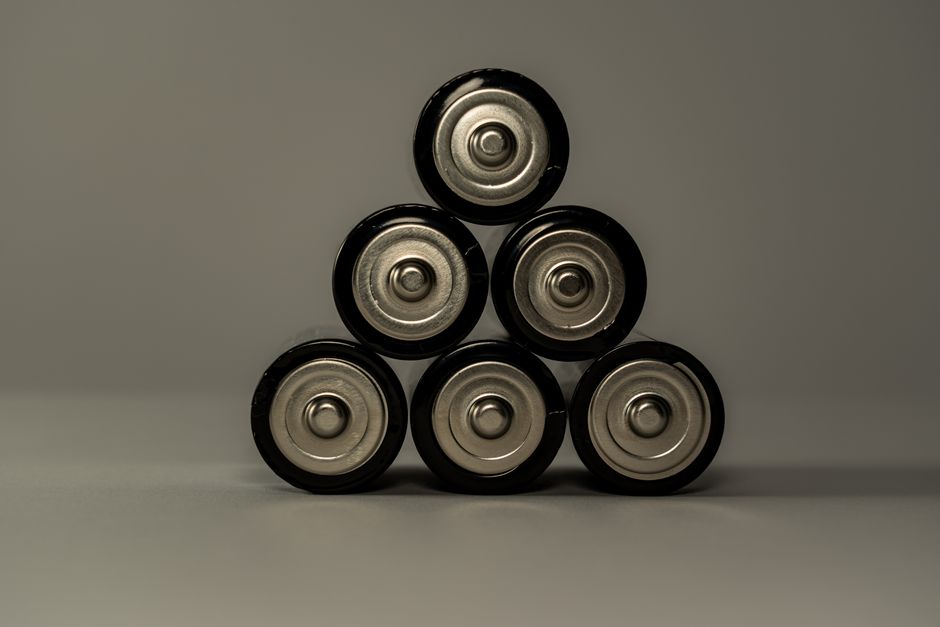
A battery cell is the basic building block that stores and releases electrical energy through chemical reactions. Every battery you use — from the AA in a remote to the pack in an electric vehicle — is made of one or more cells. Understanding how a battery cell works comes down to three parts: two electrodes, an electrolyte between them, and the chemical reaction that moves electrons through a circuit. The main types are primary cells (single-use), secondary cells (rechargeable), and specialized chemistries like lithium-ion, alkaline, and lead-acid.
What Is a Battery Cell and How Does It Work?
A battery cell converts chemical energy into electrical energy. This happens through a process called an electrochemical reaction. Inside the cell, two metal electrodes sit in a chemical solution or paste called the electrolyte.
One electrode is the anode (negative terminal). The other is the cathode (positive terminal). When the cell is connected to a device, a chemical reaction at the anode releases electrons. Those electrons travel through the wire to the cathode, powering the device along the way. The electrolyte allows ions to move between the electrodes to balance the charge.
This is not a single reaction. It is two separate reactions happening at each electrode. The anode gives up electrons (oxidation). The cathode accepts them (reduction). Together they form the redox reaction that produces electricity.
When the reactants are used up, the cell is dead. In a primary cell, that is the end. In a secondary cell, you can reverse the reaction by applying an external voltage — that is what charging does.
What Are the Main Parts of a Battery Cell?
Every battery cell has the same fundamental structure, even though the materials differ.
- Anode — the negative electrode. It releases electrons during discharge.
- Cathode — the positive electrode. It accepts electrons during discharge.
- Electrolyte — the medium that lets ions move between electrodes. It can be liquid, gel, or solid.
- Separator — a physical barrier that keeps the anode and cathode from touching while still allowing ions through.
- Current collectors — thin metal foils that carry electrons to and from the external circuit.
The separator is critical for safety. If the anode and cathode touch directly, the cell short-circuits. That causes rapid heating and, in some chemistries, fire or explosion.
The voltage of a single cell depends on the materials used. An alkaline AA cell produces about 1.5 volts. A lithium-ion cell produces about 3.6 to 3.7 volts. A lead-acid cell produces about 2 volts. This is determined by the electrochemical potential of the specific anode and cathode materials.
What Are the Different Types of Battery Cells?
Battery cells fall into two broad categories: primary and secondary. Within those categories, several chemistries dominate the market.
Primary Cells (Non-Rechargeable)
Primary cells produce electricity until their reactants are consumed. Then they are discarded. They cannot be recharged because the chemical reaction is not reversible in practice.
Alkaline cells are the most common primary cell. They power remotes, flashlights, clocks, and toys. They use zinc as the anode and manganese dioxide as the cathode, with a potassium hydroxide electrolyte. They last a long time on the shelf and perform well at moderate drain rates.
Zinc-carbon cells are cheaper but less efficient. They work fine for low-drain devices like wall clocks but struggle with high-drain gadgets like digital cameras.
Lithium primary cells (not lithium-ion) are used in devices that need long life and stable voltage, such as pacemakers, military equipment, and some smoke detectors. They perform well in extreme temperatures.
Silver-oxide and zinc-air cells are small and used in hearing aids, watches, and medical devices. Zinc-air cells use oxygen from the air as the cathode reactant, which gives them very high energy density for their size.
Secondary Cells (Rechargeable)
Secondary cells can be recharged by reversing the chemical reaction. This makes them cost-effective over time and essential for portable electronics and electric vehicles.
Lithium-ion (Li-ion) is the dominant rechargeable chemistry today. It powers smartphones, laptops, power tools, and electric vehicles. Li-ion cells have high energy density, meaning they store a lot of energy relative to their weight. They also have low self-discharge, so they hold their charge well when not in use.
Nickel-metal hydride (NiMH) cells are common in AA and AAA rechargeable sizes. They have lower energy density than lithium-ion but are cheaper and more tolerant of being fully discharged. They are a solid choice for household rechargeable batteries.
Lead-acid cells are heavy but inexpensive. They are used in car starter batteries, golf carts, and backup power systems. They can deliver very high surge currents, which is why they work well for starting engines.
Nickel-cadmium (NiCd) cells are older technology. They suffer from the “memory effect,” where repeated partial charging reduces capacity. They also contain toxic cadmium. They have been largely replaced by NiMH and lithium-ion in consumer products.





What Is the Difference Between a Cell and a Battery?
People use the words interchangeably, but technically they are different things.
A cell is a single unit that produces electricity from chemical reactions. A battery is two or more cells connected together. This is why a 12-volt car battery is called a battery — it contains six 2-volt lead-acid cells wired in series.
In practice, the word “battery” is used for single cells too. A AA alkaline battery is technically one cell. But the term is so common that even engineers use it loosely in casual speech.
Connecting cells in series adds voltage. Connecting them in parallel adds capacity (runtime). Most consumer devices use a single cell or a small series string. Electric vehicles use hundreds or thousands of cells in complex series-parallel configurations.
Which Battery Cell Type Should You Choose?
The right cell depends on the device and how you use it.
For low-drain devices used occasionally — like a wall clock or a TV remote — alkaline primary cells are the practical choice. They are cheap, widely available, and last for years.
For high-drain devices used frequently — like a gaming controller, flashlight, or digital camera — rechargeable NiMH AA cells save money over time. They hold up well under repeated use.
For built-in device batteries — smartphones, laptops, tablets — lithium-ion is the standard. No consumer choice is involved; the device comes with its battery sealed inside.
For automotive starting — lead-acid remains the standard because it delivers enormous current in a short burst. Some modern vehicles use lithium-ion starter batteries, but lead-acid is still the default for cost and reliability.
| Cell Type | Rechargeable? | Typical Voltage | Common Uses |
|---|---|---|---|
| Alkaline | No | 1.5 V | Remotes, clocks, toys |
| Zinc-carbon | No | 1.5 V | Low-drain devices |
| Lithium primary | No | 3.0 V | Medical devices, military |
| NiMH | Yes | 1.2 V | Rechargeable AA/AAA |
| Lithium-ion | Yes | 3.6–3.7 V | Phones, laptops, EVs |
| Lead-acid | Yes | 2.0 V per cell | Cars, backup power |
How Long Do Battery Cells Last?
There is no single answer because it depends on chemistry, usage, and storage conditions.
Primary cells lose capacity slowly over time even when unused. This is called self-discharge. Alkaline cells lose about 2 to 3 percent of their capacity per year at room temperature. Lithium primary cells lose even less — around 1 percent per year.
Rechargeable cells have a finite number of charge cycles. A lithium-ion cell typically lasts 300 to 500 full charge cycles before its capacity drops noticeably. NiMH cells can last several hundred cycles as well. After that, the cell still works but holds less charge.
Heat is the enemy of all battery cells. Storing them in a hot car or near a heat source accelerates chemical degradation. Cold slows chemical reactions, which is why batteries drain faster in winter — they are not losing capacity, but the chemical reaction rate drops.
Modern lithium-ion cells degrade fastest when kept at full charge or fully discharged for long periods. Keeping them between 20 and 80 percent charge extends their life. Most phone manufacturers build in software that manages this automatically.
Are Some Battery Cell Marketing Claims Misleading?
Yes. Battery marketing is full of vague and sometimes misleading language.
“High performance” or “long lasting” on a battery package is not a regulated standard. It usually means the manufacturer claims better performance than its own standard product. It does not mean it outperforms competitors.
“Heavy duty” on a zinc-carbon battery is especially misleading. It is a label, not a technical grade. Heavy-duty zinc-carbon cells are still inferior to standard alkaline cells in most high-drain applications.
Some rechargeable battery brands advertise exaggerated capacities. Independent testing has repeatedly found that some off-brand lithium-ion cells claim far more capacity than they actually deliver. Sticking with reputable brands reduces this risk.
There is no clinical or regulatory body that verifies consumer battery performance claims. The only reliable way to compare is independent testing or checking the milliamp-hour (mAh) rating printed on the cell — and even that can be overstated on cheap products.
Frequently Asked Questions
Can you recharge any battery cell?
No. Only secondary cells are designed to be recharged. Attempting to recharge a primary cell like an alkaline battery can cause leakage or rupture.
Why do lithium-ion batteries degrade over time?
Every charge cycle causes tiny structural changes in the electrodes. Over hundreds of cycles, these changes reduce the cell’s ability to hold charge.
Is it better to store batteries in the refrigerator?
No. Modern alkaline and lithium batteries have low self-discharge at room temperature. Refrigeration can introduce moisture that damages contacts.
What is the difference between mAh and voltage?
Voltage is the electrical pressure the cell provides. mAh (milliamp-hours) is the charge capacity — how long the cell can deliver a given current before going flat.
