
A rolled ankle is one of the most common injuries, and most people want to know the fastest way to get back on their feet. The quickest path to healing involves immediate protection, controlled movement, and a gradual return to activity. Resting completely for days can actually slow recovery, while doing too much too soon risks re-injury. The goal is to reduce swelling, maintain motion, and rebuild strength safely.
What Is a Rolled Ankle and Why Does It Hurt?
A rolled ankle happens when your foot twists inward or outward beyond its normal range. The most common type is an inversion sprain, where the foot rolls inward and damages the ligaments on the outside of the ankle. These ligaments are tough bands of tissue that hold bones together. When stretched too far, they tear partially or completely.
The pain you feel comes from the torn ligament and the inflammation that follows. Your body sends fluid and white blood cells to the area to start repairing the damage. That is why the ankle swells and feels warm. The bruising you see later is blood from small vessels that broke during the injury.
Sprains are graded by severity. A grade 1 sprain involves mild stretching and tiny tears. A grade 2 sprain means a partial tear with noticeable swelling and bruising. A grade 3 sprain is a complete tear of the ligament, often with severe swelling and instability. Most rolled ankles are grade 1 or 2, and they heal well with proper care.
What Helps A Rolled Ankle Heal Faster: The RICE Method and Its Limits
The RICE method — rest, ice, compression, and elevation — has been the standard advice for decades. It still forms the foundation of early ankle care, but research has refined how each part should be used. The old advice to ice for 20 minutes every hour has been replaced by more moderate guidance.
For the first 48 to 72 hours, the priority is controlling swelling. Ice reduces blood flow to the area, which limits inflammation. Apply ice for 15 to 20 minutes at a time, several times a day, with a cloth between the ice and your skin. Never apply ice directly to bare skin, as this can cause frostbite.
Compression with an elastic bandage helps prevent fluid from pooling in the ankle. Wrap it snugly but not so tight that your foot turns numb or changes color. Elevation is simple and effective — keep your ankle raised above heart level whenever you are resting. This uses gravity to help drain fluid away from the injury.
Rest does not mean complete inactivity. Studies have shown that too much rest delays healing. After the first day, gentle movement is better than keeping the ankle completely still. The key is to avoid activities that cause sharp pain while keeping the joint moving.
When to Start Moving: The Shift Toward Active Recovery
The biggest change in ankle sprain treatment is the move away from prolonged immobilization. Years of research show that early movement leads to faster recovery and better outcomes. The old advice to stay off the ankle for a week or two is no longer supported by evidence.
Active recovery means using the ankle within a pain-free range. On the first day after injury, you can gently move your foot up and down and in circles. These movements pump fluid out of the joint and prevent stiffness. They also send signals to the brain that help maintain coordination and balance.
Weight-bearing is encouraged as soon as you can tolerate it. If you can put weight on the ankle without severe pain, do so. Walking short distances with support is better than staying off it completely. Some research suggests that early weight-bearing speeds up ligament healing and reduces time away from work and sport.
This does not mean pushing through pain. Pain is a signal that tissue is still healing. The guideline is simple — if an activity causes sharp pain, stop. If it causes mild discomfort or stiffness, it is probably safe to continue.





Pain Relief Options: What Works and What to Avoid
Over-the-counter pain relievers can help manage discomfort during the first few days. Nonsteroidal anti-inflammatory drugs, or NSAIDs, reduce both pain and inflammation. Ibuprofen and naproxen are common examples. Acetaminophen relieves pain but does not reduce inflammation.
NSAIDs work best when started early and used for a short period. Taking them for more than a week without medical advice is not recommended due to risks to the stomach and kidneys. If you have a history of stomach ulcers, kidney disease, or take blood thinners, talk to a doctor before using NSAIDs.
Topical pain creams and gels are another option. Some contain NSAIDs and are absorbed through the skin directly into the injured area. These products tend to have fewer side effects than oral medications because less of the drug enters your bloodstream.
Arnica gel and other herbal remedies are popular for bruises and swelling. Some small studies suggest they may help, but the evidence is not strong. If you choose to use them, they are unlikely to cause harm, but do not rely on them as your primary treatment.
Rehabilitation Exercises: The Most Important Step for Full Recovery
Rehabilitation is the part of ankle recovery that people most often skip, and it is the most important. Ligaments do not just need time to heal — they need to be retrained. After an ankle sprain, the small muscles and nerves around the joint become weaker and slower. This is why a healed ankle can still feel unstable for weeks or months.
Range of motion exercises should start early. Write the alphabet with your foot by moving your ankle in all directions. This simple exercise keeps the joint mobile without putting weight on it. Do this several times a day once the initial pain starts to settle.
Balance exercises are the next step. Standing on one foot challenges the ankle to stabilize itself. Start by holding onto a counter or wall for support, then progress to standing without support. Aim for 30-second holds, repeating several times daily. Some research suggests that balance training reduces the risk of re-injury significantly.
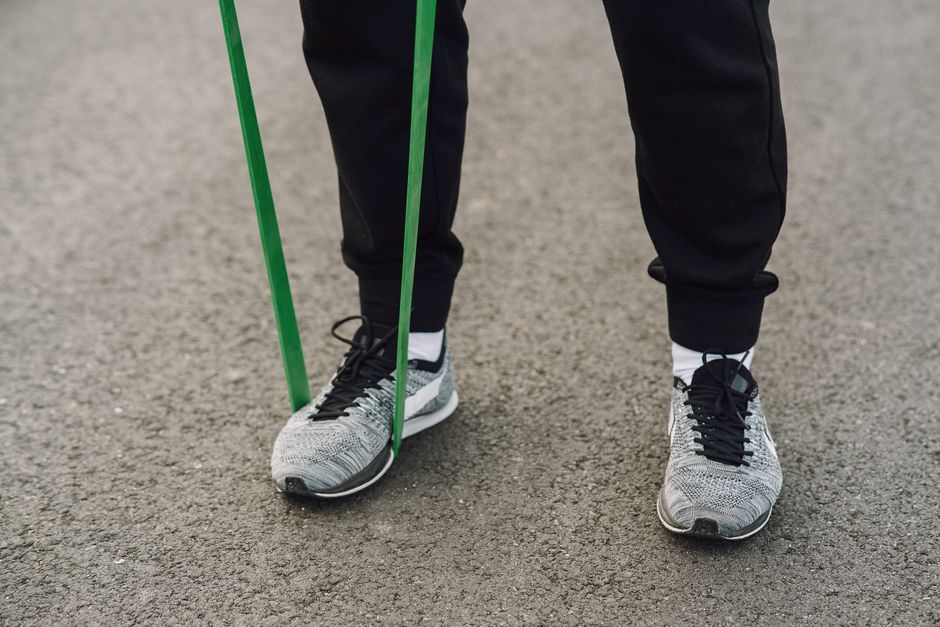
Strength exercises come later. Resistance bands can be used to work the ankle in all four directions — up, down, inward, and outward. Calf raises are another effective exercise. Start with both feet, then progress to single-leg raises as strength returns.
The timeline for returning to sport or heavy activity varies. A mild sprain may heal in one to two weeks. A moderate sprain can take three to six weeks. Severe sprains with complete ligament tears may require months. The safest approach is to return to activity gradually and only when you can walk, jump, and change direction without pain or instability.
When to See a Doctor
Most rolled ankles can be managed at home, but some need medical attention. See a doctor if you cannot bear weight on the ankle at all, if the pain is severe, or if the swelling does not improve after a few days of home care. These signs can indicate a fracture or a complete ligament tear.
Numbness, tingling, or a foot that looks pale or cold are also warning signs. These may indicate nerve or blood vessel damage. If you heard a popping sound at the moment of injury, that can indicate a more serious tear.
X-rays are not needed for every ankle sprain. Doctors use specific criteria to decide whether imaging is necessary. If you have tenderness over the bony parts of the ankle or cannot bear weight, an X-ray is usually recommended to rule out a fracture.
Untreated ankle sprains can lead to chronic instability. Repeated sprains weaken the ligaments further and can lead to long-term ankle problems. This is why rehabilitation is not optional — it is the difference between a full recovery and a recurring problem.
Preventing Future Ankle Sprains
The best treatment for a rolled ankle is preventing the next one. After one sprain, your risk of another is higher. This is partly due to weakened ligaments and partly due to reduced balance and proprioception — your body’s awareness of where your ankle is in space.
Continuing balance exercises after recovery helps address this. Even simple daily practice of standing on one foot while brushing your teeth can make a difference. Wearing supportive footwear during sports and on uneven ground also reduces risk.
Ankle braces or taping can provide extra support during the return to sport. Some athletes use these for several months after an injury. They do not weaken the ankle when used properly and can give you confidence while your strength rebuilds.
Frequently Asked Questions
How long does a rolled ankle take to heal?
Mild sprains usually heal in one to two weeks, while moderate sprains take three to six weeks. Severe sprains with complete ligament tears can take several months.
Should I ice a rolled ankle?
Yes, ice helps reduce swelling and pain in the first 48 to 72 hours. Apply it for 15 to 20 minutes at a time, several times a day, with a cloth between the ice and skin.
Can I walk on a rolled ankle?
Yes, if you can bear weight without severe pain, walking short distances is encouraged. Complete rest actually delays healing, so gentle weight-bearing and movement are better.
When can I return to sports after an ankle sprain?
Return when you can walk, jump, and change direction without pain or instability. This may take one week for mild sprains and several weeks or months for more severe injuries.
