
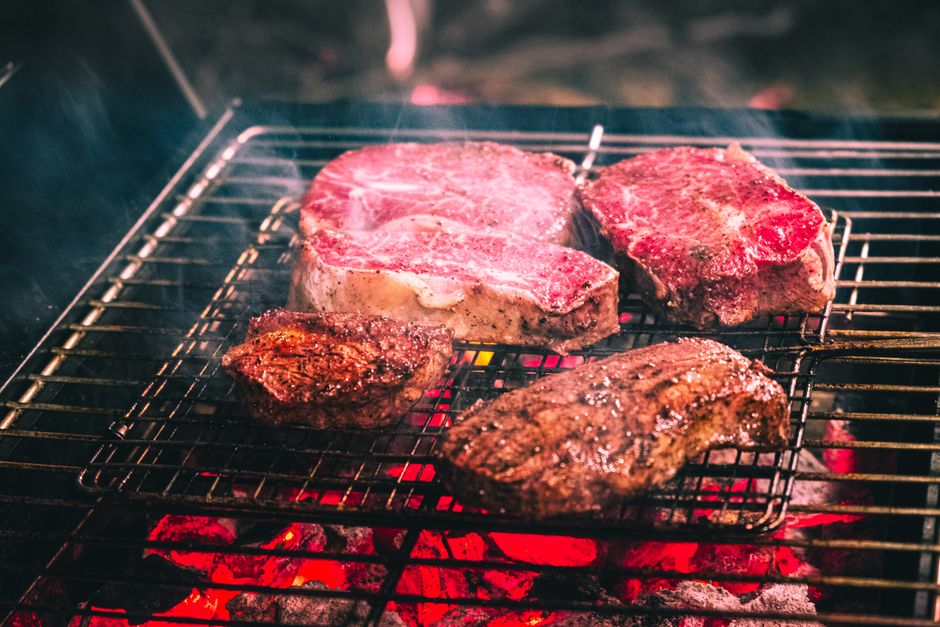
Gram for gram, steak has more protein than salmon. A 6-ounce cooked ribeye or sirloin delivers roughly 42 to 50 grams of protein, while the same portion of cooked salmon lands closer to 34 to 40 grams. That gap is real, but it is not the whole story — and for most people deciding between the two, it is not the most important number on the plate.
Both foods are protein-dense. Both are complete proteins, meaning they supply all nine essential amino acids your body cannot make on its own. The difference shows up in fat, calories, and a handful of micronutrients that matter more than the protein gap for many eaters.
What Has More Protein Steak Or Salmon?
Steak wins on protein per ounce, and the margin holds across most cuts and cooking methods.
Protein content concentrates when meat cooks because water cooks off. A raw 6-ounce steak and a cooked 6-ounce steak are not the same amount of food — the cooked version started heavier. This is why nutrition labels and food databases almost always specify whether the weight is raw or cooked. Mixing the two is one of the most common sources of confusion in protein comparisons.
The cut matters too. Leaner cuts like sirloin and top round pack slightly more protein per ounce than heavily marbled cuts like ribeye, because fat displaces protein by weight. A fattier steak can have less protein per ounce than a lean one, even though both are beef.
Salmon’s protein density is lower but fairly consistent. Farmed and wild salmon differ more in fat content than in protein. Wild salmon tends to be leaner, which nudges its protein-per-ounce figure slightly higher, but the difference is small.
How Much Protein Is in a 6-Ounce Serving of Each?
Here is a side-by-side look using cooked weights, which is the fairest way to compare.
| Food (6 oz cooked) | Protein | Calories (approx.) | Fat |
|---|---|---|---|
| Sirloin steak, lean | ~48–50 g | ~340–380 | ~14–18 g |
| Ribeye steak | ~42–46 g | ~480–540 | ~34–40 g |
| Salmon, farmed | ~34–38 g | ~350–400 | ~20–24 g |
| Salmon, wild | ~38–40 g | ~280–320 | ~10–14 g |
These are approximate ranges drawn from standard nutrient databases. Exact values shift with the specific cut, the animal’s diet, and how the fish or meat was raised. The pattern is what matters: steak generally leads on protein, salmon generally leads on fat quality.
Notice that wild salmon is the outlier. It delivers protein close to a fatty steak while carrying far fewer calories, because it is so much leaner.
Does Protein Quality Matter More Than Protein Quantity?
For total protein, no — steak is higher. For protein quality, the two are essentially tied.
Both beef and salmon are complete proteins with strong digestibility scores. Your body can use the amino acids from either one efficiently. Neither is meaningfully “better” at building muscle on a gram-for-gram basis. This is where a lot of online debate goes wrong: people argue about protein sources as if quality varies wildly between animal foods, when in reality the major animal proteins are all high quality.
A less obvious point — the leucine content. Leucine is an amino acid that helps trigger muscle protein synthesis. Beef and salmon both contain enough leucine per serving to support that process in most adults. You would need a much smaller portion of either to hit a meaningful leucine threshold than most people realize, which means the protein gap between steak and salmon rarely changes the practical outcome for muscle building.



Which One Is Better for Muscle Building and Recovery?
Both support muscle building well. The better choice depends on your total diet, not on this single comparison.
Muscle growth responds to total daily protein and resistance training, not to which animal the protein came from. If you hit your daily target, swapping steak for salmon or salmon for steak will not noticeably change your results. What can change is your calorie intake, because fatty steak carries substantially more calories per gram of protein than salmon does.
For someone watching calories, salmon — especially wild salmon — often delivers a better protein-to-calorie ratio. For someone who needs to pack in protein with fewer bites, a lean steak is efficient. Older adults, who tend to need more protein per meal to stimulate muscle synthesis, may find either works well because both are protein-dense.
- Steak: higher protein per ounce, more calories if fatty, rich in iron, zinc, and B12
- Salmon: slightly less protein, fewer calories when wild, rich in omega-3 fats and vitamin D
What About Fat, Calories, and Heart Health?
The fat in salmon is largely omega-3 fatty acids, which are associated with cardiovascular benefits. The fat in steak is mostly saturated and monounsaturated, which most health authorities recommend limiting.
This is the strongest argument for salmon over steak — not protein, but fat composition. The American Heart Association and similar bodies have long recommended eating fish, particularly fatty fish, as part of a heart-healthy diet, and limiting red meat. That guidance rests on decades of observational and clinical research linking fish intake with lower cardiovascular risk and higher red meat intake with higher risk.
That said, the evidence on red meat is more nuanced than headlines suggest. Processed meats — bacon, sausage, deli meats — carry the clearest risk signal. Unprocessed red meat like steak shows a weaker and more debated association. Lean cuts eaten in moderation fit within most dietary patterns. The honest position: fish has the stronger cardiovascular evidence, and red meat is best kept moderate.
If you are choosing between the two purely for heart health, salmon has the better track record. If you are choosing for protein alone, steak is higher.
Are There Other Nutrients Where One Clearly Wins?
Each food brings nutrients the other lacks, and this often matters more than the protein difference.
Steak is one of the best dietary sources of heme iron, the form your body absorbs most easily. It is also high in zinc and vitamin B12. For people at risk of iron deficiency — including many menstruating women — this is a meaningful advantage that salmon cannot match.
Salmon is one of the few natural food sources of vitamin D and is among the richest sources of long-chain omega-3 fats. Those fats support heart and brain health. Beef contains almost none. This is a genuine nutritional gap in salmon’s favor.
Neither food is a complete nutritional package on its own. The strongest dietary pattern includes both fish and moderate amounts of lean red meat, alongside plants, rather than treating one as the winner.
How Much Protein Do You Actually Need?
The Recommended Dietary Allowance for protein is 0.8 grams per kilogram of body weight per day for most adults. That works out to roughly 56 grams per day for a 154-pound person.
That RDA is a minimum to prevent deficiency, not an optimal target. People who are physically active, older, or trying to build muscle often need more — commonly cited ranges run higher, though exact optimal amounts remain debated. A single 6-ounce steak or salmon fillet can cover a large share of a day’s needs on its own.
For most people, the practical takeaway is simple: either food easily helps you meet your protein needs. The choice between them comes down to calories, fat quality, and the other nutrients you want on your plate.
Frequently Asked Questions
Does steak have more protein than salmon?
Yes. A 6-ounce cooked steak generally provides more protein than the same weight of cooked salmon, though the exact amount depends on the cut.
Is salmon or steak better for building muscle?
Both support muscle building well because both are complete, high-quality proteins. Total daily protein intake and resistance training matter far more than which of the two you choose.
Is salmon healthier than steak?
For heart health, salmon generally has the stronger evidence because of its omega-3 fats, while red meat is best kept moderate. Steak offers more iron and zinc, which matters for some people.
How much protein is in a 6-ounce salmon fillet?
A 6-ounce cooked salmon fillet typically provides roughly 34 to 40 grams of protein, depending on whether it is farmed or wild.
