
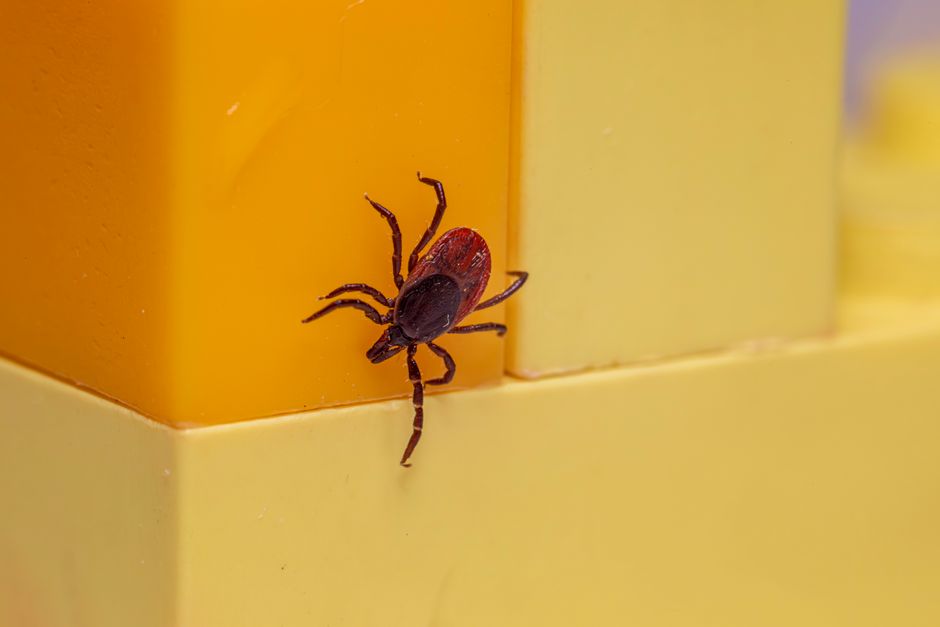
A tick bite often goes unnoticed. Unlike a mosquito bite, it usually doesn’t hurt or itch right away. The tick’s saliva contains compounds that numb the skin and prevent your blood from clotting. This allows the tick to feed for days without you feeling a thing. The real risk is not the bite itself, but the diseases a tick can pass to you while it feeds.
What Happens When A Tick Bites You
The process starts when a tick lands on your skin and finds a good spot to feed. It inserts its mouthparts, which look like tiny barbs, into your skin. It does not burrow completely under the skin. It only embeds its head and mouthparts, leaving its body exposed so it can swell with blood.
As the tick feeds, it secretes saliva that contains an anesthetic and an anti-clotting agent. This is why you rarely feel the bite. The tick then slowly draws blood. Most ticks need to be attached for at least 24 hours before they can transmit certain diseases. Some pathogens can be transmitted faster, so early removal matters.
The bite itself usually leaves a small red bump. In most cases, the bump fades within a few days. The danger comes from pathogens the tick may carry, such as Borrelia burgdorferi, which causes Lyme disease. The longer the tick stays attached, the higher the risk of disease transmission.
How Long Does A Tick Need To Stay Attached?
This is one of the most important questions about tick bites. The answer depends on the disease. Lyme disease is not transmitted instantly. Research consistently shows that the bacteria causing Lyme disease typically takes 36 to 48 hours of attachment before it moves from the tick’s gut into its saliva and into you.
Other diseases are faster. Anaplasmosis and babesiosis can be transmitted within hours of attachment. Powassan virus is even faster — some studies suggest it can be transmitted within 15 minutes of a bite. This is why checking for ticks daily is so important, especially after spending time in grassy or wooded areas.
If you find a tick and remove it within 24 hours, your risk of Lyme disease is very low. The risk increases significantly if the tick has been attached for more than 48 hours. A fully engorged tick — one that looks swollen and round — has likely been feeding for several days.
What Does A Tick Bite Look Like?
A tick bite can look different depending on how long the tick was attached and whether a disease was transmitted. Right after removal, you might see a small red spot. This is a normal reaction to the bite itself.
The classic Lyme disease rash is called erythema migrans. It often looks like a bull’s-eye — a red ring with a clear center. But this pattern is not universal. Many people develop a solid red rash that expands slowly. The rash typically appears 3 to 30 days after the bite and can grow to several inches wide.
Not every tick bite produces a rash. Some people infected with Lyme disease never develop one. If you have flu-like symptoms — fever, chills, muscle aches, fatigue — after a tick bite, see a doctor even if you have no rash. The absence of a rash does not rule out a tick-borne illness.





How To Remove A Tick Safely
Proper removal reduces the risk of disease transmission. Use fine-tipped tweezers. Grasp the tick as close to your skin as possible. Pull upward with steady, even pressure. Do not twist or jerk the tick — this can cause the mouthparts to break off and remain in your skin.
Do not use petroleum jelly, nail polish, heat, or alcohol to try to make the tick detach. These methods do not work and may cause the tick to regurgitate saliva into your wound, which can increase infection risk. The goal is to remove the tick intact and quickly.
After removal, clean the bite area with rubbing alcohol or soap and water. Place the tick in a sealed bag or container. Some health departments accept ticks for testing, though routine testing is not always recommended. If you develop symptoms, having the tick can help your doctor identify potential diseases.
If the mouthparts break off and remain in the skin, try to remove them with clean tweezers. If you cannot remove them easily, leave them alone and let your skin heal. The body will often push them out on its own. Watch the area for signs of infection.
When Should You See A Doctor?
See a doctor if you develop a rash or flu-like symptoms within 30 days of a tick bite. This includes fever, chills, headache, fatigue, and muscle or joint aches. Early treatment of tick-borne diseases is important. Delaying treatment can lead to more serious complications.
Some doctors prescribe a single dose of doxycycline as a preventive measure after a tick bite. This is only recommended in specific situations — if the tick was attached for more than 36 hours, if you live in an area where Lyme disease is common, and if you can start the antibiotic within 72 hours of removing the tick. This is not routine practice for every tick bite.
Do not wait for symptoms to worsen. If you feel unwell after a tick bite, contact a healthcare provider. Tell them about the bite, when it happened, and how long the tick was attached. This information helps guide testing and treatment decisions.
How To Prevent Tick Bites
Prevention is the most effective strategy. Ticks live in grassy, brushy, and wooded areas. They do not jump or fly. They wait on the tips of grass and leaves and grab onto passing animals or people.
When spending time outdoors, use an EPA-registered insect repellent containing DEET, picaridin, or oil of lemon eucalyptus. Treat clothing with permethrin, which kills ticks on contact. Wear long sleeves and pants when possible, and tuck your pants into your socks in high-risk areas.
After coming indoors, do a full-body tick check. Ticks prefer warm, moist areas like the armpits, groin, scalp, and behind the ears. Check your gear — backpacks, jackets, and pets can carry ticks into your home. Tumble dry clothes on high heat for at least 10 minutes to kill any ticks that survived the wash.
Showering within two hours of coming indoors has been shown to reduce the risk of Lyme disease. It can wash off unattached ticks and provides a good opportunity for a thorough tick check.
What Are The Common Tick-Borne Diseases?
Different regions carry different risks. Lyme disease is the most common tick-borne illness in the United States, concentrated in the Northeast and upper Midwest. It is caused by the black-legged tick, also known as the deer tick.
Rocky Mountain spotted fever is more common in the Southeast and South Central states. It is transmitted by the American dog tick and the Rocky Mountain wood tick. Early symptoms include fever, headache, and a distinctive spotted rash. It can be severe if not treated promptly.
Ehrlichiosis and anaplasmosis are less common but still serious. Both cause fever, headache, and fatigue. Babesiosis is a parasitic infection that affects red blood cells and can cause malaria-like symptoms. It is most common in the Northeast and upper Midwest.
Alpha-gal syndrome is a newer concern. A bite from the lone star tick can trigger an allergy to red meat. This condition causes hives, stomach pain, or difficulty breathing hours after eating beef, pork, or lamb. Symptoms usually appear 2 to 6 hours after eating the meat.
Frequently Asked Questions
Can a tick bite make you sick immediately?
No. Most tick-borne diseases take hours to days to transmit after the tick attaches. Symptoms usually appear days or weeks after the bite, not right away.
What should I do if I find a tick on me?
Remove it immediately with fine-tipped tweezers, pulling straight up with steady pressure. Then clean the area with rubbing alcohol or soap and water and watch for symptoms.
Does a tick bite always leave a bull’s-eye rash?
No. The bull’s-eye rash is common in Lyme disease but not universal. Some people get a solid red rash, and others get no rash at all.
Can a tick bite cause an allergy to meat?
Yes. A bite from the lone star tick can cause alpha-gal syndrome, an allergy to red meat that develops weeks after the bite.
