

The first month of pregnancy is counted from the first day of your last menstrual period, not from conception. During these first four weeks, a fertilized egg travels down the fallopian tube, implants in the uterine lining, and begins forming the earliest structures of the embryo. By the end of week four, the embryo is roughly the size of a poppy seed, and the placenta is starting to form to provide future nutrients and oxygen.
How Is The First Month Of Pregnancy Counted?
Pregnancy is measured from the first day of your last period. This means that during week one and week two, you are not actually pregnant yet. Your body is preparing to release an egg.
Conception typically happens around week three, when the sperm fertilizes the egg. The fertilized egg, now called a zygote, begins dividing rapidly as it travels toward the uterus. This journey takes about three to four days.
By week four, the blastocyst reaches the uterus and implants into the endometrial lining. This implantation triggers the release of human chorionic gonadotropin (hCG), the hormone that pregnancy tests detect.
What Happens In The First Month Of Pregnancy: Week By Week
Understanding the timeline helps make sense of what is happening inside your body. Here is what occurs during each of the first four weeks.
Week One and Week Two
Your body is shedding the previous uterine lining during your period. The pituitary gland releases hormones that stimulate the ovaries to prepare an egg for release. The uterine lining thickens in preparation for a potential pregnancy.
Week Three
Ovulation occurs, and the egg travels into the fallopian tube. If sperm are present, fertilization happens within 12 to 24 hours of ovulation. The fertilized egg begins dividing into multiple cells as it moves toward the uterus.
Week Four
The blastocyst implants into the uterine lining. Cells begin differentiating into two groups: one becomes the embryo, and the other becomes the placenta. The neural tube, which will become the brain and spinal cord, starts to form. This is a critical period for fetal development.
What Symptoms Might You Notice In The First Month?
Many women experience no symptoms at all in the first month. Others notice subtle changes. Symptoms vary significantly from person to person.
- Missed period: This is often the first sign that prompts a pregnancy test.
- Breast tenderness: Hormonal changes cause breasts to feel swollen, heavy, or sore.
- Fatigue: Rising progesterone levels can make you feel unusually tired.
- Mild cramping: Implantation can cause light cramping or spotting, often called implantation bleeding.
- Nausea: Morning sickness typically starts later, but some women feel queasy early.
- Frequent urination: Increased blood flow to the pelvic area affects the bladder.
These symptoms are caused by rapid rises in estrogen and progesterone. They do not indicate the health of the pregnancy. Some women with perfectly healthy pregnancies have no symptoms at all in the first month.


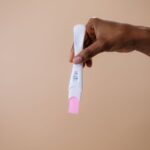


When Should You Take A Pregnancy Test?
Home pregnancy tests detect hCG in your urine. The hormone is only present after implantation occurs. Testing too early can produce a false negative.
Most home tests are accurate if taken on the first day of your missed period. This is approximately two weeks after conception. Some sensitive tests claim to detect pregnancy earlier, but the results are less reliable.
If you test negative but your period does not arrive, wait three to five days and test again. hCG levels double roughly every 48 to 72 hours in early pregnancy. A blood test at a doctor’s office can detect pregnancy even earlier than a urine test.
What Prenatal Steps Should You Take In The First Month?
If you suspect you are pregnant, start taking a daily prenatal vitamin. Folic acid is the most important nutrient during the first month because it helps prevent neural tube defects. These defects develop between week three and week four, often before you know you are pregnant.
Schedule an appointment with your healthcare provider. Many doctors see you for a confirmation visit around week eight. This first appointment typically includes a physical exam, blood work, and a discussion of your medical history.
Stop alcohol, tobacco, and recreational drugs immediately. No safe amount of alcohol has been established during pregnancy. Limit caffeine to 200 milligrams per day, which is about one 12-ounce cup of coffee.
Review your medications with your doctor. Some prescription medications are not safe during pregnancy. Do not stop a prescribed medication without consulting your doctor first.
What Developmental Milestones Occur In The First Month?
By the end of week four, the embryo has between 100 and 300 cells. It is about 1 to 2 millimeters long, roughly the size of a poppy seed.
The three primary germ layers have formed. These layers will develop into all of the body’s tissues and organs:
- Ectoderm: Becomes the nervous system, skin, and hair.
- Mesoderm: Becomes muscles, bones, and the circulatory system.
- Endoderm: Becomes the digestive system, lungs, and liver.
The neural tube, which forms the foundation of the brain and spinal cord, closes around day 28. The heart begins as a simple tube that will start beating around week five or six. The amniotic sac and yolk sac are forming to provide protection and early nutrition.
What Should You Avoid During The First Month?
The first month is when the embryo is most vulnerable to damage. Organs are forming, and exposure to harmful substances can cause developmental problems.
Certain foods carry risks that are higher during pregnancy. Avoid raw or undercooked meat, unpasteurized dairy products, and raw fish. These can contain bacteria or parasites that cause foodborne illness. Wash all fruits and vegetables thoroughly.
Do not use hot tubs, saunas, or steam rooms. High body temperature during the first trimester has been associated with an increased risk of neural tube defects. Keep your core body temperature below 102 degrees Fahrenheit.
Some herbal supplements are not safe during pregnancy. Do not assume a product is safe because it is natural. Always check with your doctor before taking any supplement.
When Should You Call Your Doctor?
Some symptoms require immediate medical attention. Call your healthcare provider if you experience any of the following during the first month:
- Heavy bleeding that soaks through a pad every hour
- Severe cramping or pain on one side of the abdomen
- Fever above 100.4 degrees Fahrenheit
- Fainting or severe dizziness
Light spotting is common and often harmless. Heavy bleeding is not normal and should be evaluated. Severe pain on one side could indicate an ectopic pregnancy, which requires emergency treatment.
What Happens At The First Prenatal Visit?
Most healthcare providers schedule the first prenatal visit between week 8 and week 12. However, some women are seen earlier, especially if they have medical conditions or a history of pregnancy complications.
At this visit, your doctor will confirm the pregnancy, determine your due date, and perform baseline tests. Blood tests check your blood type, hemoglobin levels, and immunity to certain diseases. A urine test checks for infection and protein.
Your doctor will ask about your medical history, family history, and lifestyle habits. This information helps identify any risks early. Be honest about medications, supplements, alcohol use, and any health conditions.
Frequently Asked Questions
Can you feel pregnancy symptoms in the first month?
Yes, some women notice breast tenderness, fatigue, and mild cramping in the first month. Many women, however, feel no symptoms at all during this early stage.
When does the baby’s heart start beating?
The heart begins as a tube around week four, but it does not start beating until about week five or six. You typically cannot hear it on an ultrasound until around week six or seven.
How soon can a pregnancy test detect pregnancy?
Most home tests are accurate on the first day of your missed period, about two weeks after conception. Testing earlier may produce a false negative because hCG levels are still low.
Is bleeding normal in the first month of pregnancy?
Light spotting around the time of implantation is normal and affects about one in four women. Heavy bleeding or severe cramping is not normal and requires prompt medical evaluation.
The first month of pregnancy is a period of rapid and critical development. The embryo forms the foundations of the brain, spine, and heart during these early weeks. Taking prenatal vitamins, avoiding harmful substances, and scheduling early prenatal care give your baby the best possible start.
