
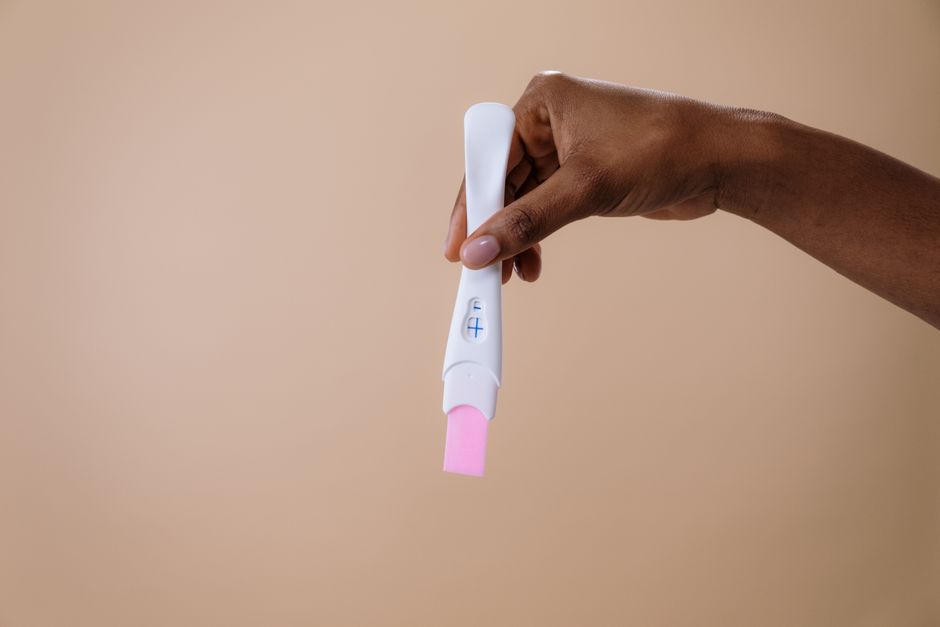
Home pregnancy tests work by detecting a hormone called human chorionic gonadotropin (hCG) in your urine. The placenta produces this hormone after a fertilized egg attaches to the uterine lining. A positive test means the test detected hCG at a level above its cutoff point. A false positive — a positive result when you are not pregnant — is rare but does happen. A false negative — a negative result when you are actually pregnant — is much more common and usually comes down to testing too early or testing incorrectly.
How Pregnancy Tests Detect hCG
Pregnancy tests use antibodies that bind specifically to hCG. When you dip the test strip in urine or hold it in the urine stream, the urine travels up the strip. If hCG is present, it attaches to those antibodies and triggers a color change or a digital readout.
Each test has a sensitivity threshold. Most home tests detect hCG at levels of 20 to 25 mIU/mL. Some newer tests claim sensitivity as low as 10 mIU/mL. Lower thresholds mean the test can detect pregnancy a day or two earlier, but they also increase the chance of a faint line that may be hard to read.
hCG doubles roughly every 48 to 72 hours in early pregnancy. That means timing matters. Testing a few days before your expected period may show a negative result simply because hCG has not yet reached the test’s detection limit.
What Causes a False Positive Pregnancy Test
A false positive means the test says pregnant when you are not. This is uncommon. When it happens, one of several things is usually going on.
Chemical pregnancy. A fertilized egg implants in the uterus but stops developing very early. The body produces hCG, which triggers a positive test, but the pregnancy ends within days or weeks. Many women never know they conceived. This is not exactly a false positive — the test detected real hCG — but the result does not lead to a viable pregnancy.
Recent pregnancy loss or abortion. hCG can remain in your blood and urine for weeks after a miscarriage, abortion, or delivery. Testing during this window can produce a positive result even though you are no longer pregnant.
Certain medications. Fertility treatments that contain hCG, such as the trigger shot used in IVF or timed intercourse, can cause a positive test. These injections contain actual hCG. Depending on the dose, the hormone can stay in your system for 7 to 14 days. No other common medications cause false positives on urine pregnancy tests.
Medical conditions. Rare conditions that produce hCG can cause positive tests. These include some ovarian tumors, pituitary gland issues, and certain cancers. In women near menopause, the pituitary gland can sometimes produce small amounts of hCG-like substances that some sensitive tests pick up.
Test errors and evaporation lines. Reading a test after the recommended time window can show an evaporation line that looks like a faint positive. This is not a true positive — it is dried urine leaving a mark. Always read the test within the time specified in the instructions.
What Causes a False Negative Pregnancy Test
False negatives are far more common than false positives. The test says not pregnant, but you actually are. Several factors explain this.
Testing too early. Implantation usually happens 6 to 10 days after ovulation. After implantation, hCG begins rising. If you test before implantation or before hCG reaches detectable levels, the result will be negative. Testing on the first day of a missed period catches most pregnancies, but not all.
Diluted urine. hCG concentration matters. Testing after drinking large amounts of fluid dilutes your urine and can push hCG below the detection threshold. First morning urine is most concentrated and gives the best chance of an accurate result.
Using the test incorrectly. Each test has specific instructions. Dipping too long, not long enough, or reading too early can all produce inaccurate results. Follow the package directions exactly.
Certain medical conditions. In rare cases, very high hCG levels can overwhelm the test antibodies. This is called the hook effect. It is extremely uncommon with modern tests but has been reported in molar pregnancies and multiple gestations.


When to Take a Pregnancy Test for the Most Accurate Result
The most reliable time to test is the first day of your missed period. By that point, hCG levels are usually high enough for most home tests to detect the pregnancy. Testing earlier increases the risk of a false negative.
If you have irregular periods, it is harder to know when to test. Wait at least 14 days after unprotected sex, or about 14 days after you think you ovulated. If the test is negative but your period does not arrive, wait a few days and test again.
For the most accurate result, use first morning urine. Your urine is most concentrated after a night of sleep. If you cannot test in the morning, hold your urine for at least four hours and avoid drinking excessive fluids beforehand.
If you get a positive result, it is almost certainly correct. If you get a negative result but still suspect pregnancy, wait 48 to 72 hours and test again. That gives hCG time to double if you are pregnant.
How to Read a Faint Positive Line
A faint line on a pregnancy test is still a positive result. The test is designed to show any line when hCG is present at or above the detection threshold. The intensity of the line correlates with hCG concentration, but even a faint line means the hormone was detected.
That said, faint lines deserve careful reading. Check the test within the time window specified in the instructions. A line that appears after the window has passed is not reliable. An evaporation line typically appears colorless or gray, while a true positive line usually has a pink or blue tint.
If you are unsure about a faint line, wait two days and test again. A progressing pregnancy should show a darker line as hCG levels rise. A line that stays faint or disappears may indicate a chemical pregnancy.
What Makes A Pregnancy Test Positive Or False — The Bottom Line
A positive pregnancy test means hCG was detected in your urine. In the vast majority of cases, that means you are pregnant. False positives are rare and usually traceable to fertility medications, recent pregnancy loss, or a chemical pregnancy.
False negatives are more common and usually result from testing too early, using diluted urine, or not following instructions. If your result does not match your symptoms or your intuition, repeat the test in a few days. If you continue to get mixed results or have concerns, a blood test at a doctor’s office is the most definitive way to know.
Blood tests detect hCG earlier and more precisely than urine tests. They can also measure exact hCG levels, which can help your doctor assess how the pregnancy is progressing. If you have questions about your results, contact your healthcare provider.
Frequently Asked Questions
Can medication cause a false positive pregnancy test?
Only medications that contain hCG can cause a false positive. These are fertility treatments like the trigger shot used in IVF or timed intercourse. Other common medications do not affect urine pregnancy test results.
How early can a pregnancy test show positive?
Some sensitive tests can detect hCG about 8 to 10 days after ovulation. Testing before your missed period increases the risk of a false negative. The most reliable time to test is the first day of your missed period.
Can a pregnancy test be positive then negative?
Yes. This can happen with a chemical pregnancy, where the fertilized egg implants but stops developing early. It can also happen if you test with diluted urine or use a faulty test. If this occurs, wait a few days and test again or see your doctor for a blood test.
Does a faint line mean I am pregnant?
A faint line within the reading window is still a positive result. It means hCG was detected. Check the test within the time specified in the instructions, and confirm with another test in two days to see if the line darkens.
