
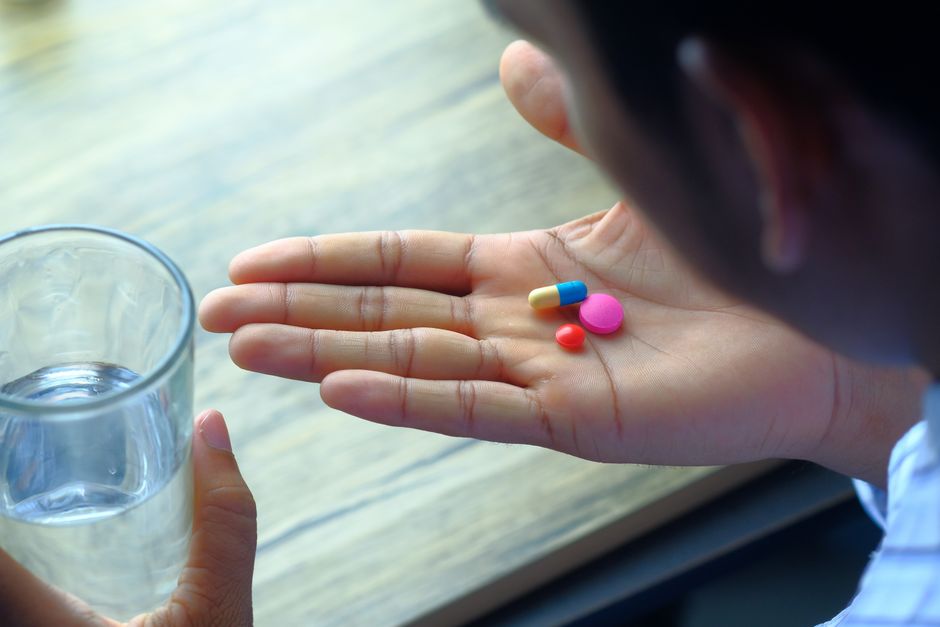
Taking testosterone without working out will raise your blood levels of the hormone. That part is predictable. What it will not do is build much muscle on its own, and it will not deliver the body changes most people are hoping for. It also carries real risks, including suppression of your own testosterone production, a drop in sperm count, and possible cardiovascular and blood-related effects. The drug does its job in the bloodstream. The muscle-building job still belongs to training and food.
This matters because a lot of people assume testosterone is the whole equation. It is not. Testosterone is a signal. Resistance training is what tells the body where to send the result.
What Happens If You Take Testosterone And Dont Work Out?
Your testosterone level goes up. Your muscle mass mostly does not.
Testosterone is an anabolic hormone, meaning it promotes tissue building. But it does not act in a vacuum. Muscle growth happens when training creates a stimulus and the hormone environment supports repair. Remove the training and you remove the stimulus.
Some research has looked at this directly. Studies in which men received testosterone but did not train generally show little to no gain in muscle size or strength compared with men who trained. In one often-cited line of research, testosterone given to healthy men who did not exercise produced minimal muscle growth, while the same hormone combined with resistance training produced substantially more. The training was the difference-maker.
What you may notice without training:
- Higher circulating testosterone, confirmed by blood test
- Possible increase in red blood cell production
- Changes in mood or libido in some people
- Water retention in some cases
- Suppression of your own natural testosterone production
- Little to no visible muscle gain
That last point is the one people miss. The hormone is present. The result is not.
Why Does Testosterone Need Exercise To Build Muscle?
Muscle grows through a process called hypertrophy, and that process needs a trigger before hormones can help.
When you lift weights hard enough, you create microscopic damage to muscle fibers. That damage is not a problem — it is the signal. The body responds by repairing the fibers and, over time, making them thicker and stronger. Testosterone supports that repair process. It does not start it.
Think of it this way. Testosterone is like a construction crew. Resistance training is the blueprint and the work order. If you hire the crew but never hand them a plan, they stand around. Nothing gets built.
There is also a nutrient side. Muscle repair needs adequate protein and total calories. Even with high testosterone and hard training, a poor diet limits how much muscle you can add. The hormone cannot compensate for missing building blocks.
What Happens To Your Own Testosterone Production?
This is where things get serious. Taking external testosterone tells your body it no longer needs to make its own.
The system works on a feedback loop. Your brain monitors testosterone levels. When it detects enough, it reduces the signal that tells your testes to produce more. Add testosterone from outside and the brain senses a surplus. It dials down production. Over time, your natural output can fall sharply, sometimes to very low levels.
This is not a minor side effect. It is a predictable consequence of how the endocrine system regulates itself. The medical term is suppression, and with continued use it can progress toward shutdown of natural production.
If you stop suddenly, you may go through a period where your testosterone is lower than it was before you started. Symptoms can include fatigue, low mood, low libido, and loss of the muscle you did have. Recovery of natural production is not guaranteed to be quick, and in some cases it does not fully return.
This is one reason testosterone is a prescription medication with monitoring, not a supplement. Under medical supervision, clinicians track blood levels and manage these effects. Without supervision, people often do not know what is happening to their own hormone system until symptoms appear.





What Are The Risks Of Testosterone Without Training?
The risks come from the hormone itself, not from whether you exercise. Training does not cancel them out.
Red blood cell increases. Testosterone can raise hematocrit, the proportion of your blood made up of red cells. When it climbs too high, blood becomes thicker, which raises the risk of clotting events. This is a well-documented effect and a reason clinicians monitor blood counts in anyone on testosterone therapy.
Cardiovascular concerns. The evidence on heart risk is mixed and has shifted over time. Some studies have raised concern about cardiovascular events with testosterone use, while others have not found a clear increase. The honest position is that this remains debated, and it is a genuine area of ongoing research rather than a settled question. What is clear is that testosterone is not risk-free for the heart.
Fertility effects. Testosterone suppresses the signals that drive sperm production. This can reduce sperm count and, in some men, cause temporary or lasting infertility. This is a documented effect and a major consideration for anyone who wants children.
Other effects. Acne, fluid retention, mood changes, and breast tissue growth can occur. In people assigned female at birth, testosterone causes masculinizing effects such as voice deepening and facial hair growth, some of which are not reversible.
None of these risks require you to skip the gym. They happen regardless.
Does Testosterone Alone Change Body Composition At All?
Some. Not much. And not the way most people expect.
Testosterone can shift body composition slightly even without training. Some studies show small reductions in fat mass and small increases in lean mass. But “lean mass” on a scale or scan includes water and other tissue, not just contractile muscle. The visible, functional change people are chasing — bigger arms, a stronger back, a different physique — comes from training.
There is a useful distinction here. A blood test can show high testosterone while a mirror shows little change. Those two facts are not in conflict. They are the expected outcome when the training stimulus is missing.
Fat loss is also worth separating out. Testosterone is not a fat-burning drug. Any fat loss from hormone use alone tends to be modest and is not a reliable path to a leaner body.
What Actually Builds Muscle?
Resistance training, adequate protein, enough calories, and sleep. These are the levers that reliably move muscle mass, with or without hormone involvement.
Progressive overload is the core principle. That means gradually asking your muscles to do more over time — more weight, more reps, or more sets. Without that progression, muscle adapts to the current demand and then stops changing.
Protein intake supports repair. General guidance for people training for muscle growth centers on getting enough total daily protein spread across the day, though exact targets vary by body size, training load, and goals. A registered dietitian or sports nutrition professional can give individualized numbers.
Sleep matters more than most people think. Growth hormone release, recovery, and hormonal regulation are all tied to sleep quality. Chronic short sleep works against muscle gain.
If you are concerned about low testosterone, the first step is a blood test and a conversation with a clinician. Low testosterone has real causes and real treatments. Self-prescribing is a different path with different risks.
Can You Take Testosterone And Just Do Cardio?
You can, but cardio does not build much muscle. It builds cardiovascular fitness, which has its own value.
Endurance training improves heart and lung function, endurance, and metabolic health. It does not create the mechanical tension and muscle damage that drive hypertrophy the way resistance training does. So testosterone plus cardio gives you a fitter cardiovascular system and higher hormone levels, but not a meaningfully more muscular body.
If your goal is muscle, the training has to match the goal. Hormones amplify a stimulus. They do not replace one.
The Bottom Line On Hormones And Training
Testosterone without training is a mismatch between a signal and a missing instruction. The hormone rises. The muscle does not follow. Meanwhile, your own production can drop, your blood can thicken, and your fertility can be affected.
Training is not optional in this equation. It is the part that turns a hormone into a result. If you are considering testosterone for any reason, that decision belongs with a clinician who can monitor what it is doing to your body — not with a gym rumor or an online forum.
Frequently Asked Questions
Will testosterone build muscle if I don’t work out?
No, not to any meaningful degree. Research consistently shows that muscle growth from testosterone depends on resistance training as the trigger, and without it gains are minimal.
Does taking testosterone shut down your natural production?
Yes, external testosterone suppresses your body’s own production through a feedback loop in the brain. This can drop your natural levels below where they started, especially after stopping.
How long does it take to see muscle gains on testosterone?
Visible muscle gain requires training, and even then it typically takes weeks to months of consistent resistance training. Without training, no reliable timeline exists because the muscle-building stimulus is absent.
Can you lose fat by taking testosterone without exercising?
Some studies show small reductions in fat mass from testosterone alone, but the effect is modest and not a reliable route to fat loss. Diet and activity remain the primary drivers.
