
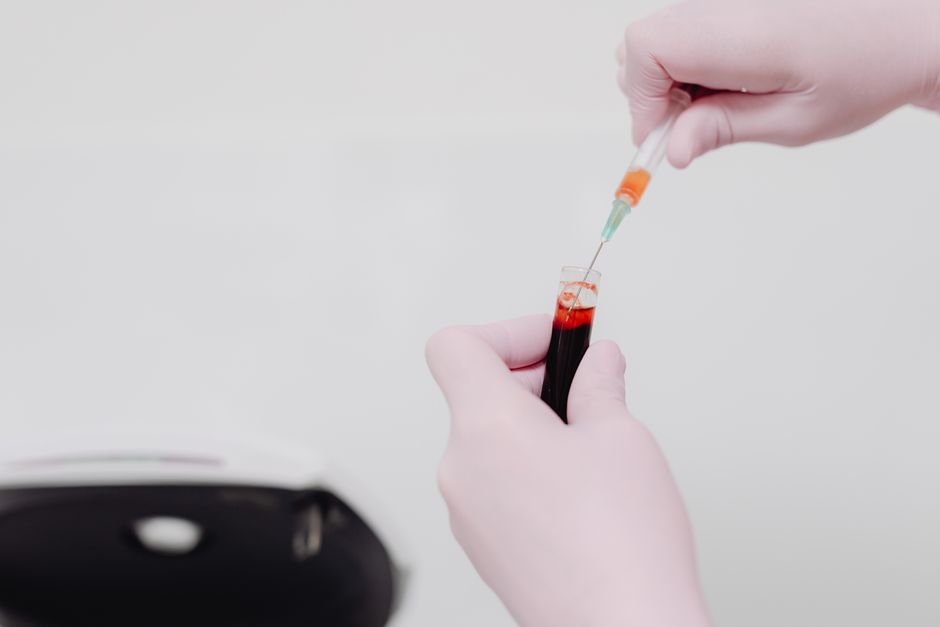
A “non reactive” result on a blood test means the test did not detect the substance it was looking for. In most cases, that substance is an antibody, an antigen, or a genetic marker linked to a specific infection or condition. For screening tests such as HIV, hepatitis B, hepatitis C, and syphilis, a non reactive result generally means no evidence of that infection was found in your sample.
That sounds simple, and often it is. But the meaning depends heavily on which test was run, why it was ordered, and how long it has been since a possible exposure. A non reactive result is not a universal “all clear” for your health. It is a statement about one specific test looking for one specific thing.
What Does It Mean When A Blood Test Says Non Reactive?
Non reactive means the test found no sign of the target it was designed to detect. If the test looks for antibodies to HIV, a non reactive result means those antibodies were not found. If it looks for hepatitis B surface antigen, a non reactive result means that antigen was not detected.
The word “reactive” is used instead of “positive” because these tests are often screening tools. A reactive result means the sample reacted to the test, which prompts further testing to confirm or rule out a diagnosis. A non reactive result means no reaction occurred, so no follow-up is usually needed.
This wording matters. Screening tests are built to catch as many true cases as possible, which means they can occasionally flag people who do not actually have the condition. A non reactive result avoids that problem entirely. It is the straightforward outcome.
Why Do Labs Use the Word “Non Reactive” Instead of “Negative”?
Labs use “non reactive” because it describes what happened during the test, not a final medical conclusion. The sample was mixed with reagents designed to react if a target substance was present. No reaction means non reactive.
“Negative” is a broader term that can imply a definitive diagnosis is absent. “Non reactive” is more precise about the test itself. It tells you the assay did not detect the target, without overstating what that means for your overall health.
Different labs and different tests use slightly different language. You may see “non reactive,” “negative,” “not detected,” or “within normal limits.” These are not always interchangeable, but for screening tests they usually point in the same direction.
Which Blood Tests Commonly Report Non Reactive Results?
Non reactive results appear most often on infectious disease screening panels. These are the tests where the language is standard.
- HIV antibody/antigen test — screens for HIV infection
- Hepatitis B surface antigen and core antibody — screens for hepatitis B
- Hepatitis C antibody — screens for hepatitis C
- Syphilis (RPR or treponemal test) — screens for syphilis
- HTLV antibody — screens for human T-lymphotropic virus
Some of these tests are also run on donated blood, during pregnancy, and before certain medical procedures. In each case, a non reactive result means the screening did not detect evidence of that specific infection.





Does a Non Reactive Result Always Mean You Do Not Have the Infection?
Not always. Timing is the most common reason a non reactive result can miss an infection. After exposure to a virus, the body takes time to produce antibodies or enough antigen for a test to detect. This gap is called the window period.
During the window period, a person can be infected and able to pass the infection to others, yet still test non reactive. The length of the window period varies by infection and by the specific test used. Newer tests that detect antigen as well as antibody shorten this window compared with older antibody-only tests.
If you had a possible exposure and tested non reactive very soon afterward, a repeat test later may be recommended. This is standard clinical practice for HIV and hepatitis testing. The exact timing depends on the test and the infection, so a clinician familiar with your situation is the right person to advise on whether and when to retest.
There is also a rare category of results where the test simply fails to detect something that is present. These are uncommon with modern assays, but no test is perfect.
What About Non Reactive Results on Tests That Are Not for Infection?
The term “non reactive” is used mostly for infection screening, but similar language appears elsewhere. Some autoimmune tests, allergy panels, and other assays also report reactive or non reactive results.
For example, a test for a specific autoantibody might come back non reactive, meaning that antibody was not detected. Whether that matters depends entirely on what the test was looking for and why it was ordered.
This is the key point. A non reactive result only carries meaning in the context of the specific test. A non reactive result on an HIV test tells you nothing about your liver, your thyroid, or your cholesterol. Each test answers one narrow question.
Can a Non Reactive Result Ever Be Wrong?
Yes, though it is uncommon. False non reactive results can happen for a few reasons.
The most common is the window period described above, where the infection is present but not yet detectable. Other causes include testing too early after exposure, rare test interference, or a sample handling problem.
False reactive results are actually more common than false non reactive results on screening tests. That is by design. Screening tests are tuned to catch nearly every true case, which means they accept a higher chance of flagging people who turn out not to have the infection. This is why a reactive result triggers confirmatory testing, while a non reactive result usually ends the process.
If you have strong reason to believe you were exposed to an infection and your test is non reactive, tell your clinician. They can factor in timing and decide whether repeat testing makes sense.
What Should You Do With a Non Reactive Result?
In most cases, a non reactive result on a routine screening test needs no action. It means the test did not find what it was looking for.
There are a few situations where you should follow up with a clinician rather than simply file the result away.
- You had a known or possible exposure and tested soon afterward
- You have symptoms that do not fit a non reactive result
- The test was ordered for a specific reason your clinician needs to interpret
- You are unsure which test was run or what it was checking for
Your clinician can explain what the specific test was designed to detect and whether the timing of the test was appropriate. That context is what turns a lab value into a meaningful answer.
It also helps to remember that a non reactive result on one test is not a clean bill of health for everything. Routine blood work covers many separate measurements. Each one stands on its own.
Frequently Asked Questions
Is non reactive the same as negative?
For most screening tests, yes, they mean the same thing in practice. Non reactive is more precise because it describes the test result rather than a final diagnosis.
Can you be infected and still test non reactive?
Yes, if you test during the window period before your body has produced detectable antibodies or antigen. A repeat test at a later date is often recommended after a possible exposure.
Does a non reactive HIV test mean I do not have HIV?
A non reactive HIV test means no evidence of HIV was found at the time of testing. If the test was done well after any possible exposure, that result is highly reliable.
Should I worry about a non reactive result?
No, a non reactive result is generally the expected outcome when no infection is present. Talk to your clinician only if you had a possible exposure or have symptoms that concern you.
