
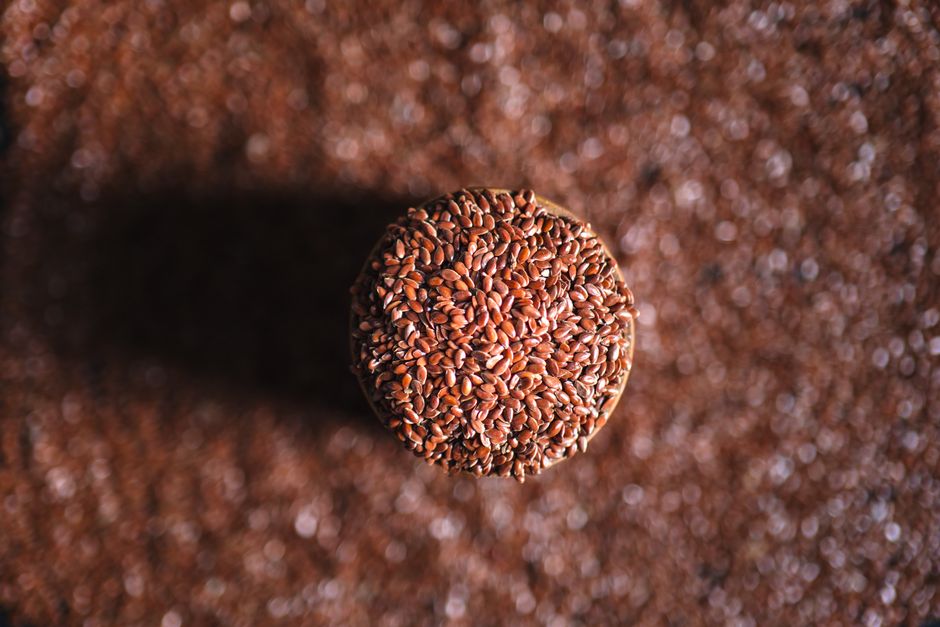
Flax seed is the small brown or golden seed of the flax plant, Linum usitatissimum, and it is one of the few foods that contains both soluble fiber and a plant-based form of omega-3 fat. People eat it ground, mix it into yogurt or oatmeal, bake it into bread, or take flax seed oil as a supplement. The seed itself has been part of human diets for thousands of years, but most of the modern interest centers on two compounds inside it: alpha-linolenic acid (ALA) and lignans.
What makes flax seed unusual is that its nutrition is not evenly distributed. The oil holds the ALA. The outer hull holds most of the fiber and nearly all of the lignans. That single fact explains why ground flax behaves so differently from flax oil, and why the form you choose matters more than the brand on the bag.
What Does Flax Seed Contain?
Flax seed is roughly 40 percent fat by weight, and most of that fat is ALA, an omega-3 fatty acid. It also carries fiber, protein, and a class of plant compounds called lignans.
Here is the breakdown for a standard 1-tablespoon serving (about 7 grams) of ground flax seed, based on USDA data:
- Calories: about 37
- Total fat: about 3 grams (mostly ALA)
- Fiber: about 2 grams
- Protein: about 1.3 grams
- Carbohydrate: about 2 grams
That serving also provides a small amount of magnesium, thiamine, and phosphorus. Whole flax seeds contain the same nutrients, but your body cannot reach most of them. The seed coat is hard enough to pass through digestion intact. Grinding breaks that barrier open.
One clarification worth making: ALA is not the same as the omega-3s in fish. Fish and fish oil supply EPA and DHA, which the body can use directly. ALA has to be converted first, and that conversion is inefficient in humans. Estimates vary, but only a small fraction of ALA becomes EPA, and a much smaller fraction becomes DHA. This is a real limitation, not a marketing detail, and it matters when people use flax as a substitute for fish.
Flax Seed vs Flax Seed Oil: What Is the Difference?
Ground flax seed and flax seed oil are not interchangeable. The oil is essentially fat only. It contains little to no fiber and no meaningful amount of lignans.
| Form | ALA | Fiber | Lignans |
|---|---|---|---|
| Whole flax seed | Yes | Yes (largely unavailable) | Yes |
| Ground flax seed | Yes | Yes | Yes |
| Flax seed oil | Yes | No | No |
If your goal involves fiber or lignans, oil will not deliver them. If your goal is ALA specifically, both work — but the oil is more concentrated and easier to overuse, since a tablespoon of oil carries far more fat than a tablespoon of ground seed.
There is also a stability issue. ALA is a polyunsaturated fat, and polyunsaturated fats oxidize — they go rancid — faster than saturated ones. Flax oil is especially vulnerable. It should be refrigerated, kept in a dark bottle, and never used for high-heat cooking. Ground flax seed has some natural protection from its seed matrix, but it still degrades over time. Buying whole seed and grinding it fresh is the most reliable approach.
Does Flax Seed Lower Cholesterol?
Flax seed can modestly lower LDL cholesterol, and the effect appears to come mainly from its soluble fiber and lignans rather than from the ALA.
This is where the evidence gets interesting. Studies on flax seed and cholesterol have produced mixed results. Some trials show a small reduction in LDL. Others show little or no change. The pattern suggests that whole ground flax seed — with its fiber and lignans intact — is more likely to produce an effect than flax oil alone. That fits what is known about soluble fiber generally, which binds bile acids in the gut and forces the liver to pull cholesterol from the bloodstream to make more.
The size of the effect, when it appears, is modest. Flax is not a substitute for a statin, and no one should treat it as one. It is better understood as one component of a diet pattern that supports cholesterol management, alongside oats, beans, and other soluble fiber sources.





Does Flax Seed Help With Digestion?
Flax seed is a mild bulk-forming laxative, and this is one of its better-supported uses. The soluble fiber absorbs water and adds volume to stool, which can help with occasional constipation.
The catch is water. Fiber without adequate fluid can make constipation worse, not better. If you add flax to your diet, you need to drink more water than usual. Start with a small amount — a teaspoon or so — and increase gradually. Jumping straight to several tablespoons a day is a common way to end up bloated and uncomfortable.
People with irritable bowel syndrome should be cautious. Fiber affects different people differently, and some find that added fiber worsens bloating and gas rather than helping. There is no single answer here. It depends on the person and the type of IBS.
What About Lignans and Hormones?
Flax seed is the richest dietary source of lignans, plant compounds that have weak estrogen-like activity. Because of this, flax has been studied in relation to breast cancer and menopause symptoms.
The evidence is not settled. Some observational research has suggested an association between lignan intake and lower breast cancer risk, but observational studies cannot prove cause and effect, and results across studies are not consistent. For hot flashes and other menopause symptoms, trials of flax seed have generally shown little to no benefit. Some studies report small improvements; others find none.
There is a reasonable concern worth naming. Because lignans interact weakly with estrogen receptors, there has been debate about whether flax is appropriate for people with hormone-sensitive conditions such as estrogen receptor-positive breast cancer. The current evidence does not show harm from dietary flax intake, and some researchers consider it safe. But this is exactly the kind of question a person should raise with their own oncologist rather than resolve from an article. Guidance can differ based on individual circumstances.
How Should You Use Flax Seed?
Ground flax is the practical choice for most people. Whole seeds pass through largely undigested, so grinding is what makes the nutrients available. A small coffee grinder works fine. Grind only what you will use within a week or two, and store it in the refrigerator or freezer in an airtight container.
Flax works in oatmeal, yogurt, smoothies, pancake batter, and bread. It can partly replace eggs in some baking recipes when mixed with water, though the texture will differ. Ground flax also thickens liquids over time, which is why it shows up in no-cook recipes as a binder.
For heat, ground flax is fine in baked goods. Flax oil is not — it should stay away from the stove entirely.
There is no single official daily recommendation for flax seed. Intakes in research studies commonly range from about 1 to 3 tablespoons of ground seed per day, but that reflects study protocols rather than a formal guideline. More is not automatically better, and digestive tolerance sets a practical limit for most people.
One safety note that gets overlooked: raw or unripe flax seeds contain small amounts of cyanogenic compounds, which the body can convert to cyanide. Ripe, commercially sold flax seed contains only trace amounts, and normal dietary intake is not considered a concern. But large amounts of raw flax — particularly unripe seed — are a different situation. Stick with ripe, food-grade flax from a normal supplier.
Who Should Be Careful With Flax Seed?
Flax is generally well tolerated, but a few groups should approach it with more caution.
- People on blood thinners. ALA may have mild antiplatelet effects. The clinical significance at typical dietary amounts is uncertain, but anyone on warfarin or similar medication should talk to their doctor before adding large amounts.
- People with bowel narrowing or obstruction risk. Bulk-forming fiber can be dangerous in these situations.
- People with hormone-sensitive conditions. Discuss with a clinician, as noted above.
- Anyone scheduled for surgery. Some clinicians advise pausing flax and other omega-3 sources beforehand because of possible bleeding effects. This is common practice rather than a firmly established requirement.
Pregnant and breastfeeding women should treat flax as a food, not a supplement to load up on. No clinical guidelines currently exist for high-dose flax intake in these groups, and the lignan question has not been well studied in pregnancy.
Is Flax Seed a Superfood?
No. Flax seed is a genuinely nutritious food with some well-supported benefits and some overstated ones. It is not a cure, and it does not replace medication or a varied diet.
The honest summary is this: flax is a good source of ALA, soluble fiber, and lignans. Its constipation benefit is reasonably well supported. Its cholesterol effect is real but modest and inconsistent across studies. Its role in cancer prevention and menopause symptoms is not established. Its omega-3 content is useful but is not a substitute for EPA and DHA from fish or algae sources.
That is a solid food. It is not a miracle. The gap between those two things is where most supplement marketing lives, and flax has been pulled into that gap more than its evidence justifies.
Frequently Asked Questions
Is it better to eat flax seed whole or ground?
Ground is better for most purposes because whole seeds pass through digestion largely intact and your body cannot access their nutrients. Grind them fresh and store the ground seed in the refrigerator.
Does flax seed have the same omega-3 as fish?
No. Flax provides ALA, which the body must convert to EPA and DHA, and that conversion is inefficient. Fish and algae oil supply EPA and DHA directly.
How much flax seed should I eat per day?
There is no official daily recommendation. Research studies commonly use about 1 to 3 tablespoons of ground seed per day, but that reflects study protocols rather than a formal guideline, so start small and adjust based on tolerance.
Can flax seed help with constipation?
It can help with occasional constipation because its soluble fiber adds bulk to stool, but it only works if you drink enough water. Adding fiber without enough fluid can make constipation worse.
