
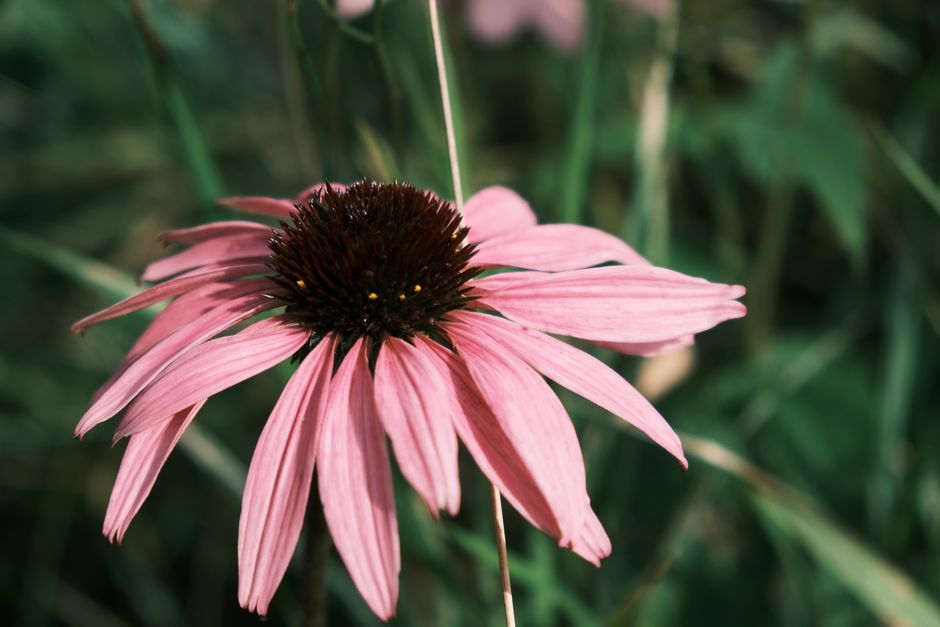
Echinacea is a group of flowering plants native to North America, and its roots and leaves are used in herbal supplements. The active compounds in echinacea are thought to stimulate the immune system, which is why it is most commonly used to prevent or shorten the common cold. Clinical research shows that taking echinacea at the start of a cold may reduce the duration of illness by about half a day to a full day, though it does not reliably prevent you from catching a cold in the first place.
What Does Echinacea Do for the Immune System?
Echinacea contains several groups of biologically active compounds, including alkamides, glycoproteins, and polysaccharides. These compounds appear to interact with immune cells called macrophages and natural killer cells. In laboratory studies, these cells become more active when exposed to echinacea extracts.
The proposed mechanism is that echinacea increases the production of certain cytokines — signaling proteins that coordinate the immune response. This is why the herb is classified as an immunostimulant. However, the clinical relevance of these lab findings is not fully settled.
What matters is what happens in the human body, not just in a petri dish. Some studies have measured immune markers in people taking echinacea, and the changes are modest. The immune system is complex, and boosting one type of cell does not automatically translate into fewer or shorter infections.
Can Echinacea Prevent or Treat the Common Cold?
This is the most studied use of echinacea, and the evidence is mixed but not negative. A large analysis of multiple trials found that echinacea reduced the odds of developing a cold by a small margin. The same analysis found that when people did get sick, the cold lasted roughly half a day to one day less on average.
That effect size is real but modest. It is not a dramatic difference, and it does not work for everyone. Some individual trials found no benefit at all, which is why the overall picture is described as mixed rather than strongly positive.
Timing matters. The evidence for shortening a cold is strongest when echinacea is started within the first 24 to 48 hours of symptoms. Taking it after you have been sick for several days appears to offer little benefit.
For prevention, the data is weaker. Echinacea does not appear to reliably stop you from catching a cold if you take it daily through cold season. It is not a substitute for hand washing, sleep, or other standard prevention measures.
Which Echinacea Species and Parts Are Used?
There are nine species of echinacea, but three are used in commercial supplements: Echinacea purpurea, Echinacea angustifolia, and Echinacea pallida. Echinacea purpurea is the most common in products sold in the United States.
Different products use different parts of the plant. The root, the aerial parts (leaves and stems), and the whole plant are all used. The chemical profile differs by species and by plant part. Echinacea purpurea is often extracted from the aerial parts, while Echinacea angustifolia is typically used from the root.
This variability creates a real problem for research and for consumers. A product made from Echinacea purpurea leaves is not chemically identical to one made from Echinacea angustifolia roots. The clinical trials that showed benefit used specific preparations, and those results may not apply to every product on the shelf.





What Forms of Echinacea Are Available?
Echinacea is sold in several forms:
- Dried herb in capsules or tablets
- Liquid tinctures and extracts
- Teas made from dried leaves or roots
- Topical creams and ointments
There is no standard dose that applies across all these forms. Clinical trials have used different preparations and different dosing schedules, which makes it hard to give one universal recommendation. Some trials used a liquid extract taken multiple times daily at the first sign of symptoms, while others used capsules.
If you choose to use echinacea, follow the dosing instructions on the specific product label. Products are not interchangeable, and the amount of active compound varies widely between brands.
Are There Other Uses for Echinacea?
Beyond the common cold, echinacea has been studied for other conditions. Some research has looked at its use for upper respiratory infections in general, with results similar to the cold research — a modest effect on duration, little effect on prevention.
Topical echinacea preparations have been studied for wound healing and for inflammatory skin conditions. The evidence here is limited, and no large clinical trials have confirmed a clear benefit. Some small studies suggest a possible effect on skin hydration and elasticity, but these findings are preliminary.
Echinacea has also been investigated as a potential anti-inflammatory agent. Some laboratory research suggests certain compounds in the plant may reduce inflammation, but this has not translated into proven clinical benefit for any inflammatory condition.
Be cautious with any claim that echinacea treats infections other than mild viral respiratory illness. No clinical evidence currently confirms that echinacea is effective against bacterial infections, influenza, or any serious illness.
Is Echinacea Safe?
For most healthy adults, short-term use of echinacea is considered safe. The most common side effects are mild gastrointestinal upset, nausea, and dizziness. Allergic reactions are possible, particularly in people allergic to plants in the daisy family, which includes ragweed, chrysanthemums, and marigolds.
People with autoimmune conditions such as lupus, rheumatoid arthritis, or multiple sclerosis should be cautious. Because echinacea stimulates immune activity, there is a theoretical concern that it could worsen these conditions. No large human trials have confirmed this risk, but the theoretical concern is enough that many clinicians recommend avoiding it.
People taking immunosuppressant medications should also avoid echinacea. The herb could potentially counteract the effect of these drugs. This is a theoretical interaction based on the herb’s mechanism, but it is a reasonable precaution.
Pregnant and breastfeeding women should avoid echinacea. No clinical guidelines currently exist for this population, and the safety data is simply absent. The same applies to infants and young children — there is not enough evidence to establish safety in these groups.
Does Echinacea Interact With Medications?
There are a few documented drug interactions with echinacea. The herb may affect how the liver processes certain medications, particularly those broken down by a group of enzymes called cytochrome P450. This could theoretically increase or decrease the levels of some drugs in your blood.
Medications that may interact include certain antifungals, some blood pressure drugs, and some cholesterol medications. However, the clinical significance of these interactions is not well established, and the evidence is largely based on laboratory studies rather than human cases.
If you take prescription medication, talk to your pharmacist or doctor before starting echinacea. This is especially important if you take multiple medications or have a chronic health condition.
What the Research Does and Does Not Show
Research consistently shows that echinacea has a modest effect on the duration of the common cold when taken early in the illness. The evidence for prevention is weaker and inconsistent.
No study has confirmed that echinacea cures any illness or that it works as a general immune booster for overall health. The marketing claim that echinacea “supports immune health” in a general sense goes beyond what the clinical evidence shows.
The quality of echinacea research is a limitation. Many trials are small, use different preparations, and report different outcomes. This makes it difficult to draw firm conclusions. Some researchers have called for standardized preparations and larger trials to settle the question.
One non-obvious point: the form of echinacea matters more than most people realize. A tincture made from fresh Echinacea purpurea is chemically different from a dried root capsule. If one product worked in a study, that does not mean all echinacea products will work the same way.
Frequently Asked Questions
How long does it take for echinacea to work?
Echinacea is not a fast-acting medication; it is taken daily at the first sign of cold symptoms and may shorten the illness by about half a day to a full day. It does not relieve symptoms immediately like a pain reliever would.
Can I take echinacea every day to prevent colds?
Daily use for prevention has not been shown to reliably stop you from catching a cold. Some research suggests a small preventive effect, but the evidence is inconsistent and weaker than the evidence for shortening an existing cold.
Is echinacea safe to take with other supplements?
There are no well-documented dangerous interactions between echinacea and common vitamins or minerals, but the data is limited. If you take multiple supplements or prescription medications, check with a pharmacist before combining them.
What is the best form of echinacea to buy?
There is no single best form because clinical trials used different preparations. Look for products that specify the species and plant part used, and choose a reputable brand that tests its products for quality and purity.
