
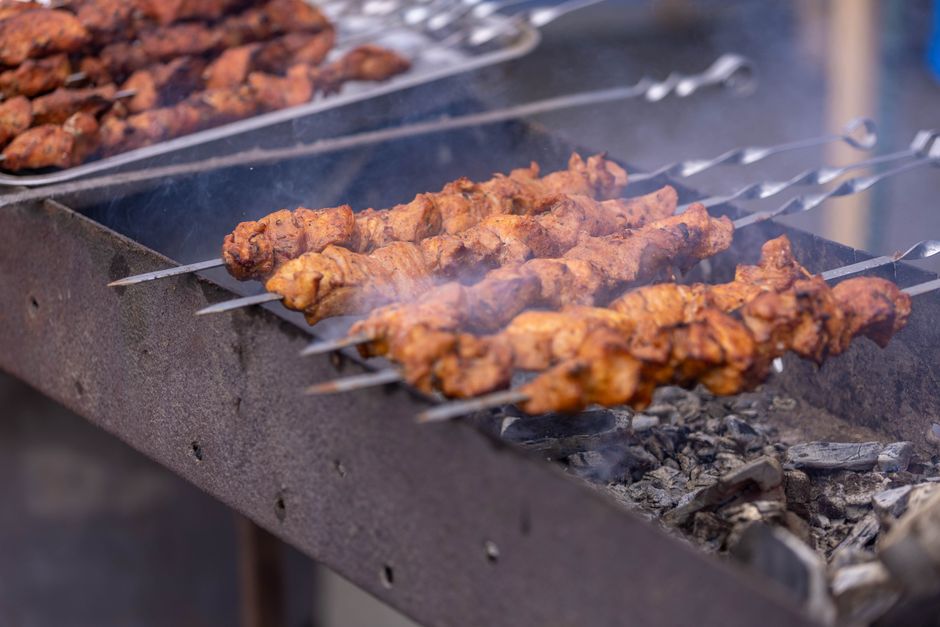
When you slice into a roasted chicken or a grilled steak, the color you see comes down to two things: how much myoglobin the muscle contains, and how that muscle was used during the animal’s life. Dark meat is muscle rich in myoglobin — a protein that stores oxygen — while white meat is muscle that relies less on oxygen storage. The color difference is not about fat content, not about “blood,” and not about how healthy the meat is. It is a direct reflection of muscle biology.
What Does Dark Meat Mean in Terms of Muscle Biology?
Muscle fibers come in different types, and the type determines the color. Slow-twitch fibers — also called red fibers — are built for sustained activity. They need a steady oxygen supply, so they contain more myoglobin and more mitochondria. Fast-twitch fibers — white fibers — are built for quick bursts of movement. They rely on stored energy and need less oxygen, so they contain less myoglobin.
Animals that stand, walk, and run most of their lives have more slow-twitch fibers in their legs and thighs. Chickens, for example, spend most of their time upright and moving around, so their leg and thigh muscles are dark. Their breast muscles, used mainly for short bursts like flapping to escape, are white.
This is not a chicken-specific rule. Ducks and geese fly long distances, so their breast meat is dark. Cows stand and walk constantly, so almost all beef is dark red. Pigs are somewhere in between — their muscles are a lighter pink because they move less than cattle but more than a confined chicken.
The red color itself is not blood. Myoglobin is a protein stored inside muscle cells. When you see reddish liquid on a plate after cooking, that is mostly water and myoglobin, not blood. Blood is drained during processing.
Why Does Meat Color Change When You Cook It?
Raw meat looks red or pink because myoglobin is intact. When heat is applied, the myoglobin protein unfolds — a process called denaturation — and the color shifts. The exact color depends on temperature and the chemical state of the myoglobin.
At around 140°F to 150°F, myoglobin starts to denature and the meat turns from red to pinkish-brown. By the time meat reaches well-done temperatures — generally above 160°F for most cuts — the myoglobin is fully denatured and the color becomes brown or gray.
There is a common misconception that pink pork or pink poultry means undercooked. For poultry, pinkness near the bone can happen even when the meat has reached a safe internal temperature. This is because the bone marrow and nearby tissues can release pigments during cooking. The color is not a reliable indicator of doneness — a food thermometer is.
For ground beef, the outside can brown while the inside stays pink even when fully cooked, because myoglobin reacts differently depending on oxygen exposure. The USDA recommends cooking ground beef to 160°F regardless of color.
Is Dark Meat Less Healthy Than White Meat?
Dark meat contains more fat than white meat, and that fat is largely unsaturated. It also contains more iron, zinc, and certain B vitamins. White meat is leaner and lower in calories per ounce. Neither is inherently “healthier” — the difference is a trade-off between fat content and nutrient density.
Here is a comparison based on USDA data for roasted chicken, skinless, per 3.5 ounces (100 grams):
| Nutrient | Chicken Breast (White) | Chicken Thigh (Dark) |
|---|---|---|
| Calories | 165 | 209 |
| Total Fat | 3.6 g | 10.9 g |
| Saturated Fat | 1.0 g | 2.9 g |
| Iron | 0.4 mg | 1.3 mg |
| Zinc | 0.8 mg | 2.0 mg |
| Riboflavin (B2) | 0.1 mg | 0.2 mg |
The extra fat in dark meat means more calories. But the extra iron and zinc matter, especially for people who need more of those minerals — menstruating women, for example, or people with mild iron deficiency. The saturated fat difference is modest but real. For someone watching saturated fat intake for heart health, white meat is the leaner choice. For someone who wants more iron and zinc in their diet, dark meat delivers more of both.
What matters more than white versus dark is how the meat is prepared and what else is on the plate. Fried chicken with skin is a different nutritional picture than roasted chicken without skin, regardless of which part you choose.





Does Dark Meat Have More Cholesterol?
The cholesterol difference between white and dark chicken meat is small. Both contain roughly similar amounts — around 70 to 90 milligrams per 3.5-ounce serving, depending on the cut and cooking method. The bigger driver of blood cholesterol for most people is saturated fat and trans fat intake, not dietary cholesterol itself.
For decades, dietary cholesterol was treated as a major concern. Current understanding is more nuanced. For most people, saturated fat has a larger effect on blood cholesterol than dietary cholesterol does. The 2020–2025 Dietary Guidelines for Americans no longer set a specific daily limit on dietary cholesterol, though they still recommend keeping saturated fat below 10% of daily calories.
This does not mean cholesterol in food is irrelevant. Some people — called hyper-responders — are more sensitive to dietary cholesterol than others. But for the general population, the saturated fat in dark meat is the more relevant consideration than the cholesterol.
What About Red Meat and Processed Meat?
Dark meat from poultry is not the same as red meat from mammals. The term “red meat” typically refers to beef, pork, lamb, and goat. These meats are darker because the animals’ muscles contain even more myoglobin than chicken thighs do.
The health concerns around red meat are different from those around dark poultry. Observational research has linked high consumption of processed meats — bacon, sausage, hot dogs, deli meats — to increased risk of colorectal cancer and cardiovascular disease. The evidence for unprocessed red meat is less consistent, with some studies showing a modest association and others showing little to none.
Dark chicken meat does not carry the same associations as processed red meat. It is poultry, not mammal muscle, and it is not processed in the same way. The nutritional profile is closer to white poultry than to beef.
That said, preparation matters. A chicken thigh covered in barbecue sauce and charred on a grill is not the same as a poached chicken thigh. The cooking method and added ingredients change the health picture more than the cut itself.
How Can You Tell If Dark Meat Is Cooked Safely?
Color is not a reliable safety indicator. The only way to know meat is safely cooked is to check its internal temperature with a food thermometer.
The USDA recommends cooking poultry to a minimum internal temperature of 165°F. This applies to both white and dark meat, and to ground poultry. For beef, pork, and lamb, the recommended minimum is 145°F with a three-minute rest time. Ground meats should reach 160°F.
Dark meat benefits from cooking to a slightly higher temperature than white meat for texture reasons. The connective tissue in dark meat breaks down more slowly, so thighs and legs often taste better when cooked to 175°F or higher. This is a preference, not a safety requirement. The safety minimum remains 165°F for poultry.
If you are cooking poultry and the meat near the bone looks pink, do not rely on that color to judge doneness. Use a thermometer inserted into the thickest part of the meat, avoiding bone. If it reads 165°F or higher, it is safe to eat.
Does the Color of Meat Tell You Anything About Animal Welfare or Farming?
Meat color is not a reliable indicator of how an animal was raised. A pasture-raised chicken and a conventionally raised chicken can both have dark thighs and white breasts. The color difference comes from muscle biology, not farming method.
What can affect color slightly is diet and exercise. An animal that moves more may develop slightly darker muscle. But the difference is subtle and not a dependable signal. Labels like “free-range,” “pasture-raised,” and “organic” are regulated to varying degrees, but meat color itself does not verify any of them.
If animal welfare matters to you, look for third-party certifications rather than relying on color. The color of the meat on your plate tells you about the muscle it came from, not the life the animal lived.
Does Dark Meat Have More Calories Because of Fat or Something Else?
Dark meat has more calories mainly because it contains more fat. The protein content is similar between white and dark meat — both are good sources of complete protein. The extra calories come from the higher fat content in the dark muscle fibers.
That fat is not “bad” in isolation. It contributes to flavor and moisture, which is why dark meat is often preferred for roasting and grilling. It also carries fat-soluble nutrients. But if you are counting calories or watching fat intake, white meat is the leaner option.
Removing the skin reduces the fat content of both white and dark meat substantially. A skinless chicken thigh has considerably less fat than a skin-on thigh. The skin is where much of the fat resides.
Frequently Asked Questions
Is dark meat chicken healthier than white meat?
Neither is healthier in absolute terms — dark meat has more fat and calories, while white meat is leaner. Dark meat provides more iron and zinc, so the better choice depends on your nutritional needs.
Why is chicken dark meat dark if it is not blood?
Dark meat is dark because the muscle contains more myoglobin, a protein that stores oxygen. Blood is drained during processing, so the color comes from myoglobin, not blood.
Does dark meat have more cholesterol than white meat?
The cholesterol difference is small — both contain roughly similar amounts per serving. Saturated fat intake has a larger effect on blood cholesterol for most people than dietary cholesterol does.
Can dark meat be pink inside and still be safe to eat?
Yes, pinkness near the bone can occur even when poultry has reached a safe internal temperature. Use a food thermometer and cook poultry to 165°F to confirm safety, not color.
