
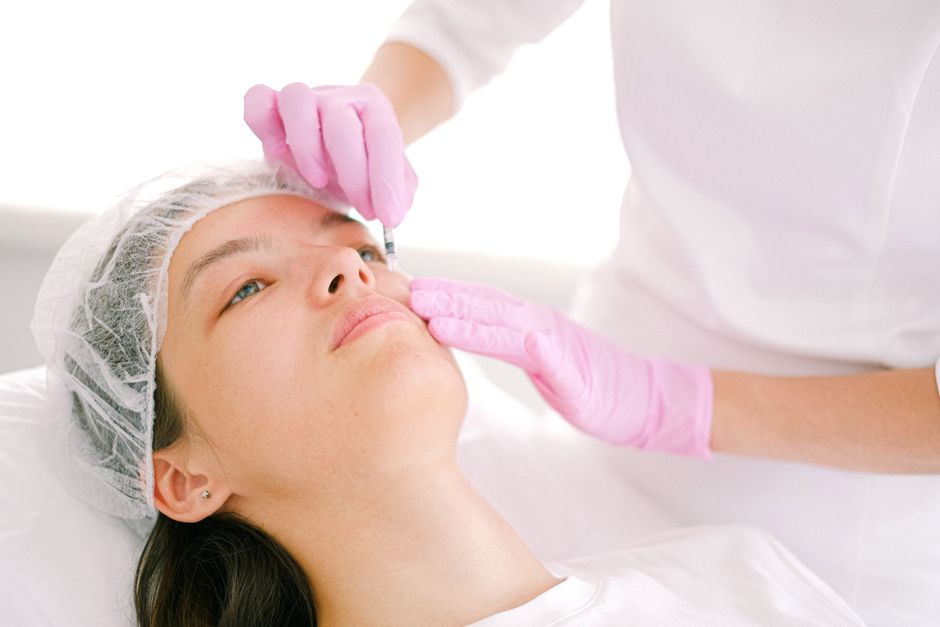
Botox in the chin relaxes the mentalis muscle, which stops that dimpled “orange peel” look when you talk or frown. It also prevents chin dimpling from aging or from dental work that changes your bite. The result is a smoother chin that moves less when you speak, but the effects are temporary and not right for everyone.
What Does Botox In The Chin Do To Your Face?
Botox in the chin targets a specific muscle called the mentalis. This muscle sits at the tip of your chin and pulls it upward when you frown or purse your lips. When the mentalis is overactive, it creates a bumpy or dimpled appearance every time your face moves. Botox weakens this muscle so it cannot contract as forcefully.
The most visible result is a smoother chin surface. People who get this treatment often describe it as fixing a “pebbled” or “orange peel” texture that appears when they talk, smile, or frown. The chin also tends to stay still rather than puckering upward when you speak. Some people notice their lower lip feels slightly different when drinking from a straw because the muscle is less active.
This is a cosmetic treatment, not a medical one. The effects last about three to four months before the muscle regains full strength and the dimpling returns.
Does Chin Botox Actually Work for Chin Dimpling?
Yes, it works well for the specific problem of an overactive mentalis muscle. Studies published in the Journal of the American Academy of Dermatology and the Journal of Drugs in Dermatology report that patients see significant improvement in chin dimpling after one treatment. Most studies use a patient satisfaction scale, and the majority report being happy with the results.
But “works” depends on what you are trying to fix. If your chin dimples only when you make extreme expressions, Botox will smooth that out. If your chin has always had a bumpy shape even when relaxed, Botox will not change that. The treatment only affects muscle movement, not the shape of the bone or the thickness of your skin.
Some people report that chin Botox also softens a “witch’s chin” — where the chin juts forward sharply when you frown. The muscle relaxation can reduce that forward projection slightly. But this is a secondary effect, not the main reason people get the treatment.
What Are the Side Effects of Botox in the Chin?
The most common side effect is temporary weakness in the lower lip. The mentalis muscle helps control your lower lip, and if too much Botox spreads to nearby muscles, your lip may droop or feel weak. This usually resolves within two to four weeks as the Botox wears off. It happens more often when someone inexperienced injects too much product in one spot.
Other side effects include bruising at the injection site, mild swelling, and tenderness for a day or two. Rarely, people report a crooked smile or difficulty pursing their lips. The American Society of Plastic Surgeons notes that these effects are almost always temporary and resolve on their own.
A less discussed risk is that the chin can look “frozen” or unnatural if too much Botox is used. You want the muscle weaker, not paralyzed. A skilled injector uses small doses — typically 2 to 6 units total — spread across multiple injection points. More is not better here.





How Is Chin Botox Different from Botox in Other Areas?
Chin Botox uses much smaller doses than forehead or frown line treatments. The mentalis is a small muscle, and it does not take much to calm it down. A typical dose is 2 to 6 units total, compared to 20 to 30 units for the forehead or 20 to 40 units for the jawline.
The injection technique is also different. For the forehead, the injector places Botox in a grid pattern across a broad area. For the chin, they inject directly into the mentalis muscle, usually one spot on each side of the chin. Some injectors use a single central injection, but this increases the risk of lip weakness.
The recovery is faster for chin Botox than for other areas. You can go back to normal activity immediately, though you should avoid lying down for four hours and skip strenuous exercise for 24 hours. Bruising is less visible on the chin than on the forehead because the chin has thicker skin.
Who Should Not Get Botox in Their Chin?
Chin Botox is not right for everyone. If you have a weak chin that recedes backward, relaxing the mentalis muscle can make your chin look even smaller. The muscle helps project your chin forward when you speak or frown. Weakening it can cause your chin to look less prominent.
People with certain neuromuscular conditions like myasthenia gravis or Lambert-Eaton syndrome should not get Botox anywhere on their face. Pregnant or breastfeeding women should also avoid it because there is not enough safety data. The FDA has not studied Botox in these populations.
If you have had dental work that changed your bite, talk to your dentist before getting chin Botox. Some people develop chin dimpling after braces, crowns, or implants change how their teeth meet. In these cases, the muscle is compensating for a dental problem, and Botox may not fix the underlying issue. A dentist or orthodontist can tell you if your bite is the cause.
| Factor | Good Candidate | Poor Candidate |
|---|---|---|
| Chin shape at rest | Smooth or slightly dimpled | Receding or weak chin |
| Chin movement | Dimples only when moving | Dimples even when relaxed |
| Bite alignment | Normal bite | Recent dental work or bite changes |
| Medical history | No neuromuscular conditions | Myasthenia gravis, pregnancy, breastfeeding |
| Previous Botox experience | First time or positive experience | Previous allergic reaction or poor results |
What to Expect During and After Chin Botox Treatment
The procedure takes about five minutes. A provider cleans your chin with alcohol and uses a tiny needle to inject Botox into the mentalis muscle. You may feel a pinch or a mild burn. Most people describe it as less painful than forehead injections because the chin skin is thicker.
Results appear gradually over three to seven days. You will notice your chin dimpling less when you frown or talk. The full effect is visible by day 10 to 14. The results last about three to four months, then the muscle slowly regains strength and the dimpling returns to its original level.
After the injection, follow these guidelines for the first 24 hours:
- Do not rub or massage your chin
- Avoid lying down for at least four hours
- Skip strenuous exercise
- Do not drink alcohol
- Avoid facials or any pressure on your chin
You can resume normal activities immediately. Some people return to work right after their appointment. Bruising is the most common visible side effect, and it typically fades within a week. If you bruise easily, ask your provider about using arnica cream or ice packs before the injection.
Common Misconceptions About Chin Botox
Some people think chin Botox will make their chin look smaller or change its shape permanently. Neither is true. Botox only affects muscle movement, not the underlying bone or fat. Your chin will look the same at rest. The change is visible only when you move your face.
Another misconception is that chin Botox is the same as “chin filler” or “jaw Botox.” Chin filler is a different treatment that uses hyaluronic acid to add volume to a recessed chin. Jaw Botox targets the masseter muscle to slim the jawline. These are separate procedures with different goals and different injection sites. Do not let a provider confuse them.
Some people also believe that chin Botox will fix a double chin or sagging skin under the chin. It will not. A double chin is caused by fat or loose skin, not by muscle movement. Kybella injections or neck liposuction are treatments for that problem, not Botox.
Frequently Asked Questions
Does chin Botox hurt?
Most people say it hurts less than forehead Botox because the chin skin is thicker. You will feel a quick pinch but the injection takes only a few seconds.
How long does chin Botox last?
Results typically last three to four months. Some people find it wears off faster if they exercise heavily or have a fast metabolism.
Can I smile after chin Botox?
Yes, you can smile normally. The Botox only weakens the mentalis muscle, not the muscles that control your smile. Some people notice a slight difference in how their lower lip moves for the first week.
Will chin Botox make my chin look frozen?
Not if the dose is correct. A skilled injector uses a small dose that weakens the muscle without paralyzing it. Too much Botox can cause a frozen look, so choose an experienced provider.
