
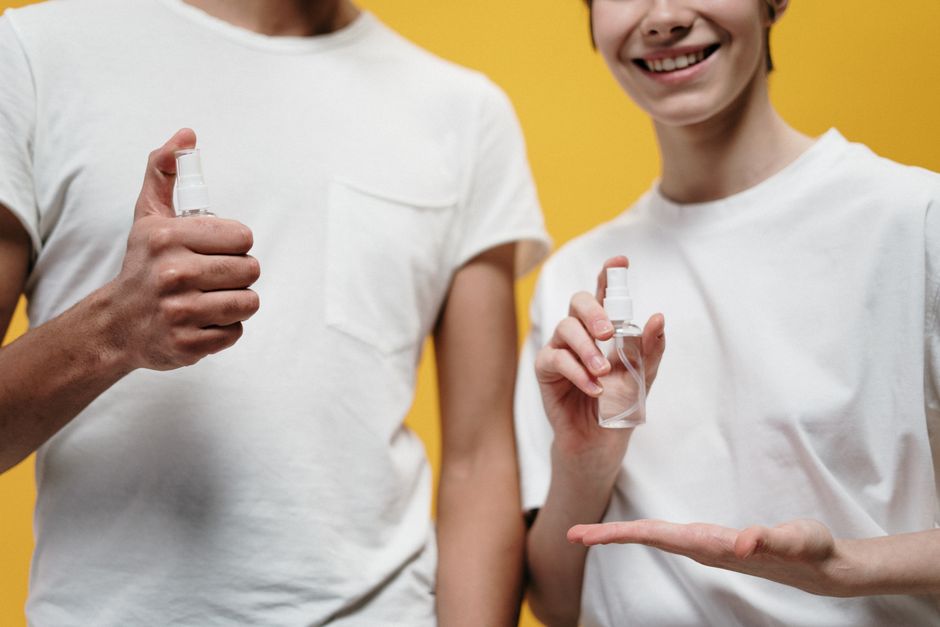
Avobenzone is one of the most widely used sunscreen ingredients in the world. It works by absorbing ultraviolet A (UVA) radiation and converting that energy into small amounts of heat, which helps protect skin from the deeper damage UVA can cause. Regulators in the United States, the European Union, and elsewhere have approved it for use in sunscreens, and the main safety questions center on how much enters the bloodstream and whether that matters for human health.
What Does Avobenzone Do And Is It Safe?
Avobenzone’s job is to absorb UVA rays. UVA penetrates deeper into the skin than UVB and is a major driver of premature skin aging, and it also contributes to skin cancer risk. By absorbing that energy before it reaches living skin cells, avobenzone reduces the amount of UVA that gets through.
On safety, the current position from regulators is that avobenzone is permitted for use in sunscreens at specified concentrations. That is not the same as saying every question is settled. The most active area of research is absorption: studies have shown that some sunscreen ingredients, including avobenzone, can be detected in blood after application. What those findings mean for health is still not fully known.
It helps to separate two different questions. The first is whether avobenzone damages skin or causes cancer when applied topically. The second is whether absorbing it into the bloodstream has any health effect. The first has decades of use behind it. The second is genuinely open.
How Does Avobenzone Protect Skin From UVA?
UV radiation comes in different wavelengths. UVB is shorter and mostly affects the outer layer of skin, causing sunburn. UVA is longer, reaches deeper, and does its damage more quietly. Avobenzone is designed to target the UVA range.
When a UVA photon hits an avobenzone molecule, the molecule absorbs the energy and shifts into an excited state. It then releases that energy as heat, returning to its original form. The UV energy never reaches the DNA in your skin cells in the form that causes damage. This is a physical process, not a chemical reaction that consumes the molecule, though avobenzone does break down over time under sunlight, which is why it is usually paired with stabilizers.
One non-obvious point: avobenzone is often described as a “chemical” sunscreen, as opposed to “mineral” sunscreens like zinc oxide and titanium dioxide. That label can be misleading. All of these ingredients are chemicals in the literal sense, and mineral sunscreens also work by absorbing UV, not only by reflecting it as often claimed. The meaningful difference is how they feel on skin, how they perform across the UV spectrum, and how they behave when absorbed.
Is Avobenzone Absorbed Into the Bloodstream?
Yes, and this is well documented. Studies have found that when sunscreen containing avobenzone is applied to skin, measurable amounts can appear in the blood.
A set of studies published in the journal JAMA in 2019 and 2020 tested several common sunscreen ingredients, including avobenzone, under maximal-use conditions. Participants applied sunscreen to large areas of skin multiple times per day. Blood levels of avobenzone rose above the threshold the FDA uses to determine whether additional safety testing is warranted for an ingredient that is absorbed.
It is important to be precise about what this does and does not show. Those studies measured absorption. They did not show harm. A blood level above a testing threshold is a signal that more study is needed, not evidence of a health effect. The FDA has continued to ask for additional data on absorption for several sunscreen ingredients, including avobenzone.
Context matters here. The study conditions involved heavy, repeated application over most of the body. Everyday use, on a face and arms, involves far less product. That does not make the absorption findings irrelevant, but it does mean the exposure in the studies does not match a typical day at the beach for most people.





Does Avobenzone Cause Hormone Disruption or Cancer?
These are the two concerns people search for most, and the honest answer is different for each.
On hormone disruption, some laboratory studies using cells and animals have reported weak estrogen-like activity for avobenzone and certain other UV filters. These findings come from experimental systems, not from studies showing hormonal effects in people using sunscreen. Whether the weak activity seen in a lab dish translates into any meaningful effect in humans at real-world exposure levels is not established. The evidence is limited and mixed, and no human study has confirmed a hormonal effect from normal sunscreen use.
On cancer, the picture points the other way. The established link is between UV exposure and skin cancer, including melanoma and the more common basal and squamous cell cancers. Sunscreen use reduces UV exposure. No current evidence indicates that avobenzone causes cancer in humans. The theoretical concern is that if people absorbed enough of an ingredient and it had some harmful effect, that could matter — but that remains theoretical.
The practical implication is uncomfortable but real: the known risk from UV is well documented, and the hypothetical risk from avobenzone is not. That does not mean absorption should be ignored. It means the comparison should be made fairly.
Is Avobenzone Safe for Children and During Pregnancy?
For children, sunscreen use is generally recommended, but the choice of product matters more at younger ages. For infants under 6 months, the guidance is usually to keep them out of direct sun and use protective clothing and shade rather than relying on sunscreen. The American Academy of Pediatrics has advised that sunscreen can be used on small areas of exposed skin in infants when shade and clothing are not enough, but this is a case where a pediatrician’s input is worth having.
For pregnancy, there is no clinical guideline that establishes avobenzone as either safe or unsafe in a way that removes all doubt. Absorption into the bloodstream has been documented, but studies have not shown harm to a pregnancy or a developing fetus from typical sunscreen use. No clinical guidelines currently exist that give a specific avobenzone recommendation for pregnant women. If you are pregnant or breastfeeding and concerned, mineral sunscreens such as zinc oxide or titanium dioxide are often chosen as an alternative, largely because they are absorbed to a much lesser degree. That is a common preference, not a proven safety advantage.
For children old enough to use sunscreen, the same general guidance applies as for adults: use it, and reapply as directed. The concern about absorption does not currently justify skipping sun protection in kids, given what UV exposure does to young skin over a lifetime.
How Should You Use Avobenzone Sunscreen Effectively?
The biggest problem with avobenzone sunscreen is not safety. It is that most people do not use enough, and avobenzone breaks down in sunlight.
Avobenzone is not photostable on its own. Under UV exposure it degrades, which reduces protection over time. This is why it is almost always formulated with stabilizers, often other UV filters such as octocrylene, or with ingredients that slow its breakdown. A product’s overall stability depends on the full formulation, not just the presence of avobenzone.
Practical points that follow from how the ingredient works:
- Apply before sun exposure, not after you are already in the sun.
- Use enough to actually cover the skin. Most people apply far less than the amount used in testing.
- Reapply at least every two hours, and sooner after swimming or heavy sweating.
- Choose a broad-spectrum product, since avobenzone covers UVA but not the full UVB range on its own.
- Check the expiration date. Old or heat-damaged sunscreen may not perform as labeled.
One clarification worth making: “water-resistant” does not mean waterproof. No sunscreen is fully waterproof, and the label reflects how long protection lasts while swimming or sweating, not a guarantee.
What Are the Alternatives to Avobenzone?
If you want to avoid avobenzone, the main alternatives are mineral filters and other chemical filters.
| Filter type | Examples | Notes |
|---|---|---|
| Mineral | Zinc oxide, titanium dioxide | Absorbed to a much lesser degree; can leave a white cast |
| Other chemical | Octocrylene, octisalate, homosalate | Often used alongside avobenzone; some also under FDA review for absorption |
| Newer filters | Filters approved in the EU and elsewhere | Not all are approved in the US; availability varies |
It is worth knowing that avoiding avobenzone does not automatically mean avoiding absorption concerns. Several other organic UV filters have also been shown to enter the bloodstream in the same studies. Switching to mineral sunscreen is the clearest way to reduce absorption, though mineral products have their own trade-offs in texture and coverage.
Frequently Asked Questions
Is avobenzone bad for your skin?
At approved concentrations in sunscreen, avobenzone is not known to damage skin, and it protects against UVA, which does cause skin damage over time. Some people may have skin irritation or allergic reactions to it, which is uncommon but possible.
Does avobenzone get into your bloodstream?
Yes, studies have found that avobenzone can be absorbed through the skin and detected in the blood, especially with heavy, repeated application over large areas. What those blood levels mean for health is not yet known.
Is avobenzone safer than mineral sunscreen?
Neither is proven safer in humans. Mineral filters like zinc oxide and titanium dioxide are absorbed to a much lesser degree, but avobenzone has decades of use and no confirmed human harm from typical use.
Should I avoid avobenzone while pregnant?
No clinical guidelines give a specific avobenzone recommendation for pregnancy, and studies have not shown harm from typical use. Some people choose mineral sunscreen during pregnancy as a personal preference rather than a proven necessity.
