
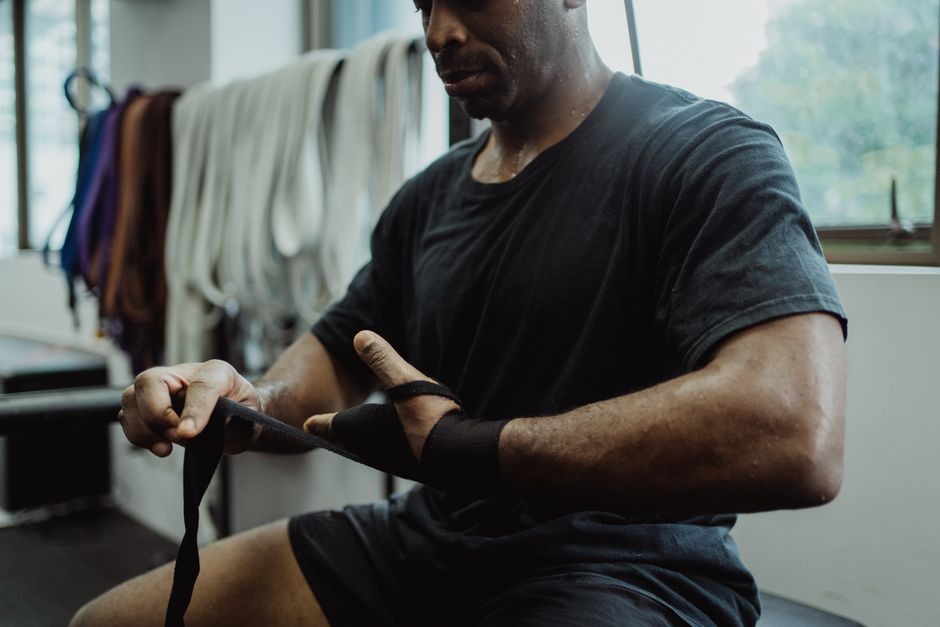
Athletic tape is a specialized adhesive tape used to support muscles, joints, and ligaments during physical activity. It works primarily by limiting excessive or unsafe movement while allowing normal, healthy motion to continue. Athletic tape also provides sensory feedback that helps you notice when a joint is moving into a risky position, and it can support injured tissues while they heal.
How Does Athletic Tape Work?
Think of athletic tape as a physical reminder for your body. It does not add strength to a muscle. It does not make a ligament stronger. What it does is create a mechanical barrier that stops a joint from moving too far in a direction that could cause injury.
When you tape an ankle, for example, the tape acts like an external ligament. It sits on the skin and anchors to the bone areas above and below the joint. If the ankle starts to roll inward too far, the tape tightens and resists that motion. This gives the muscles around the joint extra time to react and correct the position.
There is also a neurological component. The skin is packed with sensory receptors. Tape pulls on the skin, and those receptors send signals to the brain about joint position. This increased awareness — called proprioception — helps you adjust your movement before an injury happens.
Research consistently shows that athletic tape can reduce the range of motion in a taped joint immediately after application. The effect is strongest in the first 20 to 30 minutes of activity. After that, the tape loosens slightly, and the mechanical restriction becomes less pronounced.
What Are the Main Types of Athletic Tape?
Not all tape is the same. The type you choose depends on the job it needs to do.
Zinc oxide tape is the classic white athletic tape. It is rigid, strong, and does not stretch. This is the tape used for joint support and restriction. It is applied directly to the skin or over a thin layer of pre-wrap to protect the skin from irritation.
Elastic adhesive tape stretches with movement. It provides compression and support without fully locking a joint in place. This type is often used for muscle support, rib injuries, or areas that need some give, like the shoulder.
Kinesiology tape is a different product entirely. It is thin, highly elastic, and designed to mimic the elasticity of human skin. It is not meant to restrict motion. Instead, it lifts the skin slightly, which some research suggests may improve blood flow or reduce pain signals. The evidence for these effects is mixed, and kinesiology tape is best understood as a sensory tool rather than a structural support.
Underwrap is a soft foam layer placed between the skin and rigid tape. It protects the skin and makes tape removal more comfortable. The trade-off is that underwrap reduces how strongly the tape adheres, so support is slightly less secure.
What Does Athletic Tape Do for Injuries?
Athletic tape serves three main purposes in injury management: prevention, protection, and rehabilitation support.
For prevention, tape is commonly used on joints with a history of injury. A sprained ankle is the classic example. Studies have found that athletes with previous ankle sprains who tape their ankles have fewer repeat sprains than those who do not. The tape reduces the chance of the ankle rolling into the vulnerable position again.
For protection, tape supports an injured area while it heals. If you have a mild ligament strain, tape can allow you to continue light activity without putting full stress on the healing tissue. This is not a substitute for rest when rest is needed, but it can help maintain fitness during recovery.
For rehabilitation, tape allows controlled movement. A therapist may tape a joint to allow safe motion in one direction while blocking motion in a dangerous direction. This lets you exercise the injured area without reinjuring it.
One important limitation: athletic tape does not prevent all injuries. High-force impacts, awkward falls, or extreme joint positions can overpower any tape. Tape reduces risk; it does not eliminate it.





How Long Does Athletic Tape Stay Effective?
Tape loses effectiveness over time. The adhesive loosens, the material stretches, and sweat degrades the bond between tape and skin. For most applications, tape provides meaningful support for 20 to 40 minutes of vigorous activity. After that, the restriction decreases noticeably.
This is why athletes re-tape between periods, halves, or quarters of a game. A fresh application restores the full mechanical benefit. For a full-day event, expect to reapply tape several times.
Skin tolerance is another limit. Most people can wear athletic tape for a few hours comfortably. Leaving it on for a full day can cause skin irritation, especially if the tape was applied tightly or if you have sensitive skin. Remove tape gently and clean the skin afterward to reduce irritation.
Does Kinesiology Tape Work Differently?
Yes, and the difference matters. Kinesiology tape is often confused with traditional athletic tape because both are sold in the same stores and used by the same athletes. But they work in fundamentally different ways.
Traditional athletic tape is rigid. It physically blocks movement. Kinesiology tape stretches up to 140 percent of its resting length, so it cannot block movement. Instead, it provides constant sensory input through the skin.
The proposed mechanism is that lifting the skin creates a small space under the tape, which may improve local circulation or reduce pressure on pain receptors. Some research supports modest pain relief and improved range of motion in certain conditions. Other studies find no meaningful difference between kinesiology tape and a placebo tape.
No study has confirmed that kinesiology tape strengthens muscles, changes muscle activation patterns long-term, or speeds tissue healing. Use it if it helps you feel more stable or less painful during activity. Just understand that it is not doing the same job as rigid athletic tape.
When Should You Not Use Athletic Tape?
There are clear situations where tape is not appropriate. If you have an open wound, a skin infection, or a known allergy to adhesive, do not apply tape directly to the area. If you have poor circulation in a limb, tight wrapping can make it worse. If you have a suspected fracture or a severe ligament tear, tape is not treatment — you need medical evaluation.
Do not use tape to mask pain that should stop you from playing. If a joint is swollen, unstable, or painful under normal use, taping it and continuing activity can turn a minor injury into a major one. Tape is a support tool, not a permission slip.
If you are new to taping, have a professional show you the correct technique. Poorly applied tape can be useless at best and harmful at worst. A roll that is too tight can compress nerves or blood vessels. A roll that is too loose provides no support at all.
How Should Athletic Tape Be Applied?
Proper application starts with clean, dry skin. Shave the area if there is significant hair, because tape adheres poorly to hair and removal is painful. Apply a skin barrier or underwrap if you have sensitive skin.
Position the joint in the position you want to protect. For an ankle, that usually means a 90-degree angle. For a wrist, a neutral straight position. The tape should be applied with the joint held in a safe, neutral position so it blocks movement into the danger zone.
Anchor strips go first. These are placed above and below the joint to give the support strips something to attach to. Then apply the support strips in the direction that resists the unwanted movement. Smooth each strip down firmly to ensure full adhesion. Avoid gaps and wrinkles, which create friction points and blisters.
After application, check for signs of excessive tightness — numbness, tingling, discoloration, or throbbing. If any of these occur, remove the tape and reapply more loosely.
Frequently Asked Questions
Does athletic tape prevent injuries?
Athletic tape reduces the risk of certain injuries, particularly repeat ankle sprains, by limiting excessive joint movement. It does not prevent all injuries, and high-force impacts can overpower any tape.
Can you wear athletic tape overnight?
It is not recommended to wear athletic tape overnight because prolonged compression and adhesive contact can irritate the skin and impair circulation. Remove tape after activity and let the skin recover.
Is kinesiology tape as effective as regular athletic tape?
Kinesiology tape and regular athletic tape do different jobs, so they are not directly comparable. Rigid athletic tape restricts joint movement, while kinesiology tape provides sensory feedback without meaningful mechanical support.
How tight should athletic tape be applied?
Tape should be snug enough to stay firmly adhered but loose enough to slide a fingertip underneath. If you feel numbness, tingling, or throbbing, the tape is too tight and should be removed.
