
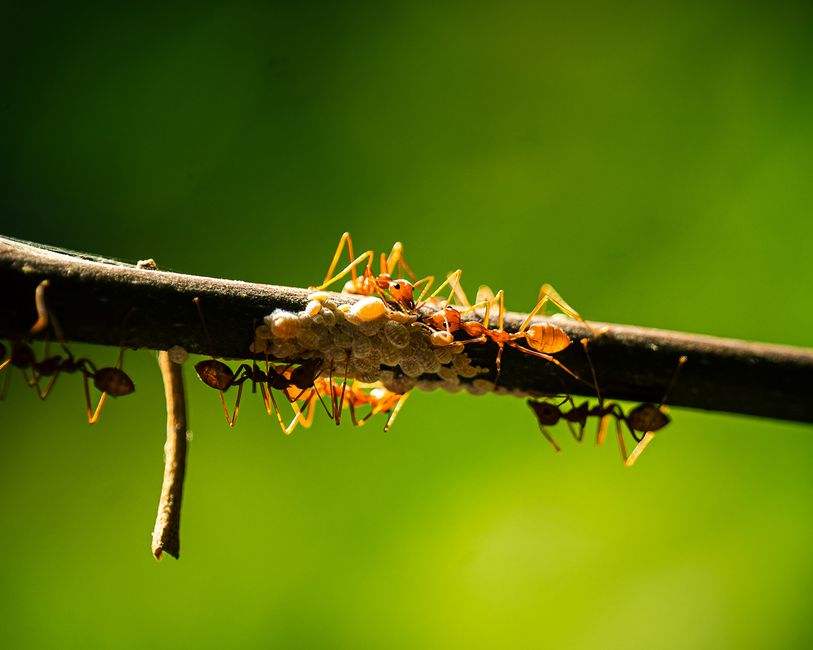
Ants are a fact of life in most homes. You can scrub every surface and still find a line of them marching across the kitchen counter. The good news is that you do not need harsh chemicals to deter them. Ants dislike certain smells, textures, and substances that are common in most households. Knowing what ants dislike is the first step to keeping them out without resorting to toxic sprays.
What Scents Do Ants Strongly Dislike?
Ants rely heavily on their sense of smell to find food and communicate with the colony. They leave chemical trails that other ants follow. Strong scents can disrupt these trails and confuse foraging workers.
Some of the most effective natural repellents are essential oils and common kitchen spices. Peppermint oil is one of the most well-documented ant deterrents. The strong menthol smell overwhelms their scent receptors. Other effective options include tea tree oil, cinnamon oil, and clove oil.
You can use these oils by mixing a few drops with water in a spray bottle. Spray along baseboards, door thresholds, and window sills. Reapply after cleaning or when the scent fades. The effect is temporary, so this works best as a maintenance strategy rather than a one-time fix.
Does Vinegar Repel Ants?
White vinegar is a popular household ant remedy, and it works for a specific reason. Vinegar does not kill ants, but it disrupts their pheromone trails. When you wipe a surface with vinegar, you erase the chemical path that tells other ants where the food is.
Mix equal parts white vinegar and water in a spray bottle. Use it to wipe down counters, floors, and other surfaces where you see ant activity. The smell fades quickly for humans, but it lingers long enough to confuse foraging ants.
One caution: vinegar is acidic. Do not use it on natural stone surfaces like marble or granite, as it can etch the finish. Test it on an inconspicuous area first if you are unsure.
What Household Substances Kill Ants on Contact?
Some substances kill ants quickly when they come into direct contact. These are not repellents — they are contact insecticides. They work well for dealing with visible ants but do not address the colony itself.
Dish soap is one of the most effective contact killers. A solution of dish soap and water breaks down the ant’s waxy exoskeleton. This causes the ant to dehydrate and die within minutes. Mix about one tablespoon of dish soap per cup of water in a spray bottle.
Diatomaceous earth is another option. This fine powder is made from fossilized algae. It is not a poison. It works by physically damaging the ant’s exoskeleton, causing it to lose moisture and die. Food-grade diatomaceous earth is safe to use around pets and children when applied correctly. Dust it lightly in cracks and along baseboards where ants travel.





Why Do Ants Avoid Certain Kitchen Ingredients?
Several common pantry items are known to deter ants, but the evidence for each varies. Some have real scientific backing. Others are more anecdotal.
Black pepper and cayenne pepper are often cited as ant deterrents. The theory is that the pungent compounds irritate ants and discourage them from crossing treated areas. Some studies suggest that certain pepper compounds do repel ants, but the effect is not consistent across all species.
Cinnamon is better supported. Research published in the Journal of Agricultural and Food Chemistry found that cinnamon oil has strong repellent properties against several ant species. The compound cinnamaldehyde is the active ingredient. You can sprinkle ground cinnamon or place cinnamon sticks near entry points.
Coffee grounds are a popular suggestion, but the evidence is limited. Some gardeners report that used coffee grounds deter ants in flower beds. However, no large human studies have confirmed this effect indoors. Treat this as a low-cost experiment rather than a proven solution.
What Food Storage Habits Keep Ants Away?
Repellents only go so far. If ants can smell food, they will keep trying to get inside. The most reliable way to prevent ants is to remove what attracts them.
Ants are attracted to sugar, grease, and protein. They will eat almost anything humans eat. Store all food in airtight containers. This includes dry goods like flour, sugar, and cereal. Cardboard boxes and plastic bags are not enough — ants can chew through both.
Wipe down counters after every meal. Sweep floors daily, especially under appliances and along baseboards. Take out the trash regularly and keep the bin clean. Pet food is another major attractant. Do not leave pet bowls out overnight.
Pay attention to moisture. Many ant species need water as much as food. Fix leaky pipes and faucets. Do not leave standing water in sinks or trays under potted plants.
How Do You Find Where Ants Are Entering?
Repellents work best when you know where to apply them. Watch the ant trail and follow it back to the entry point. Common entry spots include gaps under doors, cracks in the foundation, and openings around utility lines.
Once you find the entry point, seal it. Use caulk for small cracks and gaps. Use weather stripping under doors. For larger openings, steel wool or copper mesh can be stuffed into the gap before sealing with caulk or foam.
Sealing entry points is the most permanent solution. Repellents will never completely solve the problem if ants can still get inside. Sealing is also more effective than spraying because it stops the problem at the source.
When Should You Call a Professional?
Home remedies work for small, occasional ant problems. They are less effective for large infestations or species that nest indoors.
If you see ants every day, find winged ants inside, or notice ant trails that persist despite your efforts, you may have a colony inside the structure. Carpenter ants are a particular concern because they nest in wood and can cause structural damage.
Professional pest control services have access to baits and treatments that are not available to consumers. They can identify the ant species and target the colony directly. This is often the fastest and most effective solution for persistent problems.
If you choose to use over-the-counter ant baits, read the label carefully. Place baits where children and pets cannot reach them. Baits work because ants carry the poison back to the colony. It can take a few weeks to eliminate the entire colony.
Are Natural Repellents Safe for Pets and Children?
Most natural repellents are safer than commercial insecticides, but “natural” does not automatically mean safe. Essential oils are concentrated plant compounds. Some are toxic to cats and dogs, especially in high concentrations.
Peppermint oil is generally considered safe for humans but can be toxic to cats and dogs if ingested in large amounts. Tea tree oil is more concerning — it is known to be toxic to pets, especially cats. Keep pets away from treated areas until the oil has dried.
Diatomaceous earth is safe for humans and pets when used as directed. The risk is inhalation. Wear a dust mask when applying it. Avoid creating clouds of dust in areas where children play.
If you have pets, the safest approach is to focus on prevention. Seal entry points, store food properly, and remove moisture sources. This addresses the problem without introducing any substances into your home.
Frequently Asked Questions
What smell keeps ants away the fastest?
Peppermint oil is the most effective scent-based deterrent for most ant species. Mix a few drops with water and spray it directly on ant trails and entry points.
Does baking soda kill ants?
Baking soda is not a proven ant killer. Some people mix it with sugar as a homemade bait, but no clinical evidence confirms this works reliably.
Will ants leave if there is no food?
Yes, removing food sources is the most reliable way to discourage ants. They will stop foraging in an area once they cannot find food or water.
Can ants become resistant to natural repellents?
No, ants do not become resistant to physical deterrents like sealing cracks or scent-based repellents. However, repellent scents fade quickly and must be reapplied regularly.
