
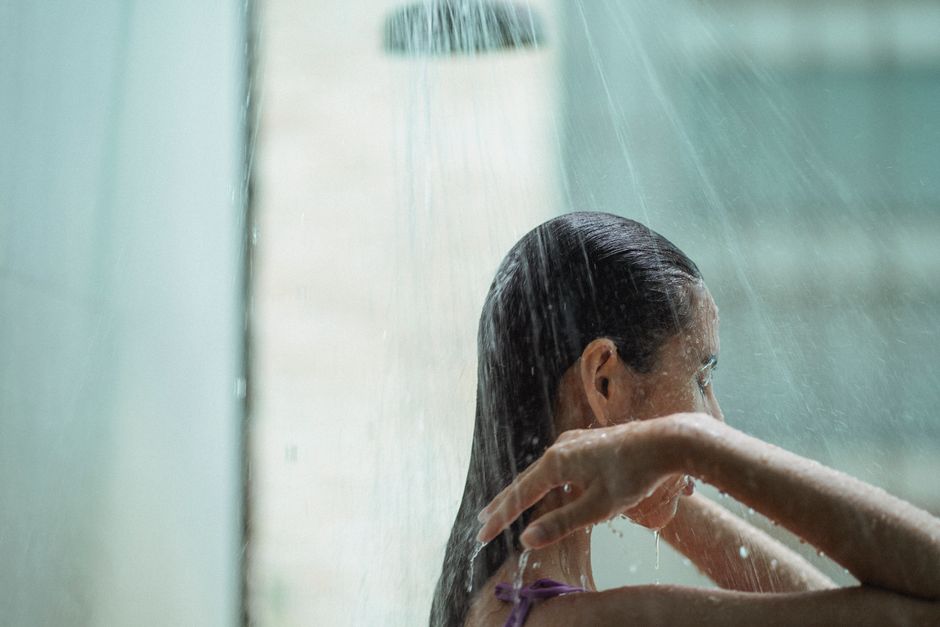
Hard water does not cause a rash in the way an allergy does. Instead, the minerals in hard water — mainly calcium and magnesium — can leave a residue on your skin that disrupts its natural barrier and traps irritants. The result usually looks like dry, rough, flaky patches with small red bumps, most often on the arms, legs, hands, and sometimes the face. It tends to itch, feel tight after washing, and get worse the more often you shower or bathe.
What Does A Hard Water Rash Look Like On Skin?
The appearance is usually subtle rather than dramatic. You are unlikely to see large welts or spreading red patches the way you might with hives or a contact allergy. What you typically see is a low-grade irritation that builds over days or weeks.
Common visual signs include:
- Small red bumps scattered across the arms, legs, or torso
- Rough, sandpaper-like texture on the skin surface
- White or gray flaking, especially after bathing
- Mild redness in patches rather than a uniform rash
- Tight, shiny skin where the barrier has dried out
- Occasional tiny cracks in the skin, particularly on the hands
The distribution matters. Hard water irritation tends to show up on areas most exposed to water — the forearms, lower legs, hands, and sometimes the chest and back. The face can be affected too, but less often unless you wash it frequently.
One thing that separates this from many other skin conditions: it usually improves when you stop washing with hard water, or when you change how you wash. That pattern alone can help you figure out what you are dealing with.
Why Does Hard Water Irritate Skin?
Hard water contains dissolved calcium and magnesium. When that water mixes with soap, it forms what is sometimes called soap scum — a sticky, insoluble residue. That residue does not rinse off easily. It stays on your skin after you towel dry.
That residue does two things. It physically blocks some of the skin’s ability to hold moisture, and it can trap other irritants like soap fragments, fragrance, and bacteria against the skin surface. Over time, this weakens the outer layer of skin, called the stratum corneum.
The stratum corneum is your skin’s barrier. It is made of dead skin cells packed with fats (lipids) that keep water in and irritants out. When that barrier is compromised, water evaporates from your skin faster, and outside substances penetrate more easily. That is when you get dryness, itching, and the small bumps that look like a rash.
Soap choice matters here. Regular bar soap reacts with hard water minerals more than synthetic detergents (often labeled “syndets” or “soap-free cleansers”) do. If you use bar soap in hard water, you are essentially creating more residue with every wash.
Is It Actually a Rash or Just Dry Skin?
This is a fair question, and the line is blurry. Hard water irritation often sits somewhere between dry skin (xerosis) and a true rash. In clinical terms, it is usually classified as an irritant contact reaction rather than an allergic one.
The distinction matters because the treatment approach is slightly different. An allergic rash involves an immune response and can spread or worsen with each exposure. An irritant reaction is caused by direct damage to the skin barrier. It tends to stay local and improves when the irritant is removed.
Signs it is more irritant than allergic:
- It stays in areas that contact water
- It does not spread to untouched skin
- It improves within days of changing your washing routine
- It does not blister or ooze
If your skin is blistering, oozing, or spreading rapidly, that points toward something else — an allergy, an infection, or another skin condition — and you should see a doctor.



Who Is Most Likely to React to Hard Water?
Not everyone reacts the same way. Some people bathe in very hard water for years with no problem. Others notice irritation quickly. Several factors influence this.
People with existing skin conditions tend to be more sensitive. Research has found associations between hard water exposure and eczema severity, though the relationship is not straightforward. Some studies suggest hard water may worsen symptoms in people who already have atopic dermatitis, but the evidence is mixed on whether it causes the condition in the first place.
Other factors that increase sensitivity:
- Frequent showering or bathing
- Use of harsh soaps or fragranced body washes
- Hot water, which strips oils more aggressively than warm water
- Cold or dry climates that already dry out skin
- Age — older skin tends to have a weaker barrier
People who already have a compromised skin barrier from another condition (psoriasis, eczema, or even just winter dryness) are more vulnerable to the added stress of hard water residue.
How Do You Tell Hard Water Irritation From Other Skin Conditions?
This is where people often get confused, because several skin conditions look similar at first glance. Here is how to think about the differences.
| Feature | Hard Water Irritation | Eczema (Atopic Dermatitis) | Contact Dermatitis |
|---|---|---|---|
| Onset | Gradual, over days to weeks | Often starts in childhood | Hours to days after exposure |
| Location | Water-exposed areas | Flexural areas (elbow creases, behind knees) | Where the substance touched |
| Appearance | Dry, flaky, small red bumps | Red, scaly, sometimes oozing | Red, sometimes blistered |
| Itch | Mild to moderate | Often intense | Often intense |
| Response to stopping hard water | Improves | May improve slightly | Improves when allergen removed |
The key differentiator is the pattern. Hard water irritation improves when you change your water or your washing habits. Eczema and contact dermatitis often need more targeted treatment.
If you are not sure which one you have, a dermatologist can help. Skin conditions are often diagnosed by appearance and history, and sometimes patch testing is used to rule out allergies.
What Can You Do About Hard Water Skin Irritation?
The most direct solution is to reduce your exposure to hard water residue. That does not always mean installing a whole-house water softener, which can be expensive. There are smaller steps that often help.
Practical changes that may reduce irritation:
- Switch from bar soap to a gentle, soap-free cleanser
- Shorten showers and use warm water instead of hot
- Apply a thick moisturizer within three minutes of patting dry
- Use a shower filter designed to reduce minerals (effectiveness varies)
- Rinse with filtered or softened water if available
- Avoid fragranced lotions and body washes
Moisturizing is not just about comfort. It helps rebuild the skin barrier that hard water residue has disrupted. Look for moisturizers with ceramides, glycerin, or petrolatum. These ingredients help hold water in the skin and support barrier repair.
Some clinicians recommend using a water softener if hard water irritation is a recurring problem. The evidence for shower filters specifically is limited — they may reduce some minerals but are not as effective as a whole-home softener. If you try one, give it a few weeks and see if your skin improves.
When Should You See a Doctor?
Most mild hard water irritation can be managed at home. But some signs suggest you need medical attention.
See a doctor if:
- The rash is spreading or getting worse despite changes
- You have blisters, oozing, or crusting
- Itching is severe enough to disturb sleep
- You see signs of infection — warmth, swelling, pus, or increasing pain
- Home measures have not helped after several weeks
These signs could point to an infection, an allergic reaction, or another skin condition that needs different treatment. A doctor can examine the skin and determine what is actually going on.
It is also worth mentioning: hard water irritation is not dangerous. It does not lead to serious disease. But it can affect quality of life, and it can make existing skin conditions harder to manage.
Does Hard Water Cause Eczema?
The short answer is no — hard water is not considered a cause of eczema. Eczema is a complex condition involving genetics, immune function, and environmental triggers. Hard water may be one of many triggers that worsen symptoms in people who already have it.
Research on this is ongoing. Some studies have found that areas with harder water have higher rates of eczema, but that does not prove cause and effect. Other factors — climate, pollution, and water treatment methods — could explain the association.
What is clearer is that hard water can irritate skin that is already compromised. If you have eczema, reducing hard water exposure may help reduce flare-ups, but it is not a cure. Standard eczema treatment — moisturizers, topical steroids, and avoiding known triggers — remains the foundation of care.
Frequently Asked Questions
What does a hard water rash look like on skin?
It usually appears as dry, rough, flaky patches with small red bumps, most often on the arms, legs, hands, and sometimes the face. The skin may feel tight and itchy, especially after showering or bathing.
How long does a hard water rash take to go away?
If you reduce your exposure to hard water, mild irritation often improves within a few days to a week. More persistent cases may take longer, and existing skin conditions may need separate treatment.
Can hard water make eczema worse?
Some studies suggest hard water may worsen symptoms in people who already have eczema, but it is not considered a cause of the condition. The evidence is mixed, and more research is needed.
Do shower filters help with hard water skin irritation?
Shower filters may reduce some minerals, but their effectiveness varies and the evidence for skin improvement is limited. A whole-home water softener is generally more effective at reducing hardness.
