
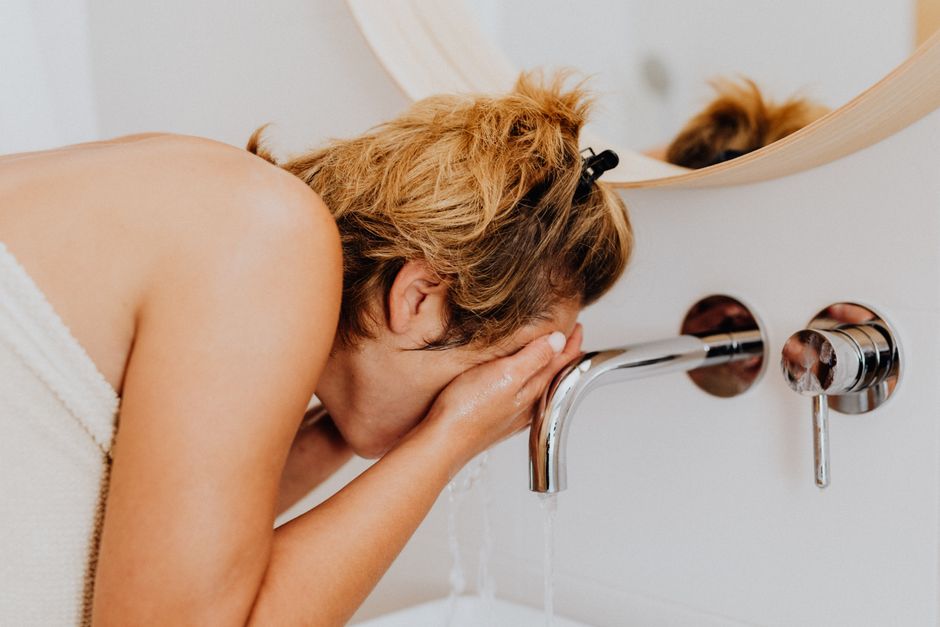
Hot water is not good for your face. It strips away the oils your skin needs to stay healthy, and it can leave your face feeling tight, dry, and irritated. Warm water — not hot — is the better choice for washing your face. If you have ever stepped out of a hot shower and noticed your face feels raw or flushed, that is your skin telling you the water was too hot.
Is Hot Water Good For Your Face Or Bad For Skin?
Hot water is bad for your facial skin. The outer layer of your skin — called the stratum corneum — is built like a brick wall. Skin cells are the bricks, and fats called lipids are the mortar holding them together. Those lipids include ceramides, cholesterol, and free fatty acids. They form a barrier that keeps moisture in and keeps irritants out.
Hot water dissolves those lipids. The hotter the water, the faster it breaks down the barrier. This is basic chemistry — fats dissolve more easily in hot water than in cool water. When the mortar between your skin cells weakens, water escapes from your skin and outside irritants get in more easily.
Research published in the Journal of Investigative Dermatology found that even short exposure to hot water can damage the skin barrier in healthy adults. The damage shows up as increased water loss through the skin and a drop in the skin’s natural moisture-holding capacity. This is not a minor effect. It happens quickly and can take hours or longer to recover.
Your face is more vulnerable than the rest of your body for two reasons. First, facial skin is thinner than skin on your arms, legs, or back. Second, your face has more oil glands per square inch than most other areas. That combination means facial skin reacts faster to heat and loses its protective oils more easily.
What Happens To Your Skin Barrier When You Use Hot Water?
The skin barrier is your face’s first line of defense. When hot water breaks it down, several things happen at once.
Your skin loses water faster. This is called transepidermal water loss. You cannot see it happening, but it is measurable. Skin that loses water too quickly becomes dry, flaky, and rough.
Irritants get in more easily. Things that normally sit on the surface of your skin — pollution, bacteria, skincare ingredients — can slip through the weakened barrier. This can cause redness, stinging, and itching.
Inflammation can follow. When the barrier is compromised, your immune system responds. That response shows up as redness, warmth, and sometimes swelling. For people with sensitive skin or conditions like rosacea or eczema, this inflammation can trigger a flare.
Your skin may produce more oil to compensate. This is a rebound effect. When you strip away natural oils with hot water, your sebaceous glands may ramp up oil production to replace what was lost. The result is skin that feels both dry and oily at the same time.
One thing worth understanding: the damage is cumulative. A single hot wash may not cause lasting harm. But washing your face with hot water every day, twice a day, for months or years, keeps your barrier in a constant state of repair. Over time, skin can look dull, feel rough, and become more reactive to products it once tolerated.
Does Water Temperature Really Matter That Much?
Yes. Water temperature is one of the most controllable factors in any skincare routine. You cannot change your genetics or your age, but you can change how hot your water is.
The difference between hot and warm water matters more than most people realize. Hot water — the kind that feels soothing in a shower — is typically well above body temperature. Warm water, closer to body temperature, does not dissolve skin lipids nearly as fast.
Cold water does not damage the barrier. But cold water also does not clean your face as effectively as warm water. Cold water can feel refreshing and may temporarily reduce puffiness, but it does not remove oil, sweat, or sunscreen as well.
Warm water is the middle ground. It is warm enough to help cleanse without stripping the barrier. Think of it as the temperature you would use to wash a baby — comfortably warm, not hot.




What Water Temperature Should You Use To Wash Your Face?
Use lukewarm water. That means water that feels neutral against your skin — not hot, not cold. If the water feels noticeably warm on your inner wrist, it is probably too warm for your face.
A good way to test: run the water over the inside of your wrist for a few seconds. Your wrist skin is thinner and more sensitive than your hands, similar to your face. If it feels comfortably warm, it is fine. If it feels hot, turn the temperature down.
Here is how to adjust your routine:
- Wash your face with lukewarm water, not hot.
- Keep your showers warm, not steaming, if you wash your face in the shower.
- Limit facial cleansing to twice a day — morning and night. Over-washing, even with warm water, can dry out your skin.
- Use a gentle, non-foaming cleanser. Harsh soaps combined with warm water can still strip your skin.
- Pat your face dry with a soft towel. Do not rub.
- Apply moisturizer within a minute or two of washing, while your skin is still slightly damp. This helps seal in water.
If you wear heavy makeup or sunscreen, you may need a two-step cleanse. Start with a cleansing oil or balm to break down the product, then follow with a gentle water-based cleanser. Use lukewarm water for both steps.
Can Hot Water Make Acne Worse?
Hot water does not cause acne. But it can make existing acne worse by irritating the skin and triggering inflammation.
Acne forms when pores get clogged with oil and dead skin cells, and bacteria called Cutibacterium acnes multiply inside the clogged pore. Hot water does not cause this process. But it can weaken the skin barrier, which may allow more irritation and inflammation around existing acne.
Some people with acne think they need to wash aggressively with hot water to “dry out” pimples. This approach usually backfires. Stripping the skin can lead to more oil production, more irritation, and slower healing.
If you have acne, stick with lukewarm water and a gentle cleanser. Follow your dermatologist’s recommendations for acne treatment. Do not rely on water temperature alone to manage acne — it is not a treatment.
Does Hot Water Cause Rosacea Flare-Ups?
Hot water is a well-known trigger for rosacea flushing. If you have rosacea, heat — including hot water, hot drinks, and hot environments — can cause blood vessels in your face to dilate. That dilation shows up as redness, warmth, and sometimes a burning sensation.
This does not mean hot water causes rosacea. Rosacea is a chronic condition with genetic and environmental factors. But for people who already have it, hot water can reliably trigger symptoms.
If you have rosacea, lukewarm or cool water is generally better tolerated. Some people with rosacea find that cool compresses help calm flushing. But always follow the guidance of your dermatologist, because rosacea management varies from person to person.
Does Hot Water Cause Wrinkles Or Aging?
Hot water does not directly cause wrinkles. But it can contribute to skin changes that make wrinkles more visible over time.
When your skin barrier is repeatedly damaged, your skin struggles to retain moisture. Dry skin looks less plump and makes fine lines more noticeable. Chronic low-level inflammation from repeated barrier damage may also play a role in skin aging, though the research on this is still developing.
The bigger factors in skin aging are sun exposure, genetics, and smoking. Hot water is a minor player compared to those. But it is one factor you can easily control.
What About Cold Water — Is It Better?
Cold water does not damage your skin barrier the way hot water does. But that does not make it the best choice for cleansing.
Cold water is less effective at dissolving oils and removing dirt. If you use cold water alone to wash your face, you may not get a thorough clean. Cold water can feel refreshing and may temporarily constrict blood vessels, which can reduce puffiness. But these effects are short-lived.
Some people alternate between warm and cold water — warm to cleanse, cool to finish. There is no strong evidence that this practice benefits skin. It is not harmful, but it is not necessary either.
The bottom line: lukewarm water for cleansing is the most practical choice. Cold water is fine if you prefer it, but it may not clean as well. Hot water is the one to avoid.
How Long Does It Take For Skin To Recover From Hot Water Damage?
Recovery time depends on how much damage was done and how healthy your skin was to begin with. Mild barrier disruption from a single hot wash may recover within hours. More significant damage from repeated hot water exposure can take days or longer.
Your skin has repair mechanisms. It can rebuild lipids and restore the barrier. But it needs time and the right conditions. Gentle cleansing, moisturizing, and avoiding further heat exposure all support recovery.
If your skin is persistently red, dry, itchy, or irritated despite switching to lukewarm water, see a dermatologist. These symptoms can have many causes, and a proper diagnosis matters.
The Bottom Line
Hot water is bad for your face. It strips the oils that protect your skin, weakens your barrier, and can lead to dryness, irritation, and inflammation. Warm water cleans just as well without the damage.
If you have been washing your face with hot water, try switching to lukewarm for a few weeks. Many people notice their skin feels less tight and looks less red. It is a small change that can make a real difference.
Frequently Asked Questions
Is hot water good for your face?
No, hot water is not good for your face. It strips natural oils, weakens the skin barrier, and can cause dryness and irritation.
What temperature water should I wash my face with?
Use lukewarm water that feels neutral against your skin. If it feels hot on your wrist, it is too hot for your face.
Can hot water cause acne?
Hot water does not cause acne, but it can irritate existing acne and make inflammation worse. Stick with lukewarm water and a gentle cleanser.
Does cold water shrink pores?
No, cold water does not shrink pores. Pore size is determined by genetics and oil production, not water temperature.
