
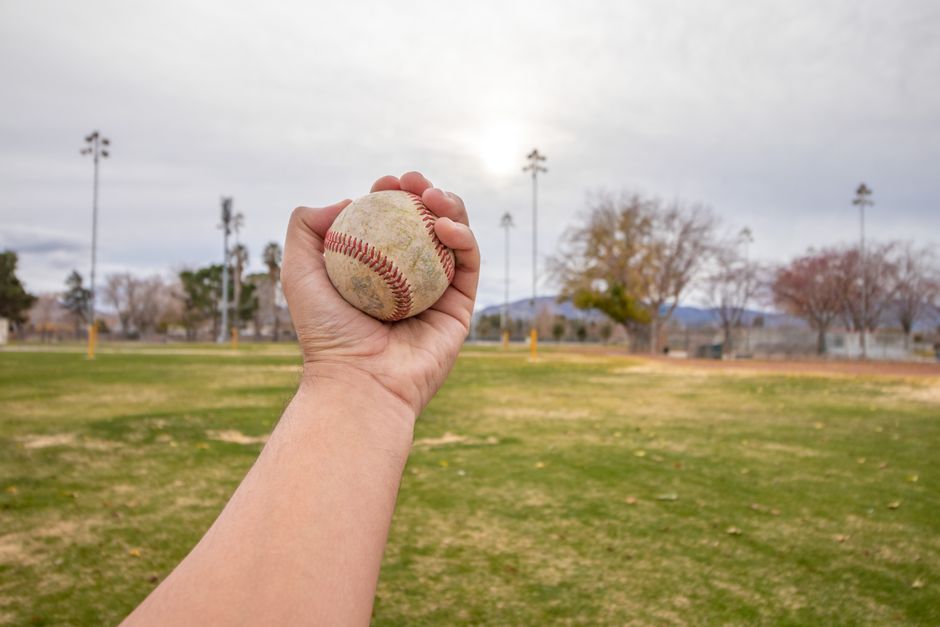
Throwing a changeup is about making a fastball look like it is coming, but arrive slower. The pitch works because the batter’s timing is fooled, not because the ball does something magical. You need the right grip, the right feel, and the same arm speed you use for your fastball. If your arm slows down, the batter reads the pitch immediately and the advantage is gone.
What Is The Best Changeup Grip For Beginners?
The circle changeup is the most common grip for good reason. You make a circle with your thumb and index finger on the side of the ball. Your middle, ring, and pinky fingers sit across the top of the seams. The ball rests deeper in your hand than a fastball, which takes velocity off the pitch naturally.
A second option is the three-finger changeup. Your index, middle, and ring fingers sit on top of the ball with the thumb underneath. This grip is often easier for younger players with smaller hands. The ball comes out with less spin, which causes it to tumble slightly as it reaches the plate.
There is also the palm ball, where the ball is wedged firmly into the palm. This grip produces the biggest speed drop but is harder to control. Most coaches start players with the circle change because it offers the best balance of control and speed difference.
How Do You Grip The Circle Changeup Correctly?
Start by placing the ball in your throwing hand. Form a circle with your thumb and index finger on the side of the ball opposite your palm. The circle should be small and tight, not stretched wide. Your remaining three fingers rest across the top of the ball with the seams.
The key is pressure. You want the ball held firmly but not squeezed. Squeezing too hard creates tension in your forearm, which slows your arm action. The ball should feel secure in your hand without your fingers digging into the seams.
Your thumb placement matters more than most players realize. The thumb sits on the side of the ball, not underneath. This position helps the ball come off your fingers with less spin. Less spin means the pitch drops more as it approaches the hitter.
Practice the grip without throwing. Hold the ball for a few minutes each day until the feel becomes automatic. You should not have to look at the ball to know you have the grip right.
What Should A Changeup Feel Like When You Throw It?
The changeup should feel like you are throwing a fastball with a slightly looser hand. Many pitchers describe it as throwing through a thin layer of water. The motion is the same, but the ball releases a fraction of a second later.
Your wrist stays firm. A common mistake is flicking the wrist to create spin, which defeats the purpose of the pitch. Keep the wrist locked and let the grip do the work. The ball should roll off your fingers rather than snap off them.
You want the ball to come out with the same arm speed as your fastball. Your body should not know the difference. Only your hand and fingers know the grip has changed. When you get it right, the ball feels almost weightless coming out of your hand.
Some pitchers feel the ball slipping slightly on release. That is normal and often a sign the grip is working. The slip reduces spin and creates the tumbling action that makes the pitch effective.





Why Is Arm Speed The Most Important Part Of A Changeup?
Arm speed is everything with this pitch. A changeup thrown with fastball arm speed looks identical to the fastball out of the hand. The batter commits to swinging at what they believe is a fastball, but the ball arrives slower. Their swing is early and they miss or make weak contact.
If your arm slows down even slightly, the batter sees the difference immediately. The human eye can detect changes in arm speed within a fraction of a second. Once the batter reads the slower arm, they simply wait on the pitch and hit it hard.
Think of it this way: the changeup is not a slow pitch. It is a fast pitch that arrives slower than expected. The difference between a good changeup and a batting practice pitch is entirely about deception, not speed.
To maintain arm speed, focus on your fastball mechanics. The delivery should be identical. Many pitchers benefit from throwing a few fastballs first, then switching to the changeup without changing their rhythm or tempo.
How Much Slower Should A Changeup Be Than A Fastball?
The ideal speed difference is about 8 to 10 miles per hour slower than your fastball. A pitcher throwing 90 mph should aim for a changeup around 80 to 82 mph. A youth pitcher throwing 60 mph should aim for 50 to 52 mph.
Going slower than 10 mph difference is not necessarily better. A changeup that is too slow gives the batter extra time to recognize the pitch and adjust. The goal is to be close enough to the fastball that the batter cannot tell the difference until it is too late.
Some professional pitchers throw changeups with a 12 to 15 mph difference, but they have exceptional control. For most pitchers, the 8 to 10 mph range provides the best combination of deception and reliability.
You should measure your speeds with a radar gun during practice. Throw five fastballs and five changeups, then compare the averages. This data tells you if you are in the right range or if you need to adjust your grip pressure.
What Are Common Changeup Mistakes To Avoid?
The most common mistake is slowing down the arm to try to throw the pitch slower. This completely defeats the purpose. The pitch must look like a fastball until the batter commits to swinging.
Another frequent error is changing your release point. The ball should come out of your hand at the same height and angle as your fastball. A lower or higher release point tips off the pitch. Video recording your delivery from the side can reveal these differences.
Gripping the ball too tightly is also a problem. Tension in the hand and forearm reduces arm speed and creates extra spin. The grip should be relaxed, almost casual, while still secure enough to control the pitch.
Some pitchers throw their changeup only in certain counts, which teaches batters to expect it. The pitch is most effective when it is thrown in any count. If batters cannot predict when it is coming, they cannot sit on it.
How Do You Develop A Feel For The Changeup?
Feel comes from repetition, not from reading about it. You need to throw the pitch hundreds of times before it becomes natural. Start with short toss from about 30 feet, focusing on the grip and release. Then gradually move back to a full pitching distance.
Long toss is an excellent way to develop changeup feel. Throw the pitch at long distances where you cannot throw at full effort. This forces your hand and fingers to do the work of slowing the ball down, which builds the correct muscle memory.
Some pitchers find it helpful to throw the changeup exclusively during bullpen sessions. This forces you to learn the pitch without relying on your fastball. After a few sessions, the feel becomes more consistent and predictable.
Pay attention to how the ball moves when it reaches the catcher. A good changeup has slight downward movement or fades to your arm side. If the ball stays flat, you are likely spinning it too much. Loosen the grip slightly and try again.
When Should You Throw A Changeup In A Game?
The changeup is most effective when the batter is expecting a fastball. This often happens in fastball counts like 0-2 or 1-2. A batter protecting the plate with two strikes is vulnerable to a pitch that looks like a fastball but arrives slower.
The pitch is also useful against aggressive hitters who swing early in the count. If a batter is jumping on the first pitch, a changeup can disrupt their timing for the rest of the at-bat. Even if they do not swing, they have seen the pitch and must adjust.
Against opposite-handed hitters, the changeup can be particularly effective because it moves away from their swing path. A right-handed pitcher throwing a changeup to a left-handed batter will see the ball fade away from the hitter’s bat.
The changeup is not just a two-strike pitch. Throwing it in hitter’s counts keeps batters honest and prevents them from sitting on your fastball. The unpredictability is part of the pitch’s power.
Frequently Asked Questions
How long does it take to learn a changeup?
Most pitchers need several weeks of consistent practice to develop a reliable changeup. The grip can be learned in a day, but the feel and arm speed consistency take time.
Can a changeup hurt your arm?
A changeup is generally considered a low-stress pitch because it requires less arm speed than a fastball. The risk comes from poor mechanics, not the pitch itself.
Should young pitchers throw changeups?
Yes, the changeup is often recommended for young pitchers because it is a safer alternative to breaking balls. It teaches arm speed control and reduces the need to overthrow.
What is the difference between a changeup and a splitter?
A changeup is thrown with the same arm speed as a fastball and relies on grip to reduce velocity. A splitter is thrown harder and drops sharply due to the finger placement on the seams.
