
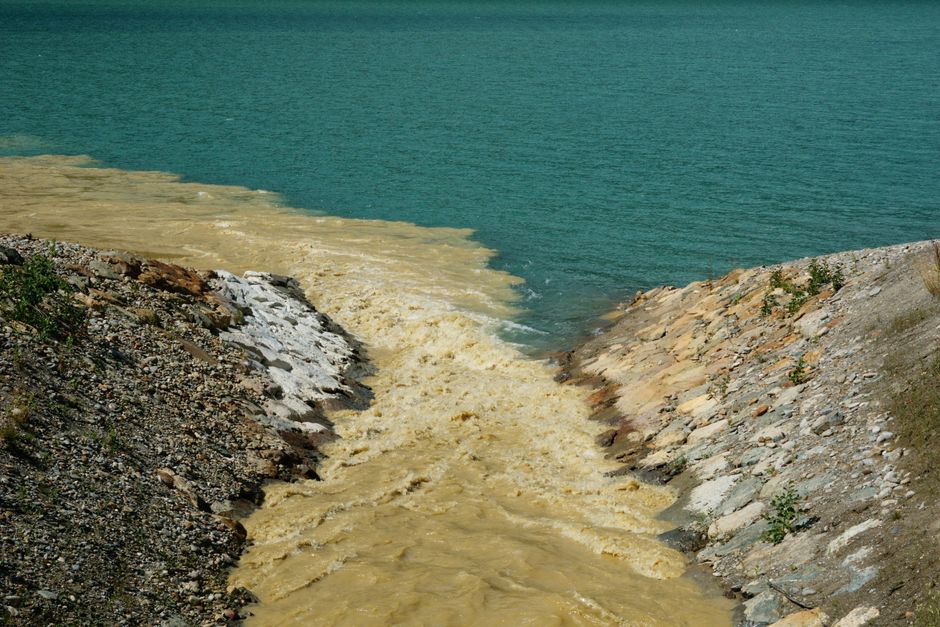
Turbidity measures how cloudy or murky your water is. It happens when tiny particles like dirt, sand, clay, or organic matter float in the water. High turbidity is not just a cosmetic problem — it is a warning sign that the water may contain harmful contaminants, including bacteria and viruses that can attach to those particles. For this reason, turbidity is one of the most important tests water utilities run to confirm that drinking water is safe.
What Exactly Does a Turbidity Reading Tell You?
A turbidity reading tells you how much light scatters when it passes through a water sample. The more particles in the water, the more light scatters, and the higher the turbidity number.
Scientists measure turbidity in units called NTU, which stands for Nephelometric Turbidity Units. A reading of 0 NTU means the water is perfectly clear. Most treated drinking water measures below 1 NTU. In contrast, a muddy river after a rainstorm might measure anywhere from 50 to several hundred NTU.
The number itself is a screening tool. It does not tell you exactly what is in the water. It only tells you that something is there. Think of it like a smoke alarm — it goes off when something is wrong, but it does not tell you what is burning.
Why High Turbidity Matters for Your Health
High turbidity matters because particles in water are not harmless by themselves. They act as shields and transport systems for dangerous microorganisms.
Bacteria, viruses, and parasites like Giardia and Cryptosporidium can attach to the surface of suspended particles. When those particles pass through a water treatment plant, they can protect the pathogens from disinfectants like chlorine. Chlorine kills free-floating microbes quickly, but it struggles to reach microbes hiding inside or behind clumps of sediment.
This is why the Environmental Protection Agency (EPA) sets strict turbidity limits for treated drinking water. The rule exists because studies have consistently linked turbidity spikes to outbreaks of gastrointestinal illness. If the water looks cloudy, the disinfection process may not be working as well as it should.
What Do Turbidity Levels Mean For Water Quality? Key Facts
For drinking water, the key threshold is 1 NTU. The EPA requires that 95% of water samples taken each month measure below 1 NTU for conventional filtration systems. The absolute maximum allowed at any time is 5 NTU.
For well water, there is no regulatory limit because the EPA does not regulate private wells. That does not mean turbidity is unimportant. It means the responsibility falls on the homeowner. If your well water looks cloudy, you should test it for coliform bacteria and nitrates, not just turbidity.
For natural bodies of water, turbidity matters for aquatic life more than human health. High turbidity blocks sunlight, which prevents aquatic plants from photosynthesizing. It can also clog fish gills and reduce oxygen levels. A clear mountain stream might read 1-5 NTU. A sediment-heavy river after a storm can read over 100 NTU.





What Causes Turbidity in Drinking Water?
Turbidity in drinking water comes from several sources. Some are natural, and some are signs of infrastructure problems.
- Runoff after heavy rain — Rain washes soil, animal waste, and fertilizer into rivers and reservoirs.
- Algae blooms — Algae and other microorganisms multiply in warm, nutrient-rich water.
- Sediment from construction or mining — Disturbed land releases soil into nearby water sources.
- Corroded pipes — Rust and mineral scale can break loose inside aging water mains.
- Water main breaks — A break in a pipe can pull contaminated soil directly into the water supply.
After a flood or a major storm, public water systems often issue boil water advisories. This is not an overreaction. The turbidity spike means the treatment process may be overwhelmed, and pathogens may have slipped through.
How Do Water Treatment Plants Remove Turbidity?
Water treatment plants remove turbidity through a multi-step process. Each step targets a different size of particle.
Coagulation and flocculation come first. The plant adds chemicals with a positive charge, like aluminum sulfate or iron salts. These chemicals neutralize the negative charge on suspended particles. Once neutralized, the particles stick together and form larger clumps called flocs.
Sedimentation comes next. The heavy flocs settle to the bottom of a large basin, leaving clearer water at the top. This step can remove up to 90% of suspended particles.
Filtration is the final physical barrier. The water passes through layers of sand, gravel, and charcoal. These layers trap remaining particles, including those that carry pathogens.
Disinfection happens last. Chlorine or another disinfectant kills any remaining microorganisms. The critical point is that disinfection works far better when the preceding steps removed most of the turbidity. Cloudy water is harder to disinfect, which is why turbidity is monitored continuously at treatment plants.
How to Test Turbidity at Home
Homeowners can check turbidity in two ways. The first is a simple visual check. Fill a clear glass with water and hold it up to the light. If you can see visible cloudiness, your turbidity is elevated. This method is imprecise but useful as a first warning sign.
The second method is a home water test kit. Some kits include a turbidity tube or a digital meter that gives a numerical NTU reading. These kits are inexpensive and widely available online or at hardware stores. They are not as accurate as laboratory equipment, but they can tell you if your water is in a concerning range.
If your water has visible cloudiness that does not clear after letting it sit, you should test for more than turbidity. Cloudiness that persists can indicate bacterial growth. Cloudiness that settles to the bottom is more likely sediment from the well or pipes.
How to Reduce Turbidity in Your Drinking Water
If your tap water is cloudy, the right fix depends on the cause. Do not assume one filter solves every problem.
Sediment filters remove dirt, sand, and rust. They are rated by micron size — a 5-micron filter catches most visible particles, while a 1-micron filter catches much more. These filters are the first line of defense for turbidity.
Activated carbon filters improve taste and odor but do not reliably remove turbidity. They are designed to adsorb chemicals, not trap sediment.
Reverse osmosis systems remove nearly all particles, including those too small to see. These systems are effective but slow and wasteful — they produce several gallons of wastewater for every gallon of clean water.
Ultraviolet (UV) purification kills microorganisms but does nothing for turbidity. In fact, UV light cannot penetrate cloudy water, so the water must be filtered first for UV to work at all.
For well water, the most important step is identifying the source of the turbidity. If the cloudiness appears only after heavy rain, the well casing may be cracked or the cap may be unsealed. If the cloudiness is constant, the problem may be the pump pulling sediment from the bottom of the well. Fixing the source is always better than filtering the symptom.
Common Myths About Cloudy Water
Myth: Cloudy water is always unsafe. Not true. Tiny air bubbles from a newly installed faucet or a pressure change can make water look milky. Fill a glass and let it sit for a few minutes. If the cloudiness clears from the bottom up, it was air. If it stays cloudy, it is sediment or something else.
Myth: Boiling water removes turbidity. Boiling kills microorganisms, but it does not remove particles. In fact, boiling can concentrate some chemicals as water evaporates. Boiling is a temporary emergency measure, not a treatment for turbidity.
Myth: Clear water is always safe. This is the most dangerous myth. Many contaminants — including heavy metals, nitrates, and some viruses — are invisible and do not affect turbidity. Clear water can still be unsafe. Turbidity is one indicator of water quality, not the whole picture.
Frequently Asked Questions
What is a safe turbidity level for drinking water?
A reading below 1 NTU is considered safe for treated drinking water. The EPA requires that 95% of monthly samples from conventional filtration plants stay below this level, with an absolute maximum of 5 NTU at any time.
Can high turbidity make you sick?
Yes, because pathogens like Giardia and Cryptosporidium can attach to suspended particles and hide from disinfectants. Studies have linked turbidity spikes to increased rates of gastrointestinal illness.
Why is my tap water cloudy but clears after sitting?
That is usually trapped air, not turbidity. Fill a glass and wait a few minutes — if the cloudiness clears from the bottom upward, it was air bubbles. If it stays cloudy, you have suspended particles.
Does a home water filter remove turbidity?
It depends on the filter. Sediment filters rated at 5 microns or smaller remove visible particles. Activated carbon filters do not reliably remove turbidity, and UV purifiers require clear water to work at all.
