
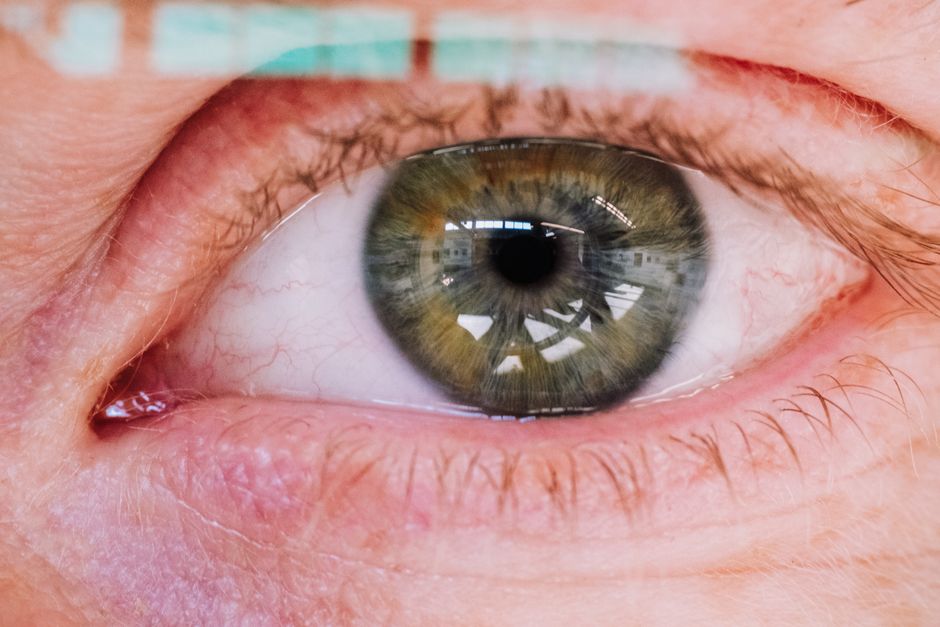
When a pupil dilates, the black center of the eye grows larger — often covering most of the colored iris around it. The pupil becomes a wide, dark circle instead of a small dot, and the eye may look almost entirely black in the center. This happens because the muscles in the iris relax and let more light into the eye.
Dilated pupils are a normal response to dim light, excitement, or certain emotions. They can also be caused by medications, drugs, or a medical problem. Knowing what a dilated pupil looks like — and what it might mean — can help you decide whether to see a doctor.
What Do Pupils Look Like When Dilated?
A dilated pupil looks like a large black circle in the center of the eye. The colored part around it, called the iris, appears much thinner than usual. In some people, the pupil can open so wide that only a narrow ring of color is left at the edge.
The size of a normal pupil changes all the time. In bright light, a healthy pupil usually shrinks to about 2 to 4 millimeters across. In a dark room, it can widen to roughly 4 to 8 millimeters. These ranges are well established in clinical practice, though exact size varies from person to person.
When a pupil is fully dilated, it may look close to the maximum size for that person. The black center looks round and even. Both pupils usually match in size and shape, unless something is affecting just one eye.
A dilated pupil does not change the color of the iris. It just lets more of the dark pupil show. The white of the eye stays the same.
What Causes Pupils to Dilate?
Pupils dilate when the muscle that widens the pupil pulls the iris open. This muscle is controlled by the nervous system. Two main systems are at work: one that responds to light and one that responds to arousal and attention.
The most common cause is low light. When the room gets dark, your pupils open to let in more light so you can see. This is automatic and happens in both eyes at the same time.
Other common causes include:
- Emotions and focus. Excitement, fear, attraction, or intense concentration can widen the pupils. This is a normal response.
- Medications. Some prescription and over-the-counter drugs cause pupils to dilate. These include certain antidepressants, motion sickness patches, and some asthma or cold medicines.
- Eye drops. Drops used during an eye exam deliberately widen the pupil so the doctor can see inside the eye.
- Recreational drugs. Stimulants such as cocaine and amphetamines commonly widen the pupils.
- Alcohol and withdrawal. Alcohol can affect pupil size, and withdrawal from some substances can too.
- Medical conditions. Problems with the nerves or muscles of the eye, head injury, and some neurological conditions can change pupil size.
The key point is that a dilated pupil by itself does not tell you the cause. Context matters — where you are, what you took, and whether other symptoms are present.
How Can You Tell If Pupils Are Dilated From a Drug or Medication?
You usually cannot tell the cause just by looking. A pupil widened by a medication looks the same as one widened by dim light or emotion. The difference shows up in the details around it.
Pupils from a drug or medication tend to stay wide even in bright light. They may not shrink the way they normally would when a light shines into the eye. This is one of the more useful clues, and it is something a clinician checks.
Other signs that can point toward a drug cause include:
- Pupils that are wide in both eyes and stay wide for hours
- Rapid heart rate, sweating, or feeling jittery
- Confusion, agitation, or unusual behavior
- Dry mouth or blurred vision
If you suspect a drug reaction or overdose, treat it as a medical emergency. Call 911 or Poison Control right away. Do not wait to see if it passes.





When Are Dilated Pupils a Medical Concern?
Dilated pupils are often harmless. They become a concern when they appear suddenly, affect only one eye, or come with other symptoms.
One pupil that is much larger than the other is called anisocoria. Mild differences in pupil size are common and usually not serious. A sudden, large difference is different. It can signal a problem with the nerves that control the eye, and it needs medical attention.
Seek emergency care if a dilated pupil comes with any of these:
- Sudden, severe headache
- Blurred or double vision
- Eye pain or redness
- Drooping eyelid
- Confusion, dizziness, or trouble speaking
- Head injury, even a minor one
- Nausea or vomiting with a headache
A single fixed, wide pupil after a head injury is a red flag. So is a pupil that does not react to light at all. These situations need urgent evaluation, not watching and waiting.
How Long Do Dilated Pupils Last?
How long dilation lasts depends on the cause. Natural dilation from light or emotion passes in seconds to minutes. Once the trigger is gone, the pupil returns to its normal size quickly.
Dilation from eye drops used in an exam is different. These drops can keep the pupil wide for several hours. Many people notice sensitivity to light and blurred near vision until the effect wears off. The exact time varies by the type of drop used and the person.
Dilation from medications or drugs can last longer — sometimes many hours. The timeline depends on the substance, the dose, and how the body clears it. There is no single number that applies to everyone.
If pupils stay widely dilated for no clear reason, or if the change is new and persistent, see a doctor. A lasting change in pupil size deserves a proper look.
What Does a Normal Pupil Look Like Compared to a Dilated One?
A normal pupil is a small, even black circle that changes size with the light. It shrinks in brightness and widens in darkness. It reacts to a penlight by getting smaller within a second or two.
A dilated pupil is larger and stays larger. In bright light, it may not shrink the way a normal pupil would. It can look like a wide black disc with only a thin rim of iris color around it.
The table below compares the two at a glance. The size ranges reflect general clinical reference points, not exact cutoffs for every person.
| Feature | Normal Pupil | Dilated Pupil |
|---|---|---|
| Size in bright light | About 2 to 4 mm | Often larger than 4 mm, may not shrink |
| Size in dim light | About 4 to 8 mm | Near the upper end, stays wide |
| Reaction to light | Shrinks quickly | Sluggish or no reaction |
| Iris visible | Wide ring of color | Thin ring or almost none |
| Both eyes | Usually equal | Equal, unless one eye is affected |
Can You Control Pupil Size on Purpose?
No. You cannot will your pupils to dilate or shrink. The muscles that control pupil size are managed by the autonomic nervous system, which works without your conscious input. This is why pupil changes can be a useful clue to what is happening inside the body.
One common myth is that you can tell if someone is lying by watching their pupils. There is no reliable evidence that pupil size can detect lying. Pupils do widen with mental effort and emotion, but so many other things cause the same change that it cannot be used as a lie detector. This idea shows up in popular articles and videos, but it is not supported by research.
Another myth is that dilated pupils always mean something is wrong. In most everyday situations, they are a normal response to light, interest, or excitement. The concern is not the dilation itself but the pattern — sudden, one-sided, or paired with other symptoms.
Frequently Asked Questions
What do dilated pupils look like?
They look like large black circles in the center of the eye, with only a thin ring of the colored iris visible around them. In bright light, a dilated pupil may not shrink the way a normal one would.
What is the most common cause of dilated pupils?
Low light is the most common cause, since pupils open automatically in the dark to let in more light. Emotions, certain medications, and some drugs can also widen the pupils.
Should I worry if one pupil is bigger than the other?
A small difference in pupil size is common and usually not serious. A sudden, large difference — especially with headache, eye pain, drooping eyelid, or head injury — needs emergency care.
How long do dilated pupils last after an eye exam?
Dilation from eye exam drops often lasts several hours, and the exact time depends on the type of drop used. Light sensitivity and blurred near vision are common until the effect wears off.
