
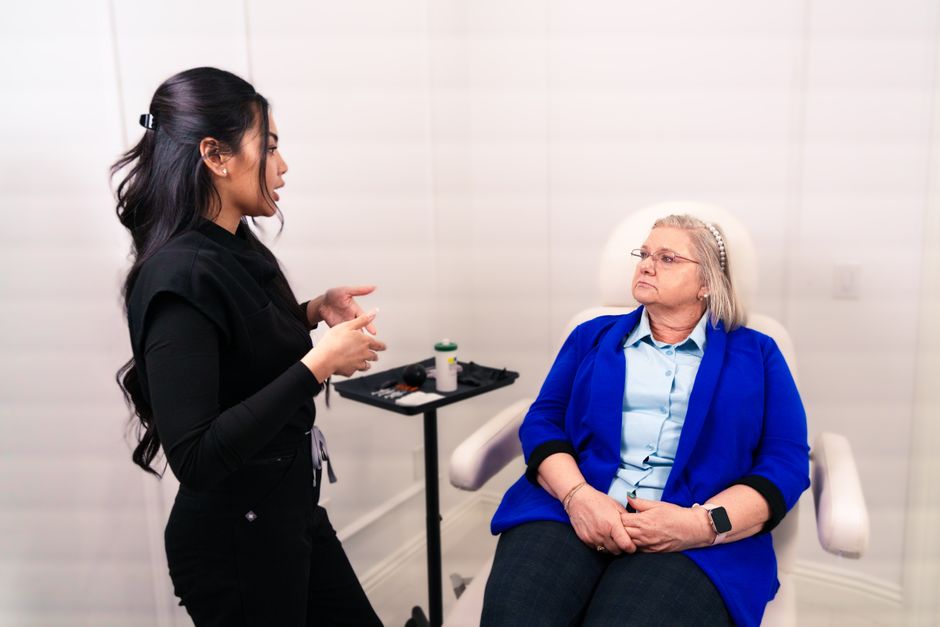
Botox is the most popular cosmetic treatment in the United States, but it is not always obvious who has had it. The clearest sign is a forehead that barely moves when someone raises their eyebrows. A completely smooth, wrinkle-free forehead combined with an inability to frown or squint usually points to Botox. Other clues include eyebrows that look slightly uneven, a subtle droop at the brow tail, or an overly arched “Spock” shape. Knowing these signs helps you recognize Botox when you see it — and understand why some results look natural while others look frozen.
How To Tell If Someone Has Botox What To Look For?
The most reliable visual clue is the forehead. Normally, when you raise your eyebrows, horizontal creases form across the forehead. After Botox, those creases are reduced or gone. Look for a smooth, shiny, and motionless forehead area. Another strong sign is the inability to frown. Ask someone to frown — if the skin between the eyebrows stays smooth, Botox is likely present. The “brow lift” effect from Botox can also make the eyebrows appear slightly raised in the center or outer corners. If the brows look unnaturally peaked or uneven at rest, that is a hallmark of cosmetic Botox.
What Exactly Is Botox and How Does It Work?
Botox is a brand name for botulinum toxin type A. It is a purified protein that temporarily blocks nerve signals to muscles. When injected into specific facial muscles, it prevents them from contracting. This relaxes the muscle and softens the wrinkles that form from repeated movements like squinting, frowning, or raising the eyebrows. The effect is not permanent — it lasts about three to four months. The FDA approved Botox for cosmetic use in 2002. It is also used medically for migraines, muscle spasms, excessive sweating, and other conditions.
Why Does a Frozen Forehead Happen After Botox?
A frozen or expressionless forehead happens when too much Botox is injected or when it spreads beyond the intended muscle. The goal of cosmetic Botox is to weaken the muscles just enough to soften wrinkles while preserving natural movement. A skilled injector aims for a natural look. If the dose is too high or if the injection is placed too deeply, the muscle may become completely paralyzed. This results in a smooth, shiny forehead that cannot move at all. Some people prefer this look, but many consider it unnatural. The frozen appearance is most obvious when the person tries to show emotion — surprise, anger, or joy — and the forehead remains still.





How Can You Spot Botox in the Eyebrows?
Eyebrow changes are among the most common Botox tells. The two main patterns are brow ptosis (drooping) and brow elevation (lifting). Brow ptosis happens when Botox weakens the muscles that hold the brow up, causing the outer part of the eyebrow to droop. This gives a heavy-lidded or tired look. On the other hand, Botox can also cause the brows to lift, especially if injected into the glabella (the area between the eyebrows). This can create a surprised or arched appearance. Sometimes the inner brows lift while the outer brows drop, producing a quizzical or “Spock” look. These changes are usually temporary and resolve as the Botox wears off, but they are clear signs that Botox has been used.
Can You Tell Botox From Asymmetry or Injection Marks?
Yes, asymmetry is a common sign. After Botox, one eyebrow may sit slightly higher than the other, or one side of the mouth may not move as much when smiling. These differences are often subtle but noticeable if you look closely. Small red bumps or tiny bruises at the injection sites can also be visible immediately after treatment. These marks usually fade within hours to a few days. If you see small, faint pinpoint marks around the crow’s feet, forehead, or between the eyebrows, Botox may have been injected recently. However, many people cover these with makeup, so injection marks are not a reliable long-term sign.
What About Botox for Medical Conditions? Does It Look Different?
Botox is used for several medical conditions, not just cosmetics. Common medical uses include chronic migraines, cervical dystonia (neck muscle spasms), overactive bladder, and severe underarm sweating. When used for migraines, the injections are placed in multiple spots around the head, neck, and shoulders. The cosmetic signs can be similar — a smooth forehead, limited eyebrow movement, or droopy eyelids — but the pattern of injections is different. The doses used for medical conditions are often higher than for cosmetic purposes. As a result, someone receiving Botox for migraines may have more visible facial changes, such as a droopy brow or heavy eyelids. These side effects are temporary but can be mistakenly attributed to cosmetic treatment.
How Long Does It Take for Botox Signs to Appear and Fade?
Botox does not work instantly. The effects begin to appear about 24 to 48 hours after injection, with full results visible at around 7 to 10 days. The most obvious signs — smooth forehead, inability to frown — are strongest during the first two months. After that, muscle function gradually returns. By three to four months, most people regain normal facial movement, and wrinkles begin to reappear. If you see someone with a completely smooth forehead one month and then see slight creases three months later, that pattern is consistent with Botox wear-off.
Is There Any Way to Tell Natural Aging From Botox Treatment?
Natural aging causes wrinkles that are visible when the face is at rest and become more prominent with movement. Botox specifically smooths wrinkles caused by muscle movement. A person with natural aging will still have some forehead creases when they raise their eyebrows, though the creases may be deeper over time. A person who has had Botox will have a noticeably smoother forehead even when they try to move it. Additionally, natural aging tends to lower the eyebrows over time. Botox can sometimes lift the brows, making them appear more elevated than expected for someone’s age. If you see a 50-year-old with a completely wrinkle-free forehead and slightly raised outer brows, Botox is likely involved.
How Common Is Botox in the United States?
Botox is extremely common. According to the American Society of Plastic Surgeons, over 7 million Botox procedures were performed in the United States in 2020, making it the most popular minimally invasive cosmetic procedure. The numbers have been rising steadily. This means you likely see Botox on friends, coworkers, and public figures without realizing it. Many people opt for “baby Botox,” which uses lower doses to preserve natural movement. In these cases, the signs are much subtler — a slight lack of movement in the crow’s feet or a mildly smoother forehead that is not completely frozen. Recognizing Botox often requires looking for the subtle absence of expected movement rather than obvious frozenness.
Can You Spot Botox in Pictures or Videos?
Yes, but it is harder than in person. In static photos, look for an unnaturally smooth, shiny forehead with no creases. Compare the forehead to the rest of the face — if the cheeks and chin show signs of aging but the forehead is completely smooth, Botox is likely. In videos, watch for expressions. If the person’s forehead does not move when they laugh, frown, or raise their eyebrows, Botox is almost certainly present. Pay attention to the eyebrows during different expressions. Lack of movement in the brow area, especially between the brows, is a strong sign. Lighting and makeup can obscure some signs, but the absence of normal wrinkle formation during animation is hard to hide.
What Should You Keep in Mind About Judging Others’ Botox?
Botox is a personal medical choice. Many people use it and prefer not to discuss it. The signs described here are based on anatomy and clinical observation — not a critique of appearance. A natural-looking result is the goal of most injectors, and many people achieve results that are difficult to detect unless you know exactly what to look for. If you are considering Botox yourself, discuss your goals with a board-certified dermatologist or plastic surgeon. If you simply want to recognize Botox in others, focus on movement patterns rather than static appearance. A lack of forehead wrinkling when expressing surprise or anger remains the most reliable sign.
Frequently Asked Questions
How long after Botox can you tell someone had it?
Signs start to appear around 24 to 48 hours after injection and are most obvious 7 to 10 days later.
Can you tell if someone has had Botox on their lips?
Botox is rarely used on the lips themselves; it is more commonly used around the mouth for lip lines. If injected near the mouth, you may see a slightly asymmetrical smile or difficulty pursing the lips.
Does Botox on the forehead always look frozen?
No. With a skilled injector and a lower dose, the forehead can retain some movement while looking smoother. A completely frozen forehead indicates a higher dose or less conservative technique.
Is it possible to have Botox and still have wrinkles?
Yes. Botox relaxes muscles but does not erase existing static wrinkles from sun damage and collagen loss. Some wrinkles may still be visible at rest, especially if the person is older or has significant sun damage.
