
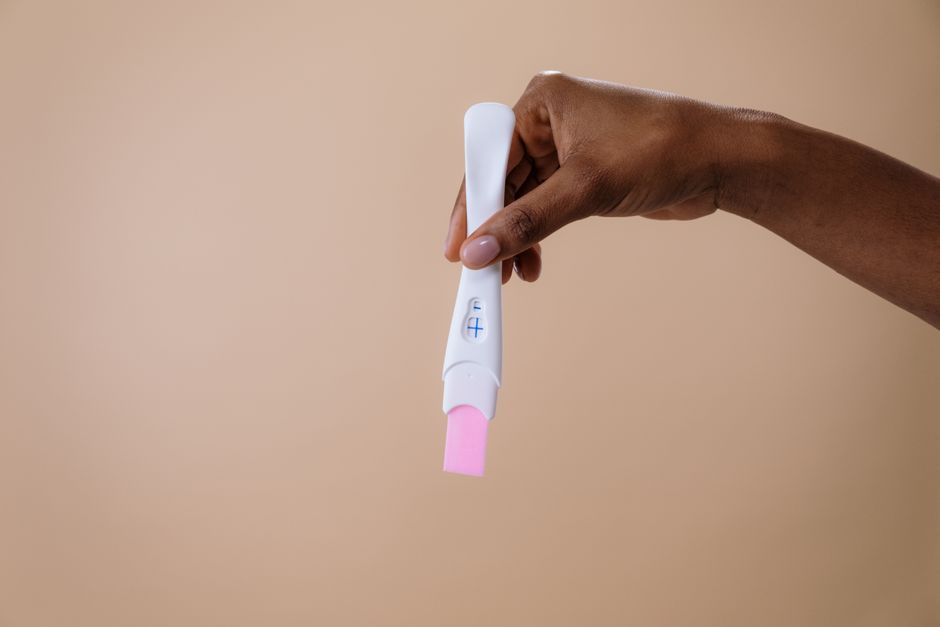
Pregnancy tests detect human chorionic gonadotropin (hCG), a hormone the body produces after a fertilized egg implants in the uterus. Home urine tests and lab blood tests both look for this hormone, but they measure it in different ways and can detect it at different times. The presence of hCG is the signal that pregnancy has begun.
What Do Pregnancy Tests Detect hCG Explained
Human chorionic gonadotropin is a hormone made almost entirely by the placenta after an embryo attaches to the uterine lining. Before implantation, there is no placenta and no meaningful hCG in the bloodstream. That is why timing matters so much when people test.
Once implantation happens, cells called syncytiotrophoblasts begin producing hCG. These cells are part of the developing placenta. The hormone then enters the bloodstream and, within a short time, appears in urine. Its main biological job is to signal the corpus luteum in the ovary to keep producing progesterone, which maintains the uterine lining during early pregnancy.
This is why hCG is considered a reliable marker. It is not produced in any significant amount outside of pregnancy, with a few important exceptions discussed below.
How Does hCG Rise After Implantation?
After implantation, hCG levels typically double roughly every 48 to 72 hours in early pregnancy. This rapid rise is one reason urine tests can turn positive within days of a missed period.
Implantation usually occurs about 6 to 12 days after ovulation, though the range varies. The exact day of implantation affects when hCG becomes detectable. A test taken too early may be negative even if pregnancy is underway, simply because hCG has not yet reached the level the test can detect.
Levels continue to climb through the first several weeks. They generally peak sometime between 8 and 11 weeks of pregnancy, then decline and level off for the remainder of the pregnancy. This pattern is well established in clinical literature.
How Do Urine and Blood Tests Differ?
Urine tests are the most common type used at home. They use antibodies that bind to hCG and produce a visible line, color change, or digital result. Most home tests can detect hCG at concentrations around 20 to 25 milli-international units per milliliter (mIU/mL), though sensitivity varies by brand.
Blood tests are done in a lab and come in two forms. A qualitative blood test simply reports whether hCG is present. A quantitative blood test, often called a beta-hCG test, measures the exact amount. Quantitative tests can detect very low levels of hCG, sometimes as low as 1 to 2 mIU/mL, which is more sensitive than most urine tests.
Blood tests can also detect hCG earlier than urine tests because hCG appears in blood before it concentrates enough in urine to be detected. A healthcare provider may order a blood test when an early or precise result is needed.
| Test Type | What It Measures | Typical Detection |
|---|---|---|
| Home urine test | Presence of hCG | Around 20–25 mIU/mL |
| Qualitative blood test | Presence of hCG | Yes or no result |
| Quantitative blood test | Exact hCG level | As low as 1–2 mIU/mL |





When Can a Pregnancy Test Detect hCG?
Most home pregnancy tests are designed to be used on the first day of a missed period. By that point, hCG levels in most pregnancies are high enough to be detected by a standard urine test.
Testing earlier than the missed period can work, but the chance of a false negative goes up. The hormone may be present but still below the test’s detection threshold. If someone tests early and gets a negative result, waiting a few days and testing again is a reasonable approach, since hCG rises quickly in early pregnancy.
First-morning urine is often recommended because it tends to be more concentrated, which can make a low level of hCG easier to detect. This is a practical tip rather than a strict requirement, and many tests work at any time of day once hCG is high enough.
What Can Cause a False Positive or False Negative?
False negatives are more common than false positives and usually come down to testing too early or using diluted urine. A test that is past its expiration date or stored improperly can also give unreliable results.
False positives are rare but do happen. A few situations can produce a positive result without a viable pregnancy:
- Very early pregnancy loss, sometimes called a chemical pregnancy, where hCG briefly rises before the pregnancy ends
- Certain medications that contain hCG, such as some fertility treatments
- Rare medical conditions, including some tumors that produce hCG
- Recent pregnancy or miscarriage, where hCG from the earlier pregnancy is still present
Some tests can also show a faint line that is actually an evaporation line, which appears after the test’s reading window has passed. Following the instructions on the test matters for this reason.
Can hCG Be Detected Without a Pregnancy?
In a small number of cases, hCG can be present without an ongoing pregnancy. This is uncommon but documented.
Certain types of tumors, including some germ cell tumors and gestational trophoblastic disease, can produce hCG. This is one reason a persistently elevated hCG with no visible pregnancy on ultrasound may prompt further medical evaluation. Fertility medications that contain hCG can also cause a temporary positive result.
These situations are not common, and a positive test usually does reflect pregnancy. But when results do not match other clinical findings, providers may look for these other explanations.
Why Do hCG Levels Matter Beyond a Positive or Negative?
In early pregnancy, tracking hCG levels over time can give information about how a pregnancy is progressing. A level that rises appropriately is generally reassuring, while a level that rises too slowly or falls can prompt further testing.
However, a single hCG number is not very useful on its own. The expected range is wide, and what matters more is the trend over two or more measurements taken about 48 hours apart. Even then, hCG patterns are only one piece of the picture, and ultrasound and other findings are usually needed to understand what is happening.
It is worth being clear that hCG levels alone cannot confirm the location of a pregnancy, such as whether it is in the uterus or elsewhere. That requires imaging and evaluation by a clinician.
Frequently Asked Questions
What exactly does a pregnancy test detect?
A pregnancy test detects human chorionic gonadotropin (hCG), a hormone produced by the placenta after a fertilized egg implants in the uterus. Both urine and blood tests look for this hormone.
How early can a pregnancy test detect hCG?
Most home urine tests are designed to detect hCG on the first day of a missed period, though some claim earlier detection. Blood tests can detect hCG earlier than urine tests because the hormone appears in blood first.
Can a pregnancy test be positive without being pregnant?
False positives are rare but possible, and can result from fertility medications containing hCG, a very early pregnancy loss, or certain rare tumors. A positive test usually does reflect pregnancy.
Why would a pregnancy test be negative if I am pregnant?
A false negative most often happens when the test is taken too early, before hCG has risen high enough to be detected. Waiting a few days and testing again usually gives a clearer result.
