
Lipids are molecules that do not dissolve in water. They include fats, oils, waxes, cholesterol, and the phospholipids that form every cell membrane in your body. If you could see them up close, most would look like long chains with a water-loving head on one end and a water-fearing tail on the other.
That simple shape explains a lot. It explains why oil and water separate. It explains how a cell builds a barrier that holds its insides in. And it explains why some lipids travel through your blood in packages while others sit solid at room temperature.
What Are Lipids Made Of?
Most lipids share the same basic building plan: carbon, hydrogen, and oxygen arranged in chains. The chains vary in length and in how many double bonds they contain. Those two details decide almost everything about how a lipid behaves.
A fatty acid is the simplest unit. It is a chain of carbon atoms with hydrogen attached and an acid group at one end. Chains with no double bonds are called saturated. Chains with one double bond are monounsaturated. Chains with two or more are polyunsaturated.
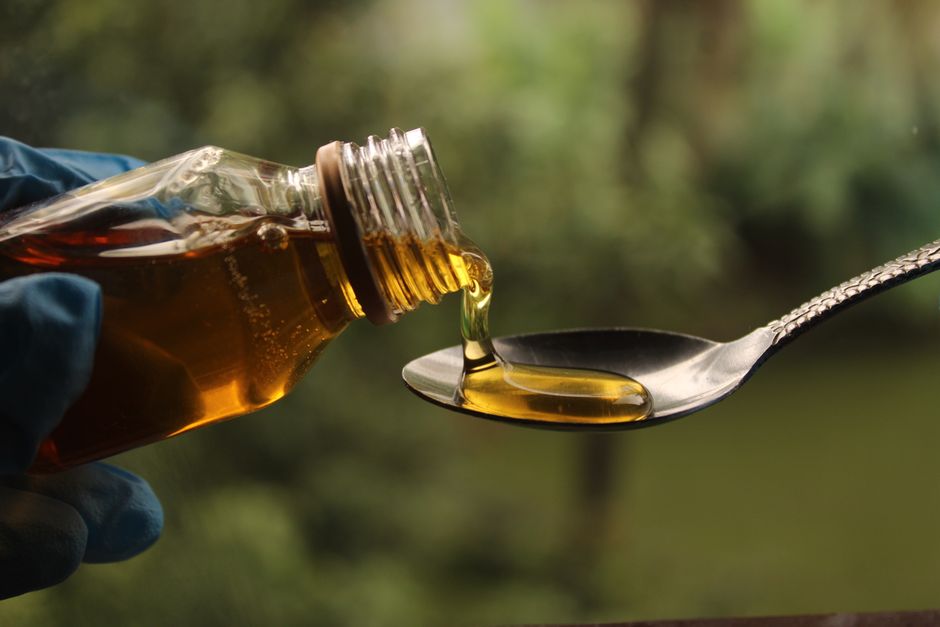
Double bonds create kinks in the chain. Saturated chains are straight and can pack tightly together, which is why butter and beef fat are solid at room temperature. Unsaturated chains bend and cannot pack as neatly, which is why olive oil and fish oil stay liquid.
Attach three fatty acids to a glycerol backbone and you get a triglyceride. That is the main form of stored fat in your body and the main form of fat in food. Attach a phosphate group and a small molecule instead, and you get a phospholipid — the molecule that builds cell membranes.
What Do Lipids Look Like From Fats To Cell Membranes?
A triglyceride looks like a three-pronged fork. Glycerol forms the handle and three fatty acid chains extend outward. In stored fat tissue, these molecules are packed into droplets so dense they push the watery parts of the cell to the edges.
A phospholipid looks different. It has only two fatty acid tails and a phosphate head. The head is attracted to water. The tails repel it. This dual nature is the whole trick behind cell membranes.
When phospholipids sit in water, they arrange themselves automatically. Heads face the water on both sides. Tails hide in the middle. The result is a double layer about five nanometers thick — a sheet so thin that roughly 10,000 of them stacked would equal the width of a piece of paper.
Cholesterol wedges between phospholipids in that sheet. It is not there to clog anything at the cellular level; it adjusts how fluid and stable the membrane is. Waxes, found in plant leaves and in earwax, are lipids built for waterproofing and protection.
So the answer depends on which lipid you mean. Fats look like packed chains. Membrane lipids look like a two-sided sheet with heads out and tails in. Both are lipids. Both follow the same rule: water-fearing parts hide, water-loving parts face outward.
| Lipid Type | Basic Shape | Where It Is Found |
|---|---|---|
| Triglyceride | Glycerol plus three fatty acid tails | Fat tissue, cooking oils, butter |
| Phospholipid | Phosphate head plus two tails | Every cell membrane |
| Cholesterol | Four fused rings | Cell membranes, hormones, bile |
| Wax | Long fatty acid joined to a long alcohol | Plant surfaces, earwax |
Why Does the Cell Membrane Form a Double Layer?
Because water is everywhere, and lipids cannot dissolve in it. That single fact drives the whole structure.
Imagine dropping oil into a glass of water. The oil does not spread out. It clumps into a bead. The molecules are not communicating; they are simply minimizing contact between their water-fearing tails and the surrounding water. Phospholipids do the same thing, but because they have a water-loving head, they form a sheet instead of a bead.
Two sheets facing each other tail-to-tail create the membrane bilayer. This arrangement is stable, self-sealing, and flexible. If you poke a hole in a cell membrane, the surrounding lipids rearrange to close it. No energy is required for that step. It happens because the water-fearing tails pull away from the water that rushed into the gap.
Proteins float within this lipid sea. Some span the whole membrane. Some sit on one side. This arrangement is often described as a fluid mosaic, a term introduced decades ago and still used because it captures the reality well: the membrane is not a rigid wall but a shifting, oily film with proteins embedded in it.





How Do Lipids Move Through the Bloodstream?
Lipids cannot travel freely in blood because blood is mostly water. Instead, the body packages them into lipoproteins — spherical particles with a lipid core and a protein shell.
The main classes are chylomicrons, VLDL, LDL, and HDL. Each carries triglycerides and cholesterol in different proportions and serves a different role. LDL delivers cholesterol to tissues. HDL participates in reverse transport, moving cholesterol back toward the liver. This is a simplified description of a system with many moving parts.
The common shorthand of “good” and “bad” cholesterol is misleading. LDL and HDL are not cholesterol itself. They are carriers. Cholesterol is the cargo. The distinction matters because the health risks linked to high LDL involve the particle, not the raw molecule in isolation.
When LDL particles circulate in excess, they can enter the artery wall and become modified. This triggers an inflammatory response, and over years the resulting plaque can narrow arteries. That process — atherosclerosis — is the reason LDL levels are monitored clinically. It is well established and not in dispute.
Are All Fats the Same in the Body?
No. Different fatty acids have different effects on the body, and the evidence here is strong.
Saturated fats tend to raise LDL cholesterol when they replace unsaturated fats in the diet. Trans fats, particularly industrial trans fats, raise LDL and lower HDL and have been linked to heart disease risk. Many countries have restricted or banned industrial trans fats as a result.
Unsaturated fats — found in olive oil, nuts, seeds, and fish — are associated with better cardiovascular outcomes when they replace saturated fats. This does not mean unsaturated fats are unlimited or that saturated fats are poison. It means the substitution matters.
Two fatty acids are called essential because the body cannot make them: linoleic acid and alpha-linolenic acid. You must get them from food. The body can build other fatty acids from these two, though conversion is limited for some, particularly the conversion to certain omega-3 fatty acids found in fish.
What Do Lipid Droplets Look Like Inside Cells?
Fat storage does not look like a blob of grease sitting in the cytoplasm. It looks like a distinct organelle.
A lipid droplet has a core of triglycerides and cholesterol esters surrounded by a single layer of phospholipids — not a double layer — with proteins studded on its surface. Cells can grow these droplets when energy is plentiful and shrink them when energy is needed.
For a long time, lipid droplets were treated as inert storage. Research over the past two decades has changed that view. They interact with other organelles, participate in signaling, and are involved in processes well beyond simple fat storage. This is an active area of research, and not everything about their function is settled.
Do Lipids Do Anything Besides Store Energy and Build Membranes?
Yes, and the list is longer than most people expect.
- Cholesterol is the starting material for steroid hormones, including cortisol, testosterone, and estrogen.
- Cholesterol is converted into bile acids in the liver, which help digest fats in the small intestine.
- Phospholipids provide the raw material for signaling molecules that regulate inflammation and blood clotting.
- Fat-soluble vitamins — A, D, E, and K — require lipids for absorption and transport.
- Lipids insulate nerve fibers and help electrical signals travel quickly.
- Subcutaneous fat cushions organs and helps regulate body temperature.
The brain is roughly 60 percent fat by dry weight. That figure is widely cited and reflects the high lipid content of neuronal membranes and myelin. It is not a marketing line; it reflects real composition.
Does the Shape of a Lipid Affect Health?
It does, and this is where chemistry meets clinical medicine.
The shape of a fatty acid determines how it packs, how it behaves in membranes, and how the body processes it. Saturated chains pack tightly and tend to raise LDL when they replace unsaturated fats. Unsaturated chains bend and are handled differently by the liver.
Industrial trans fats are a special case. Their chains are straight like saturated fats but come from a different source. The body does not handle them well, and the evidence linking them to cardiovascular harm is strong enough that regulatory agencies worldwide have moved to eliminate them from the food supply.
Membrane composition is not fixed. What you eat influences which fatty acids end up in your cell membranes. This is well established. What remains less clear is how much those shifts translate into specific disease outcomes over a lifetime, and research on that question is ongoing.
Frequently Asked Questions
What do lipids actually look like?
Most lipids look like long carbon chains with a water-loving end and a water-fearing end. In cells, they arrange into structures like droplets, sheets, and bilayers based on which end faces water.
Are lipids and fats the same thing?
Fats are one type of lipid, but the category is broader. It also includes oils, waxes, cholesterol, and phospholipids, which are the main building blocks of cell membranes.
Why do lipids form a double layer in cell membranes?
Because their water-fearing tails avoid water while their water-loving heads face it. This forces phospholipids into two opposing sheets with tails hidden in the middle, which is the basic structure of every cell membrane.
Can the body make all the lipids it needs?
No. Two fatty acids — linoleic acid and alpha-linolenic acid — are essential and must come from food. The body can make cholesterol and most other lipids on its own.
