
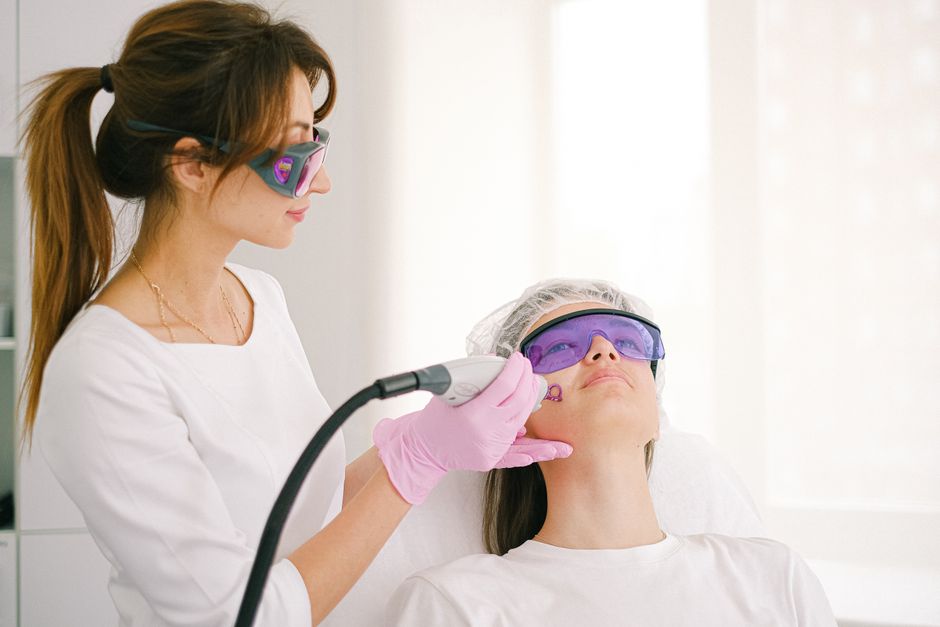
Lasers are devices that produce a narrow, intense beam of light. This light can cut, burn, vaporize, or reshape tissue in medical procedures. In cosmetics, lasers remove hair, tattoos, and skin spots. In industry, lasers cut metal, weld parts, and engrave barcodes.
How Do Lasers Work?
A laser creates light that is all the same wavelength and travels in a straight line. This is different from a regular light bulb, which scatters light in many directions. The word “laser” stands for Light Amplification by Stimulated Emission of Radiation.
The laser beam is so focused that it can deliver a large amount of energy to a very small spot. This energy can heat, melt, or destroy whatever it hits. The exact effect depends on the laser’s power, wavelength, and duration. Doctors and engineers choose specific laser settings for each task.
What Do Lasers Do in Medicine?
Lasers have many uses in medicine. They can cut tissue with very little bleeding because the laser seals small blood vessels as it cuts. This is called laser surgery. It is commonly used in eye surgery to reshape the cornea (LASIK) and treat glaucoma.
Lasers also remove tumors. For example, a laser can vaporize a small tumor in the throat or digestive tract. Dentists use lasers to remove decayed tooth tissue and reshape gums. Lasers can also treat skin conditions like birthmarks, warts, and age spots.
Some lasers treat internal problems without cutting the skin. A laser fiber can be threaded through a blood vessel to open a blocked artery. This is called laser angioplasty. It is less common than other methods, but it is an option for some patients.
Laser therapy is also used for pain relief and wound healing. Low-level laser therapy (also called cold laser) applies a low power beam to stimulate cell repair. The evidence is mixed for many conditions. Some studies show benefit for joint pain and tendonitis, but larger trials are still needed.
What Do Lasers Do in Cosmetic Procedures?
Cosmetic lasers are widely used to change the appearance of skin and hair. They work by targeting specific colors in the skin. For example, a laser can target dark hair pigment, dark tattoo ink, or red blood vessels. The laser energy heats and destroys the target without harming surrounding skin.
Laser hair removal is one of the most common cosmetic procedures. The laser damages hair follicles so they stop growing hair. Multiple sessions are needed because hair grows in cycles. Results vary, but most people see a significant reduction.
Laser tattoo removal breaks up ink particles so the body can remove them. Dark inks are easier to remove than light colors, and professional tattoos often require many treatments. Complete removal is not guaranteed.
Skin resurfacing lasers remove the outer layer of skin to reduce wrinkles, scars, and sun damage. Fractional lasers create tiny columns of damage that heal quickly and stimulate collagen growth. This treatment is effective but requires downtime for healing.
Lasers also treat spider veins, rosacea, and birthmarks like port-wine stains. Each condition responds to a specific wavelength. Laser treatment for these is generally safe when done by a qualified professional.





What Do Lasers Do in Industrial Uses?
Industry uses lasers for cutting, welding, marking, and measuring. Laser cutters use a high-power beam to slice through metal, plastic, wood, and fabric. The cut is precise and clean, with a narrow kerf (the width of the cut). This allows intricate designs that would be impossible with mechanical tools.
Laser welding joins metal parts without adding filler material. The beam melts the edges so they fuse together. This is used in car manufacturing, electronics, and medical device production. The welds are strong and consistent.
Laser marking engraves barcodes, serial numbers, and logos onto products. The laser alters the surface color or texture. Unlike ink printing, laser marks do not fade or rub off. This is essential for traceability in aerospace and medical devices.
Lasers also measure distance and speed. Laser rangefinders and Lidar systems send out a pulse and measure the time it takes to bounce back. This is used in surveying, self-driving cars, and mapping.
In manufacturing, lasers are used to drill tiny holes in fuel injectors, printer nozzles, and circuit boards. The holes can be smaller than a human hair. No mechanical drill can achieve that precision.
Are Lasers Safe?
Lasers are safe when used correctly by trained professionals. The main risk is eye injury. A laser beam can damage the retina instantly if it enters the eye. That is why everyone in a laser treatment room wears protective goggles. The specific wavelength determines the type of goggles needed.
Skin burns are possible if the laser is set too high or used on the wrong skin type. Darker skin absorbs more laser energy and is at higher risk for burns and scarring. Experienced providers adjust settings accordingly.
For industrial lasers, safety interlocks and enclosures prevent accidental exposure. Most modern laser machines are enclosed so the beam cannot escape. Operators are trained to follow strict safety protocols.
For medical and cosmetic lasers, choose a provider who is a licensed physician or works under a physician’s supervision. In many states, laser procedures can be performed by registered nurses or licensed aestheticians. Check your state’s regulations and ask about the provider’s training.
Home laser devices for hair removal or skin treatment exist, but they are less powerful than professional machines. Results are generally weaker, and the risk of improper use (like using on a mole or tattoo) can cause injury. The American Academy of Dermatology advises caution with home devices.
Frequently Asked Questions
Can lasers remove all tattoos?
No, not all tattoos can be completely removed. Dark inks typically respond better than light colors, and some inks are difficult to break down.
Is laser hair removal permanent?
It reduces hair growth significantly, but it is not always permanent. Many people need touch-up sessions once a year after the initial course.
Do laser eye surgeries hurt?
Numbing drops are used, so you feel no pain during the procedure. Some people feel pressure or mild discomfort for a few hours afterward.
Can lasers treat cancer?
Yes, lasers can vaporize certain early-stage tumors, especially in the larynx, cervix, and skin. They are often combined with other treatments.
