
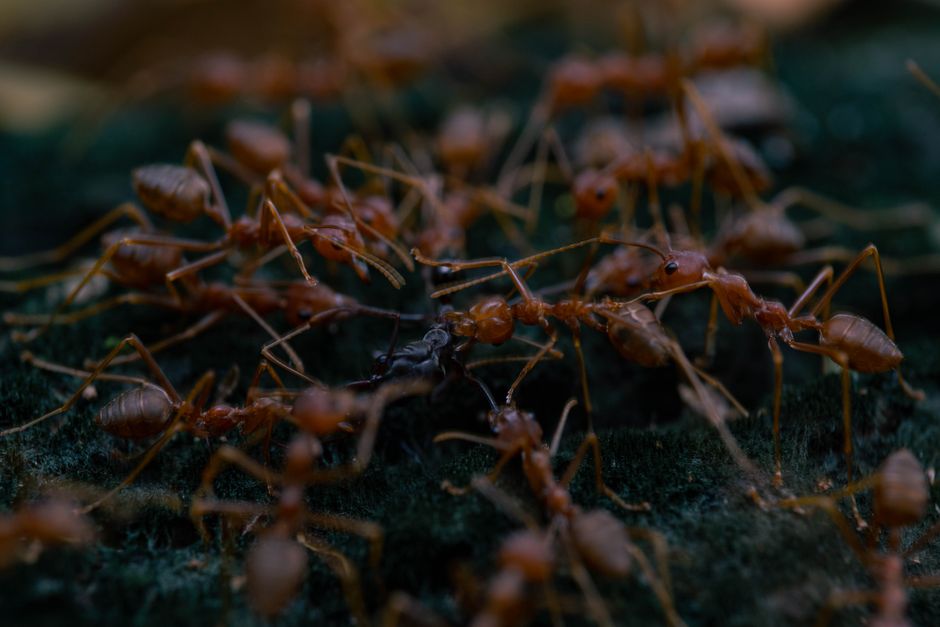
Fire ants are aggressive, invasive insects that will eat almost anything they can find. Their diet includes proteins, sugars, fats, and even other insects, which is why they are such successful survivors. Unlike many ant species that prefer only sweets, fire ants are true omnivores with a highly adaptable menu.
What Do Fire Ants Eat?
Fire ants eat a mix of proteins, carbohydrates, and fats. In natural settings, they hunt small insects, earthworms, and other invertebrates. They also scavenge dead animals, including rodents and birds, which provides them with the protein needed to grow the colony.
Sugars and carbohydrates come from plant nectar, honeydew produced by aphids and scale insects, and ripe or damaged fruit. Fire ants are also drawn to seeds, which they collect and eat for their oils and starches. This varied diet is a major reason they outcompete native ant species in disturbed areas.
In and around homes, fire ants eat pet food, crumbs, grease, spilled drinks, and even food left in trash cans. They are not picky. If a substance contains protein, sugar, or fat, a fire ant will likely consume it and bring it back to the colony.
How Fire Ants Feed Their Colony
Fire ants feed through a process called trophallaxis. Foraging workers collect food and return to the nest, where they regurgitate the food to share with other workers, the queen, and developing larvae. The larvae cannot eat solid food on their own, so they secrete digestive enzymes that break down proteins into a liquid the workers can then swallow and redistribute.
This system means the colony operates as a single feeding unit. The queen receives food directly from workers and never leaves the nest. Larvae process much of the protein, while workers handle sugars and fats. The colony’s nutritional needs shift throughout the season, with more protein required when larvae are abundant.
This feeding strategy is efficient but also creates a weakness. Because fire ants share food so thoroughly, bait products that contain slow-acting toxins can spread through the entire colony before the ants die.
Fire Ants vs. Regular Ants: Diet Differences
Most common household ants, like pavement ants or odorous house ants, prefer sweets and will forage for sugar sources almost exclusively. Fire ants are different. They actively hunt for protein and fat, which is why they are far more damaging to crops, wildlife, and electrical equipment.
Fire ants are also more aggressive feeders. They will swarm a food source in large numbers and defend it fiercely. A typical sugar ant will pick up a crumb and leave. A fire ant will recruit hundreds of nestmates to carry an entire carcass or bowl of pet food back to the mound.
This aggressive foraging behavior also explains why fire ants invade homes more often than other ants. They are not just looking for sweets. They are looking for any nutritional resource, including greasy pans, meat scraps, and even dog feces.





Are Fire Ants Attracted to Certain Foods More Than Others?
Yes. Fire ants show clear preferences depending on the season and the colony’s needs. Research consistently shows that fire ants prefer protein-based foods in the spring and summer when the colony is growing and producing new workers. In the fall and winter, they shift toward sugars and fats to build energy reserves.
This preference matters for control. Protein-based baits work best in warmer months. Sugar-based baits are more effective in cooler weather. Fat-based baits, such as those containing peanut butter or vegetable oil, are often attractive year-round because fire ants require lipids for queen production and brood development.
Individual fire ants also vary in their food preferences. Workers that are older and closer to death tend to collect sugars. Younger workers that will live longer are more likely to collect protein. This age-based division of labor means a single bait type may not reach all colony members at once.
What Fire Ants Eat in Your Yard
In lawns and gardens, fire ants feed on a wide range of organic matter. They eat other pest insects like flea larvae, tick eggs, and caterpillars, which can be beneficial. They also eat the seeds of grasses and weeds, which can reduce plant populations.
However, fire ants also damage plants directly. They feed on young seedlings, germinating seeds, and the soft bases of stems. They are particularly harmful to okra, corn, eggplant, and potato crops. They also tunnel around plant roots, which dries out the soil and can kill young plants.
Fire ants are also attracted to electrical equipment in yards, including air conditioners, irrigation timers, and outdoor outlets. They chew through insulation and wiring, causing short circuits. This behavior is not related to food. Experts believe they are drawn to the warmth or the electromagnetic field, but the damage is costly regardless.
How to Use Fire Ant Food Preferences for Control
Understanding what fire ants eat is the foundation of effective baiting. Baits work because they combine a food attractant with a slow-acting poison. The foraging ants take the bait back to the mound, share it through trophallaxis, and the toxin spreads to the queen and brood.
For best results, match the bait to the season. Protein-based baits are most effective in spring and early summer. Sugar-based baits work better in late summer and fall. Fat-based baits are a reliable option when you are unsure of the colony’s current preference.
Do not use fast-acting sprays or contact killers on fire ant mounds. These products kill the foraging workers on the surface but leave the queen alive underground. The colony will recover within weeks. Baits are the only method that reliably eliminates the entire colony because they target the queen.
Apply baits in the late afternoon or early evening when fire ants are actively foraging. Do not apply bait before heavy rain, as moisture can ruin the product. Follow the label instructions on any commercial bait product exactly. Do not mix baits with other insecticides, as this can make the bait unappealing and stop the ants from taking it.
Do Fire Ants Eat Other Fire Ants?
Yes. Fire ants are cannibalistic under certain conditions. When food is scarce, workers will consume dead nestmates. This behavior helps recycle nutrients and keeps the colony alive during periods of starvation.
More importantly, fire ants are highly territorial. When two fire ant colonies meet, they often fight to the death. The winners will consume the bodies of the defeated ants, which provides a protein-rich meal for the victorious colony. This aggression is one reason fire ants spread so quickly and dominate new habitats.
Frequently Asked Questions
Do fire ants eat wood like termites?
No. Fire ants do not eat wood. They may tunnel through wood to build nests, but they are not consuming it as food.
Will fire ants eat dead animals?
Yes. Fire ants are scavengers and will feed on dead insects, rodents, birds, and other animals they find.
What is the best bait to kill fire ants?
Protein-based baits work best in spring and summer, while sugar-based baits are more effective in fall and winter. Fat-based baits are attractive year-round.
Do fire ants eat plant roots?
Fire ants do not typically eat plant roots. They tunnel around roots, which can dry out the soil and damage plants, but their feeding is mostly above ground.
